
8 secrets to raising children from the Japanese.
(Baonghean.vn) - Japanese children are diligent in their studies, highly decisive, and very close to their families, exhibiting politeness and discipline within established norms. This is a testament to the success of Japanese parents in educating and training the younger generation. We invite families to explore and discover the distinctive features of Japanese parenting styles.
Focus on fairy tales
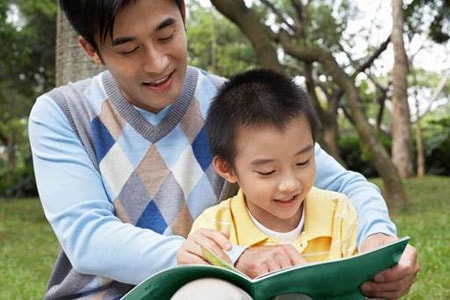 |
| Japanese parents often read fairy tales to their children. (Image: Internet) |
Japanese mothers often teach their children by telling them fairy tales and fantasy stories. However, the Japanese go a step further, believing that this mythical world, with its strange and fantastical elements, is the very material and inspiration for a child's boundless creativity later in life.
Avoid making generalizations or imposing your views.
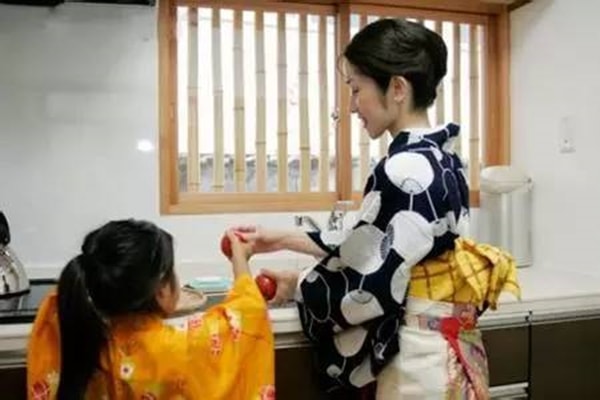 |
| General praise can easily lead to arrogance in children, so the Japanese often praise them based on specific actions. (Image: Internet) |
Japanese parents often praise their children by commending specific behaviors. For example, "My child is so good at feeding themselves" or "Who is so good at changing their own clothes!" When children are praised for a specific action, they will try to do it better the next time in order to please their parents and receive further praise.
I hardly let my children watch TV.
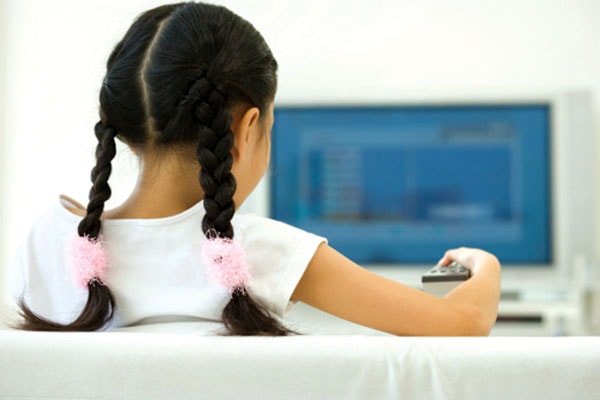 |
| "Turn off the TV, turn on the ideas" is a common saying among Japanese parents. (Image: Internet) |
Besides the fact that watching TV is time-consuming and can lead to addiction in children, Japanese parents are also very aware that allowing children to watch TV too early and too much can disrupt the structure of the cerebral cortex and may increase the risk of leukemia as well as increase the likelihood of autism.
Teaching literacy from an early age.
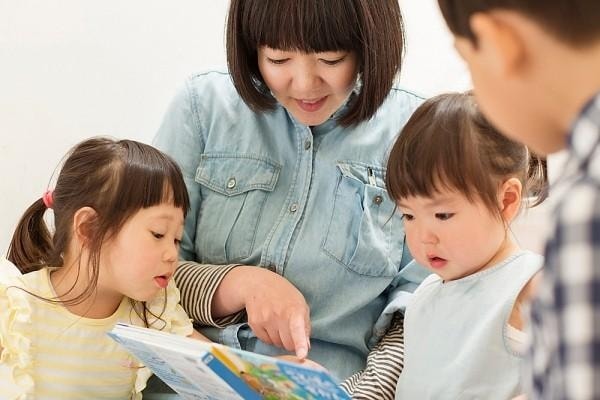 |
| Teaching children to read and write at an early age helps them learn faster. (Image: Internet) |
According to Japanese research, teaching literacy can alter brain function and lead to changes in brain structure. Japanese parents emphasize teaching their children to read and write from a very young age because, at birth, children are just small animals, but when their language and literacy systems begin to function, they become human beings. They understand that for these language systems to function effectively, the closer a child is to birth, the more effective the learning process will be.
Repeat patiently.
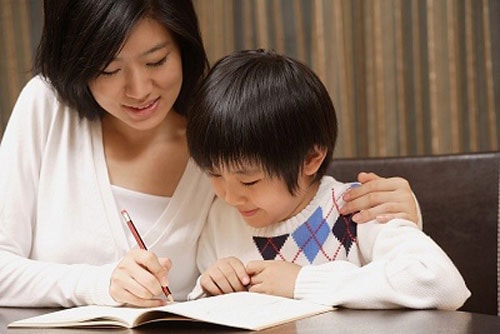 |
| Children grow into responsible adults thanks to the patient guidance of their parents. (Image: Internet) |
Unlike many people who might get annoyed when young children repeatedly ask the same silly question, the Japanese don't mind explaining things to their children multiple times. According to them, it takes at least three months for a child to master something. For example, once a child has memorized the word "aiueo," it takes at least three months for them to be able to read it fluently.
Memory training
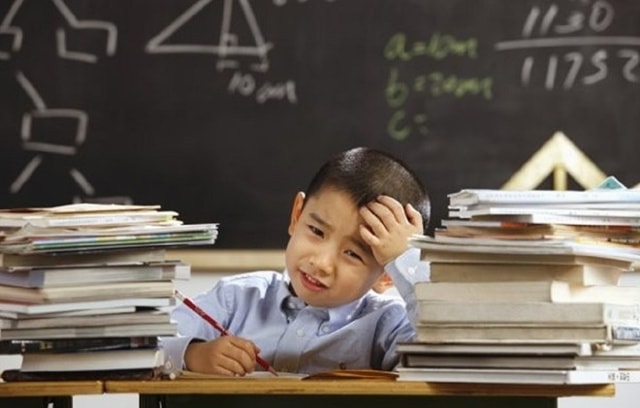 |
| Japanese children are trained in various ways to improve their memory. Photo: Internet |
With the belief that "Intelligent people remember more than others and know how to apply what they remember effectively," the Japanese believe that intelligence is something that can be practiced and acquired, not something innate. From a young age, Japanese children are exposed to intellectual games that train their memory.
Get enough exercise
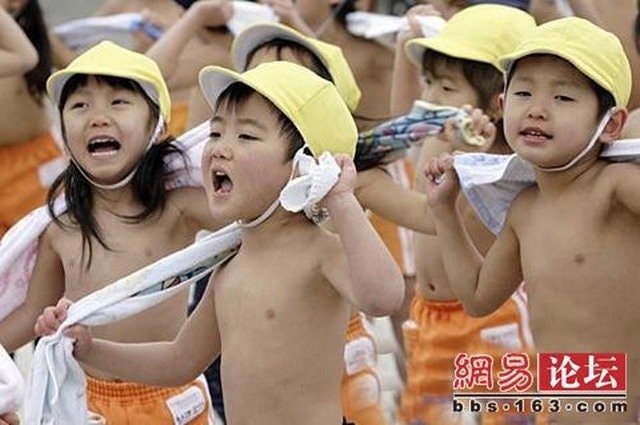 |
| From a young age, Japanese children are encouraged to lead a life full of physical activity, especially walking and running. (In the photo: Children chanting their determination to fight the cold. Photo: Internet) |
From the moment they are born, Japanese children are educated in all aspects of health, physical activity, morality, discipline, and emotions. For children as young as two, parents have them walk regularly every day, breaking down the exercise distance into short segments of 10m or 20m each day.
The habit of searching and researching.
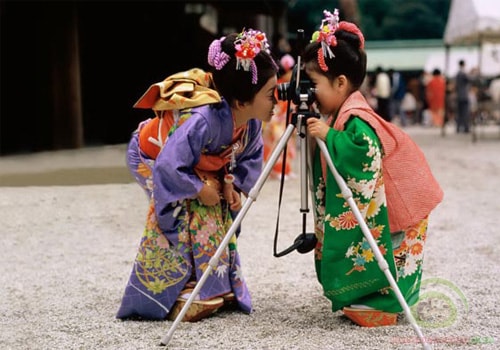 |
| Exploration and discovery help develop children's creativity. Photo: Internet |
Parents should guide their children to use easy-to-use dictionaries designed for children. Children can use these dictionaries to look up the meaning of words or the correct spelling of Chinese characters. For example, even if we know an address, it can be difficult to remember the way if someone else takes us in a car. But if we use a map and ask for directions along the way, we will remember it for a long time. Similarly, children will find it easier to acquire knowledge if they find it themselves.
Ha Chi
(Synthetic)


