



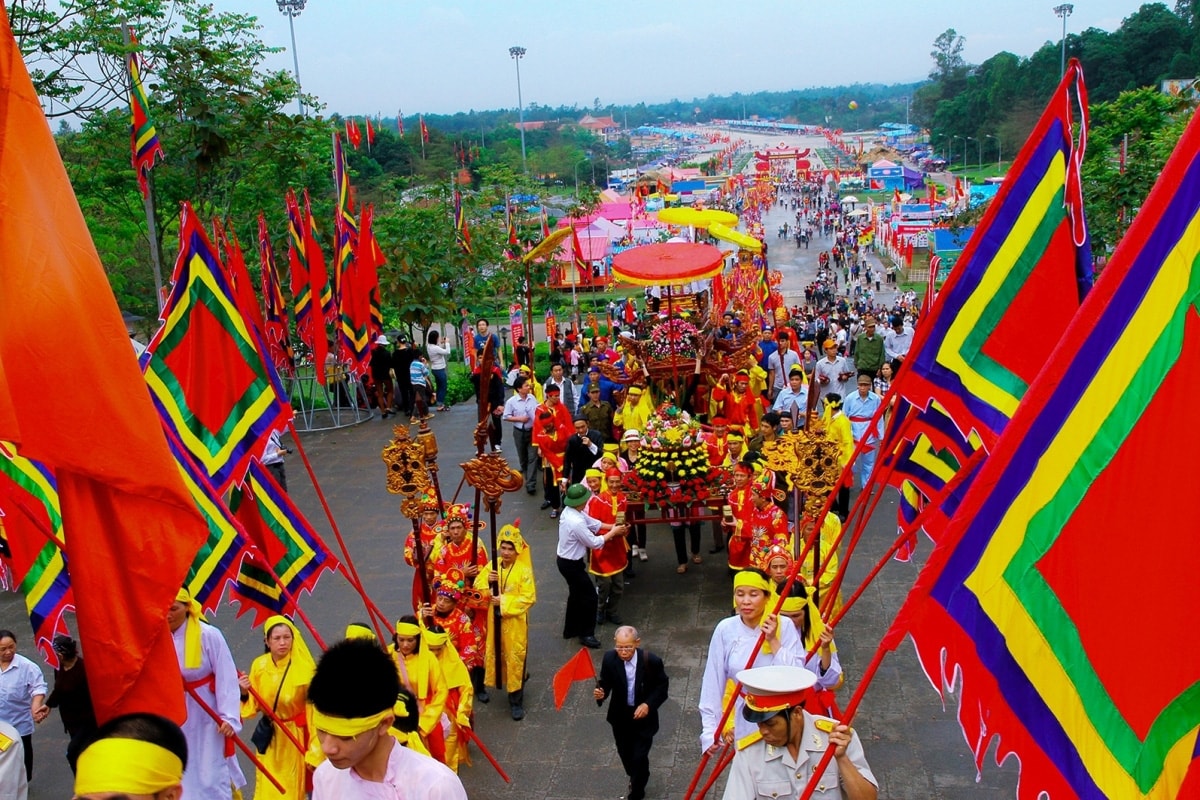
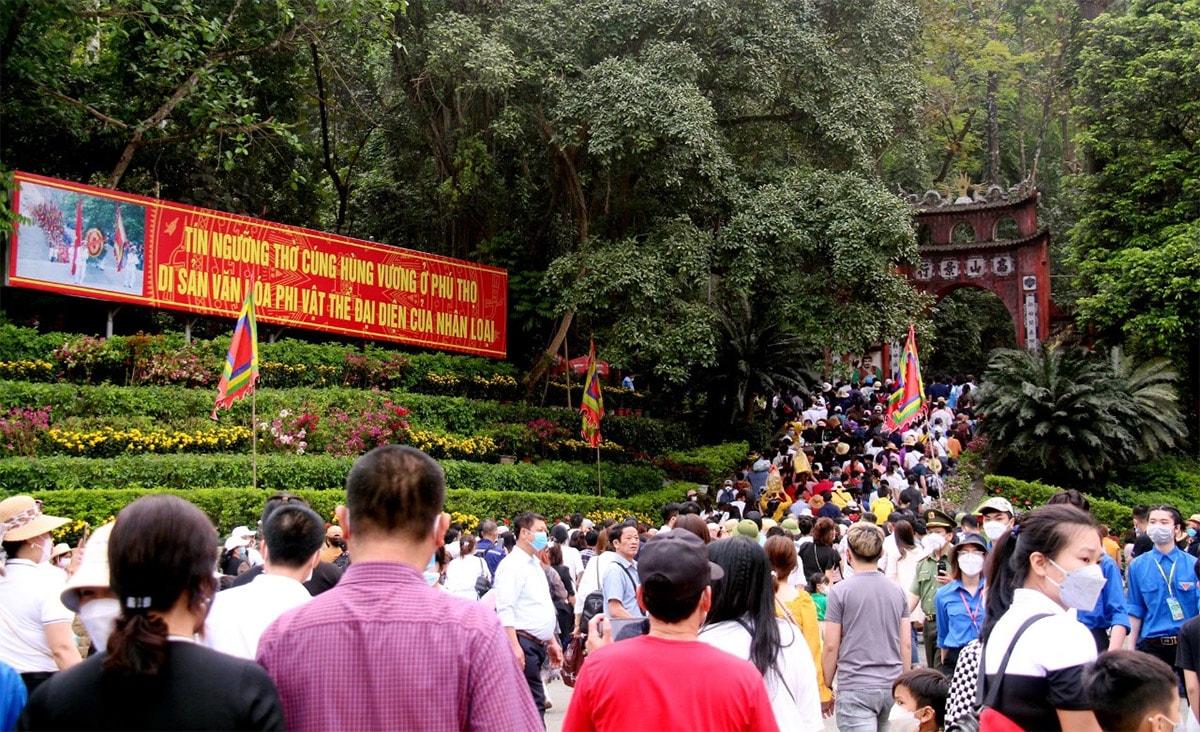
Many believe that the Ancestor Commemoration Day on the 10th of March dates back thousands of years. However, this day is only a little over a hundred years old. Furthermore, it wasn't established by the people or any particular community, but rather by a Confucian scholar. His birthplace wasn't even in the ancestral land of the Hung Kings, but rather in a region that was only incorporated into the Vietnamese map a few hundred years ago.
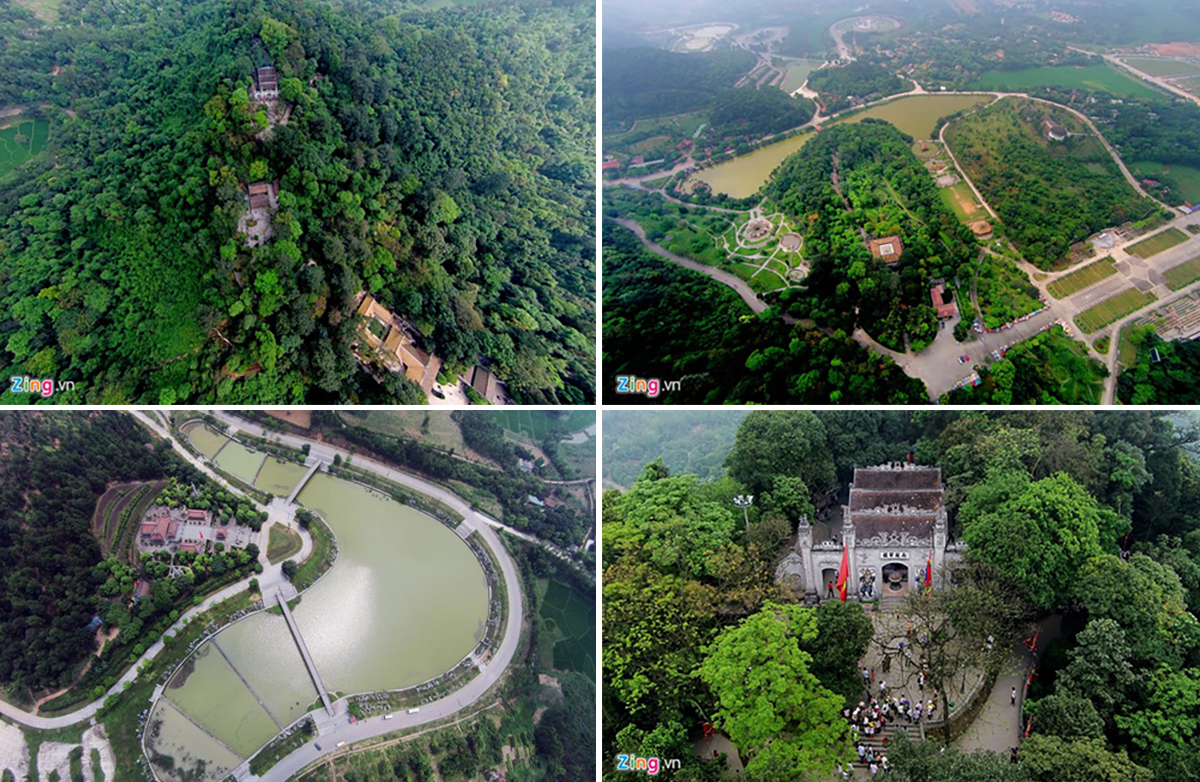
This is clearly recorded in the stone stele located at Hung Temple, titled "Hung Vuong Tu Khao" (Research on the Hung Vuong Temple), erected in the 15th year of Bao Dai's reign (1940). The stele has two sides, one side in Chinese characters (Hung Vuong Tu Khao), and the other in French (Historique du temple de HUNG VUONG). However, this stele was lost sometime later. The "Hung Vuong Tu Khao" stele at Hung Temple today is a reproduction carved according to the exact rubbing from the French School of Far Eastern Studies.
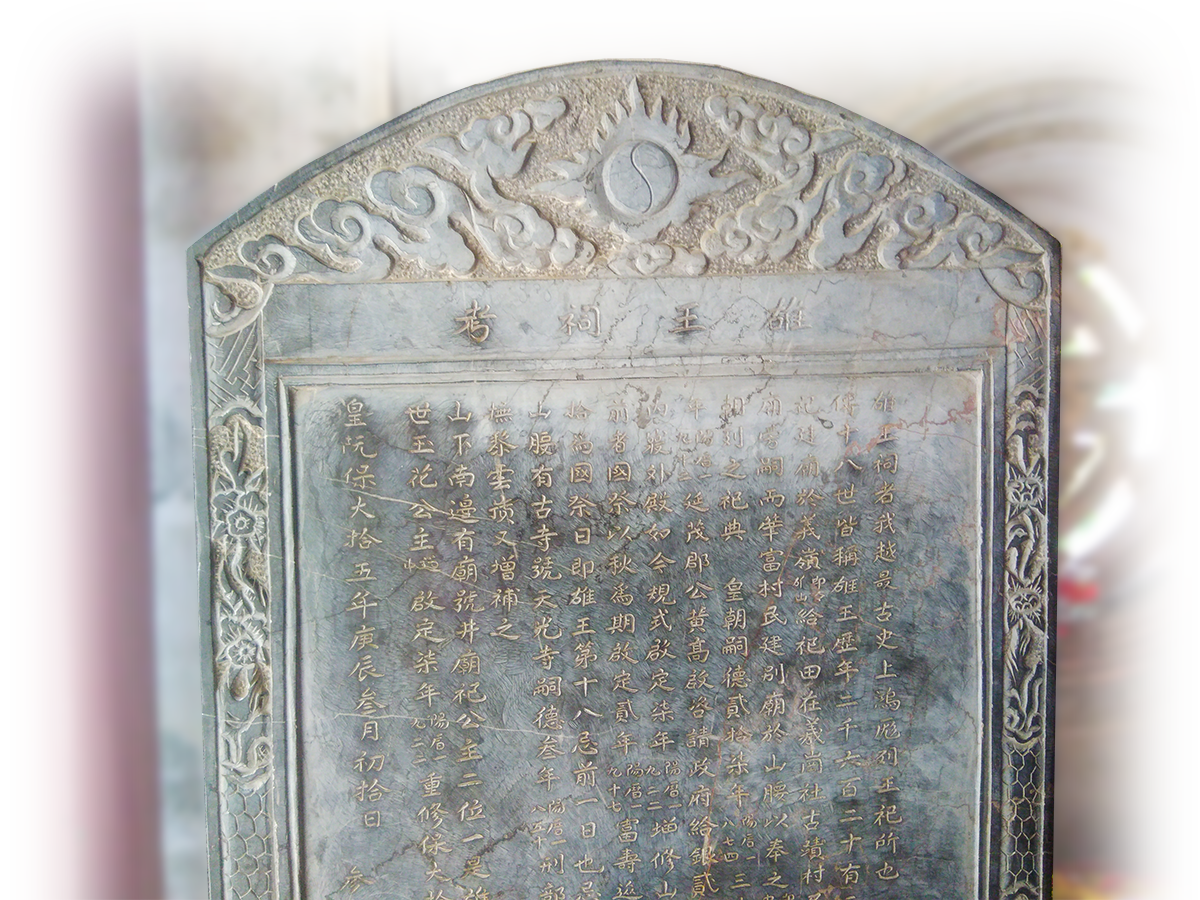
First, for ease of understanding, we would like to translate the entire inscription as follows:
“Hung Vuong Temple: This is the place of worship for the oldest kings of the Hong Bang era of Vietnam. The first Hung Vuong (2879 BC) established his capital in Phong Chau (now Bach Hac), with the national name of Van Lang. His dynasty lasted for 18 generations, all calling themselves Hung Vuong, spanning 2622 years. Later, Thuc An Duong Vuong conquered that land (258 AD). The worship of the previous kings was continued by building a temple in Nghia Linh (Hung Mountain), and providing land for worship in Co Tich village, Hy Cuong commune, which is the original land where the 18th Hung Vuong passed away. There is still a mausoleum next to the temple. Later generations, the people of Trieu Phu village built a separate temple on the mountainside to worship the kings (now Trung Temple), while Vi Cuong commune built a separate temple at the foot of the mountain (Ha Temple). Throughout the dynasties, it was included in the rituals of worship.”
In the 27th year of Emperor Tự Đức's reign (1874), Governor-General Nguyễn Bá Nghi of Tam Tuyên obeyed the imperial decree to restore the Upper Temple; in the 6th year of Duy Tân's reign (1912), Duke Hoàng Cao Khải of Diên Mậu requested 2000 quan from the government for restoration; the Governor of Phú Thọ, Chế Quang Ân, was also ordered to encourage donations to restore the inner and outer chambers to their current state; in the 7th year of Khải Định's reign (1922), the mausoleum on the mountain was further repaired.
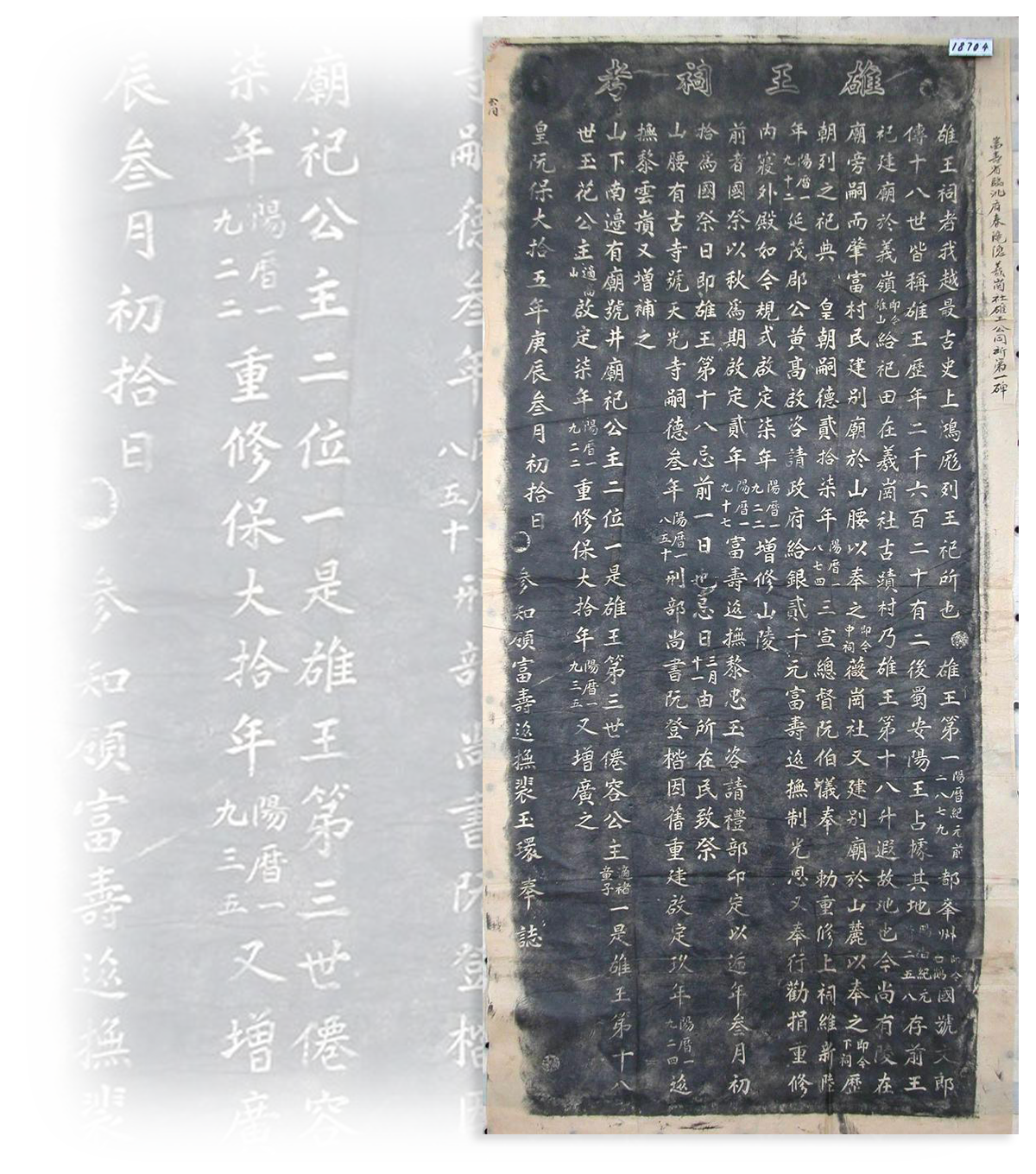
In the past, the imperial court used autumn as the date for the Hung Kings' commemoration. In the second year of the reign of Khai Dinh (1917), Le Trung Ngoc, the Governor of Phu Tho, requested the Ministry of Rites to designate the 10th of March each year as the national day of worship (worshipped nationwide), which is one day before the Hung Kings' death anniversary. The commemoration day (March 11th) was celebrated by the local people.
On the mountainside stands an ancient temple called Thien Quang Temple. In the 3rd year of Tu Duc's reign (1850), Nguyen Dang Giai, the Minister of Justice, saw the old temple and ordered its reconstruction. In the 9th year of Khai Dinh's reign (1924), Governor Le Van Dinh added to it. At the southern foot of the mountain is a shrine called Gieng Shrine, dedicated to two princesses: Princess Tien Dung, daughter of the 3rd Hung King (married to Chu Dong Tu), and Princess Ngoc Hoa, daughter of the 18th Hung King (married to Cao Son). It was renovated in the 7th year of Khai Dinh's reign (1922) and expanded in the 10th year of Bao Dai's reign (1935).
On the 10th day of the 3rd month of the year Canh Thin, the 15th year of the Bao Dai reign of the Nguyen Dynasty (1940), Bui Ngoc Hoan, the Tham Tri official in charge of the position of Governor of Phu Tho, was ordered to record this.
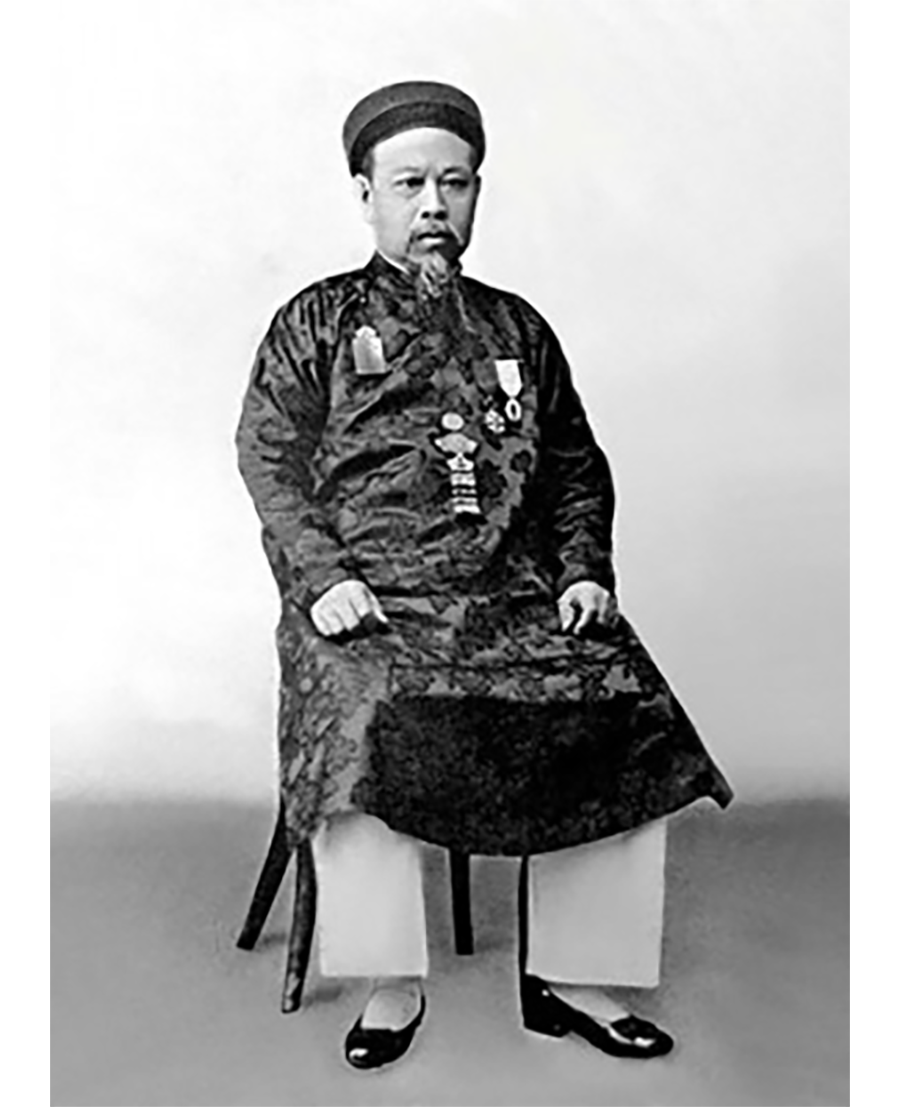
No one would have imagined a story to be inscribed on a stone tablet; it was written and carved based on real events and characters. Therefore, the "Hung Vuong Tu Khao" inscription is a highly valuable document with a clear date and reliable information. Through this inscription, we can confirm that the choice of March 10th each year originated in the second year of the Khai Dinh reign – 1917, exactly 106 years before the present. This decision was made by the Governor (Chairman of Phu Tho province), the scholar Le Trung Ngoc, who consulted the Ministry of Rites (Ministry of Culture) to request its establishment, and not by "our people for generations." From this, the Hung Vuong Ancestor Commemoration Day on March 10th each year has become an official national holiday of Vietnam and a commemoration day for the Vietnamese community worldwide.

Many believe that the Hung Kings dynasty was not real, but merely a creation of scholars/historians during the Le dynasty when compiling the "Dai Viet History Chronicle". This is incorrect, because if it existed, the Chronicle would still have to follow previous historical works such as the Dai Viet History Chronicle or the Viet History Outline, and could not possibly have fabricated a dynasty spanning thousands of years.
Furthermore, before the scholars of the Le Dynasty wrote the Dai Viet History Chronicle, many scholars of the Tran Dynasty had already mentioned "Hung Vuong" and the "Van Lang" state. For example:
The inscription "Ancient Tales of the Temple of the God" (inscription recording ancient tales of the temple of the god) composed by the scholar Truong Han Sieu on the 20th day of the 11th month of the winter of the year of the Rat, the 20th year of the Hung Long reign (1312) contains the following sentence:
Miss Going back to ancient times, the temple of the Heavenly King, dating back to the sixth Hung King's reign, was built by a Lac general from the Chu Dien tribe under orders, with the Kính Thiên platform oriented northwest-southeast.
The book "Lĩnh Nam Chích Quái" (Selected Strange Tales from Lĩnh Nam) appeared at the end of the Trần dynasty and contains 22 stories. The story "The Hồng Bàng Family" records:Âu Cơ took her 50 sons from Phong Châu, chose the eldest, and enthroned him as their ruler, known as Hùng Vương, with the country named Văn Lang..
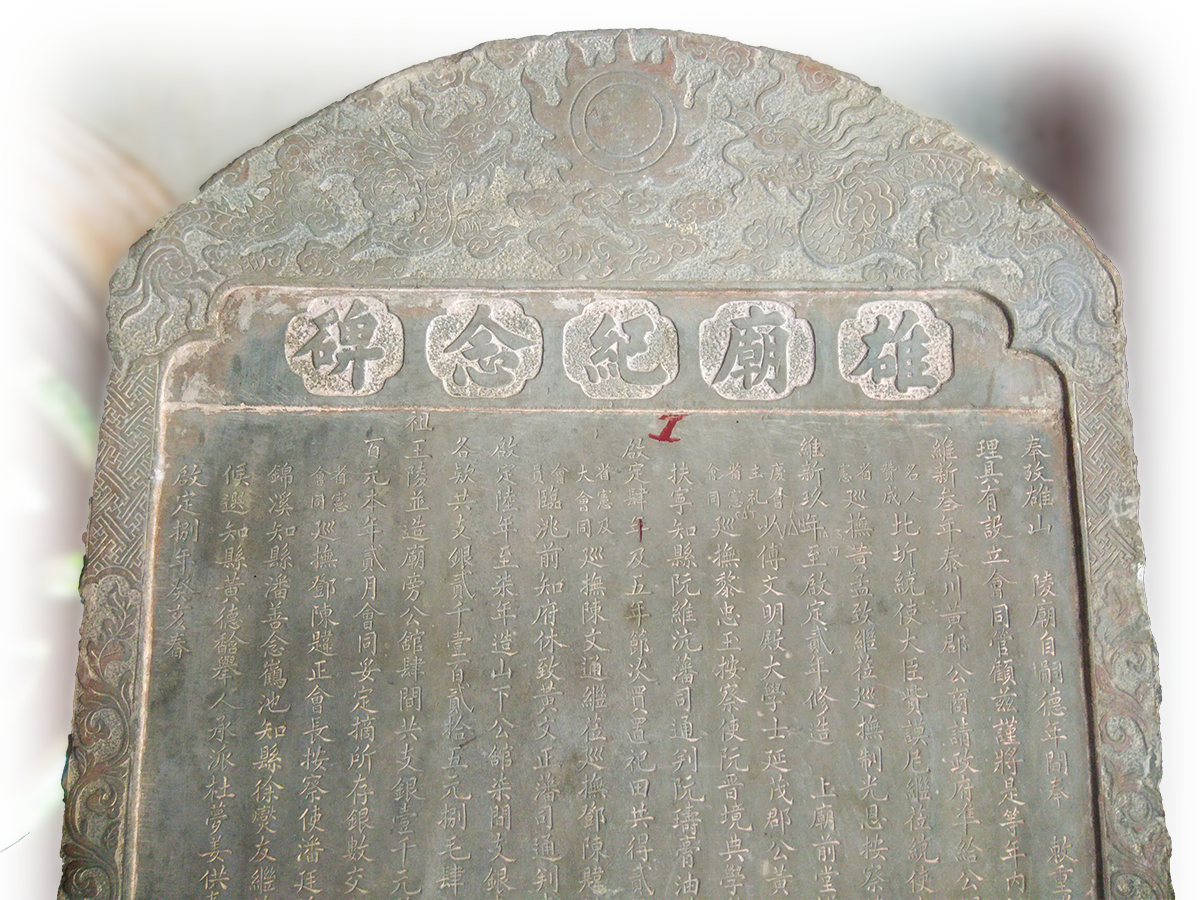
From the early days of our independence, our country has had historical works. During the Ly Dynasty, there was the "History of the Year" by Do Thien, compiled around the reigns of Ly Nhan Tong and Ly Than Tong, but it is now lost. This shows that historical books existed even during the Ly Dynasty. During the Tran Dynasty, there was the book "Linh Nam Chich Quai," consisting of 22 stories, many of which describe the characters and events of the Hung King era, such as:
– The Tree Spirit Legend: The legend of King Kinh Duong Vuong destroying the tree spirit in Phong Chau.
– The Fish Spirit Legend: The legend of Lac Long Quan defeating the Fish Spirit in the East Sea.
– The Legend of the Weasel Spirit: The legend tells of Lac Long Quan slaying the weasel spirit in the "Weasel Corpse Pond" (which is present-day West Lake).
– The Betel and Areca Tale: The legend of betel and areca and the custom of using betel and areca in wedding ceremonies. (During the reign of the 3rd Hung King).
– The Vietnamese Well Legend: A story from the time of the 3rd Hung King.
– The Legend of Dong Thien Vuong: The legend of Saint Giong defeating the Yin invaders. (During the reign of the 6th Hung King).
– The Story of Banh Chung: The legend of banh chung and banh day (traditional Vietnamese rice cakes). (During the reign of the 6th Hung King).
– The Watermelon Story: The legend of the watermelon being introduced to our country. (During the reign of the 17th Hung King).
– The Legend of the Mountain God of Tan Vien: The legend of Son Tinh and Thuy Tinh vying for the hand of King Hung's daughter, My Nuong. (During the reign of the 18th Hung King).
– The Tale of the Pond One Night: The legend of Chu Dong Tu and Princess Tien Dung, daughter of King Hung. (During the reign of the 18th Hung King)
– The Legend of the White Pheasant: King Hung ordered his servant, who claimed to be from Viet Thuong, to present a white pheasant to the Zhou dynasty.
– The story of Ly Ong Trong: A character from the late Hung Dynasty, who later served as a general fighting against the Xiongnu for the Qin Dynasty.
Among the 22 stories, the most notable is the Hong Bang Dynasty story, which records that Emperor Minh begat Emperor Nghi, who then begat King Kinh Duong Vuong. King Kinh Duong Vuong begat Lac Long Quan, and Lac Long Quan married Au Co and they had a hundred children. The section on Hung Vuong and the Van Lang State states as follows: "Au Co took 50 sons from Phong Chau land, chose the eldest son, and enthroned him as ruler, called Hung Vuong, with the national name Van Lang."
In addition, there is the book Viet Dien U Linh by the renowned scholar Ly Te Xuyen, published around 1329, in the story ""Tản Viên Hựu Thánh Khuông Quốc Hiển Linh Ứng Đại Vương"The text reads: “King Hung had a daughter named My Nuong, whose beauty was unparalleled, capable of captivating an entire kingdom. King Thuc Phan sent envoys to propose marriage, and the king wanted to give her in marriage. The high-ranking official, Lac Hau, objected, saying: 'He wants to covet our country.'"
Of particular note is the book "Viet Su Luoc" (author unknown), published around 1377. This is one of the earliest surviving chronicles of Vietnam. It records the Hung Kings era as follows: “…“During the reign of King Zhuang of Zhou (696-682 BC), in the Gia Ninh region, a stranger used magic to subdue the tribes, proclaiming himself Hung King, establishing his capital in Van Lang, naming the country Van Lang, with pure and honest customs, and governing by knot tying. Eighteen generations ruled as Hung Kings. Viet Cau Tien (505-465 BC) often sent envoys to persuade him, but the Hung Kings resisted. At the end of the Zhou dynasty, the Hung Kings were driven out by Phan, the son of the King of Shu, who then succeeded him…”
Thus, even during the Tran dynasty, there were at least three historical works recording the Hung King era.

During the time of the Hung Kings, Vietnam did not have the custom of adopting surnames, so neither the king nor the common people bore surnames. The practice of surnames arose from Sinicization after the second period of Chinese rule (from 43 to 543 AD). Many officials and people from China came to live and work in Vietnam, so over time, the Vietnamese also imitated the Han Chinese practice of using surnames to distinguish their lineage and social standing. However, this practice was merely a copy of the Han Chinese surnames, and did not necessarily mean that the people had Han Chinese ancestry.
When Ma Yuan invaded our country, the leaders of the uprising against the Eastern Han's occupying government were known as the "Two Trung Sisters," or more specifically, "Trung Trac" and "Trung Nhi." This shows us that during the time of the Two Trung Sisters, the majority of Vietnamese people did not yet have the custom of using surnames.
However, by the time of the Trieu Thi Trinh rebellion, it is likely that most Vietnamese people already had the custom of using surnames, as seen in the famous figures of that era, such as Trieu Thi Trinh and her brother Trieu Quoc Dat. From this point onward, all figures recorded in official history had clearly stated surnames.

Many people now argue that it is incorrect to venerate Hung Vuong as the "National Ancestor," because Hung Vuong is only the ancestor of the Kinh (Viet) people, while Vietnam today has many ethnic groups; Hung Vuong is not the ancestor of the Hmong, Thai, etc.
This is incorrect, because "National Ancestor" here does not mean the founder of a country or the founder of the entire nation. "Quốc" means country, but "Tổ" (ancestor) besides meaning ancestor or forefathers also means founder or initiator. Therefore, "National Ancestor" here does not refer to blood lineage or ancestry, but only to the founding of the state. Historical records clearly state that King Hung "FOUNDED THE COUNTRY called Van Lang, with its capital in Phong Chau."
The father of Hung Vuong (the first) was Lac Long Quan, but he is not the "National Ancestor" because he did not found the Van Lang dynasty. Similarly, "Buddha Ancestor" refers to the founder of Buddhism, not the ancestor of all Buddhists. This is understandable when we see that the founding kings of dynasties often have the temple name "Ancestor," such as Ly Thai To of the Ly dynasty, Le Thai To of the Le dynasty, etc.
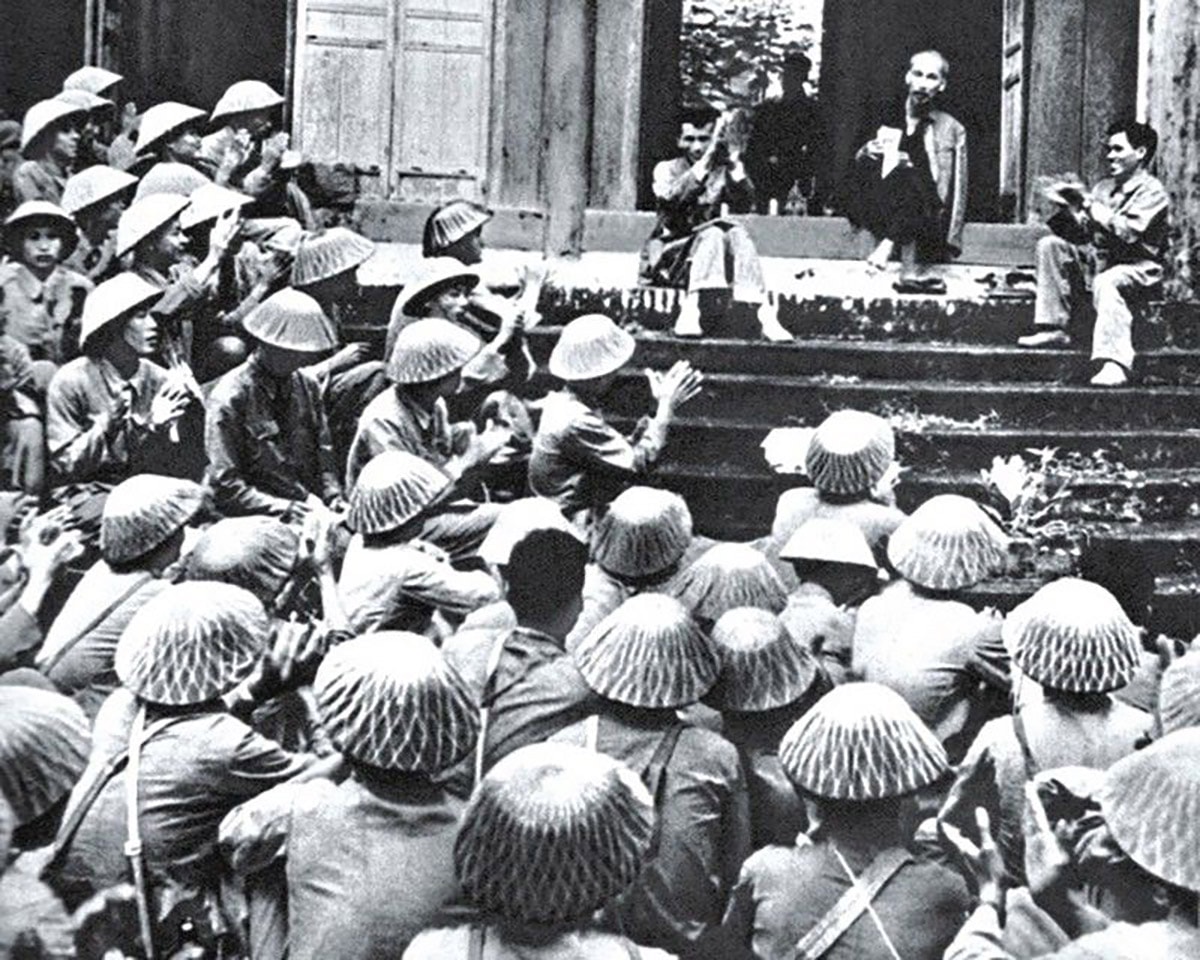
President Ho Chi Minh, during his visit to Hung Temple on September 18, 1954, also shared that:"The Hung Kings were instrumental in FOUNDING THE NATION, and we, their descendants, must work together to PRESERVE IT."President Ho Chi Minh clearly stated that King Hung was instrumental in establishing the first state in the history of Vietnam.
Finally, some argue: "Since they're called 'National Ancestors,' they should only choose one person to worship, not a whole group of 18 or 19." This is also inaccurate, because in any family today, they worship from the great-great-grandfather downwards. The ancestor's tablet is placed in the family temple to be worshipped together with the ancestors, a practice called "joint commemoration." Thus, for over four generations, spanning more than 100 years, people have performed joint commemoration ceremonies. How could the Hung Dynasty, more than 2000 years ago, not have... joint commemoration ceremonies?!