

The love story of poet Chế Lan Viên
There's a famous saying that goes something like, "The earth is expanded by the size of a poet's soul." And throughout history, wherever there are poets, there is love. Che Lan Vien is no exception.
At the young age of 17, he wrote the collection "Desolation" as a secret and lonely Cham tower casting its shadow over the field of Vietnamese poetry.
Che Lan Vien (real name Phan Ngoc Hoan, born in 1920) was originally from Cam Lo, Quang Tri, but grew up in An Nhon, Binh Dinh, near the ancient citadel of Do Ban.
The ancient citadel of Đồ Bàn, with its mysterious Cham towers and Cham maidens, left a profound mark on the poetic life of Chế Lan Viên. His first poetry collection, *Điêu Tàn* (Desolation), has a preface that also serves as an artistic manifesto of the "School of Chaotic Poetry".
|
|
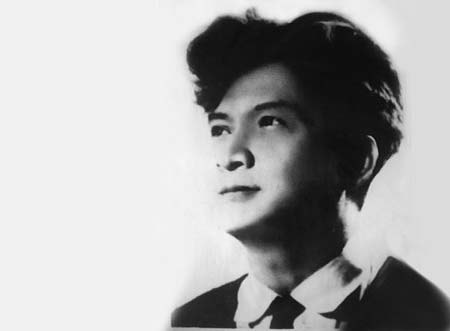
From this point on, the name Chế Lan Viên became famous in Vietnamese poetry.
Real lover
The elderly people living near the ancient citadel of Do Ban still remember seeing a young boy with a melancholic face wandering around the citadel grounds every day, around 1936 or 1937. They never imagined that this boy would one day become a towering figure in Vietnamese poetry.
Poet Yen Lan, a fellow poet of Che Lan Vien in the Binh Dinh poetry group, recounted the poet's first love, a love that he could never forget. It was a love for a girl named Ngoc Anh.
Few readers of his poetry pay attention to the names A and H. A stands for Anh, and H stands for Hoan (Che Lan Vien's real name). Ngoc Anh comes from a family of "aristocratic lineage." Her family originally lived in Dieu Tri, Tuy Phuoc district, Binh Dinh province.
Che Lan Vien lived in An Nhon, formerly known as Do Ban citadel, later renamed Hoang De citadel by Nguyen Nhac. Dieu Tri was not far from An Nhon, so Che Lan Vien often visited Ngoc Anh's house.
Chế Lan Viên's first love, from the time the poet was only 15 or 16 years old, meant infatuation to him, but the poet still regarded his beloved as an idol to be worshipped forever.
It wasn't until 1987 that Che Lan Vien mentioned her name. Poet Yen Lan commented: "Che's Ngoc Anh is the name of a flower, and also the name of his lover, a budding, silent love known only to him; so he kept it hidden forever, only to dream about it night after night, and see her image on his pillow."
Or perhaps it could be said that it was a passionate and secretive first love, where the image of the beloved would only appear in the depths of the heart when lying asleep. This love was little known, even to Ngoc Anh, Che had never confessed his feelings to her.”
Many beautiful women have passed through the poetic life of Chế Lan Viên, among them a young woman named Nguyễn Thị Giáo. Ms. Giáo possessed the alluring and graceful beauty of a refined young lady. Her most captivating feature was her delicate, arched eyebrows, curved like a crescent moon.
Many suitors pursued her, but she had fallen deeply in love with the Cham poet from a young age. Overcoming numerous difficulties and obstacles from her family, she resolutely followed her heart. Their love story is commemorated by a unique four-line poem written at their parting ways:
"When we're in a crowded place, I'll leave you behind - Turn away, don't let me see - Your face is so beautiful, like the new moon - Cutting my heart apart, your moon."
Dream lover
|
|
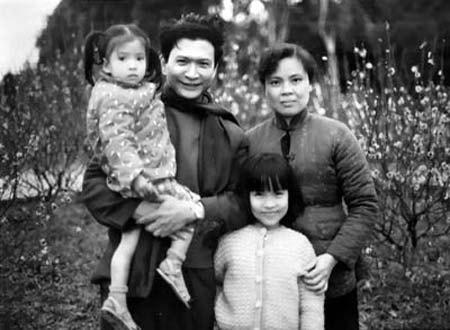
Some of Chế Lan Viên's lovers had names, others were nameless, but the poet always remembered them. It could have been a schoolgirl from Quảng province, the region with the Cham towers on the Mỹ Sơn sanctuary, or perhaps a girl named Xuyến Nhi, as the poet later wrote:
"Xuyen Nhi, my delicate soul - you will sit here. The breath of the moon and stars is coming to germinate the precious seeds up there, and soon, even before the sign of dawn, we can together harvest the fruits that are about to be born."
In his poetic journey into the underworld, Che Lan Vien encountered many bizarre things: blood, dry bones, cold steel, human skulls... But one image that evoked strong emotions and became haunting was that of lovers.
Che Lan Vien used his personal imagination and fiction as the subject to explore the mysteries of life. He was a bridge between life and death, being and nothingness, past and future, through a realistic perspective.
The illusory space of Champa, as imagined, had the power to transform Che Lan Vien's realistic perspective. Starry skies, mystical moonlight, and Champa maidens warmed the space.
For Che Lan Vien, love and death could still be intertwined and inseparable. It is said that while walking among moss-covered ruins, Che Lan Vien accidentally met a Cham girl wandering among the mountains.
He followed her but couldn't catch up, so he was left lost in thought. From then on, he believed that all the Cham maidens of the past possessed the same primal, ancient beauty of humankind as the maiden who had just passed by.
The young woman is the embodiment of love and happiness. But happiness is like a butterfly; grasping too hard will shatter it. A lover needs to be cherished. She refuses to sit and wait for her lover to arrive on their wedding night, amidst the whirlwind of passion.
He desired that two hearts come together through empathy; that was enough. For him, love that was solely tied to physical intimacy was selfish, devoid of the beauty of the soul. The poet's love transcended mere pretense.
Once, Che was overjoyed to find his graceful lover on the lush green grass. As soon as she appeared, she kissed him with intoxicating passion. Her hair was long like a stream, soft as weeping willows, swaying in the evening breeze. Then she died, and he, consumed by grief, went searching for her.
Binh Dinh is the second home of Che Lan Vien, one of the representative poets of the New Poetry movement. Binh Dinh, with its deep blue sky above the lonely Cham towers, created a chilling, eerie realm that relentlessly haunted Che Lan Vien.
For Che Lan Vien, love leads people to eternity. Love is both close and distant; lovers are sometimes intimate, sometimes fragile and illusory. Che Lan Vien encountered his lovers through his songs.
The song, like a dream, echoed up to the heavens before vanishing into nothingness, like the figure of the Cham girl that vanished without a trace the more one chased after her. Chế yearned for an eternal love that transcended all constraints and limitations of human existence. His lover was a Cham girl.
Che was captivated by the Cham music in the evenings. Then the music faded, bats flew into the temples, darkness enveloped Binh Dinh city, and Che was startled, mourning the loss of his lover.
He once witnessed the dances of Cham mountain girls transforming to the rhythm of drums and trumpets. That melancholic music and singing guided Che Lan Vien in his search for the image of the maiden from the past. How could he possibly encounter the maiden in that enchanting melody?
Where is the frenzied music I yearn for? It doesn't resound, overflowing with moonlit dreams (Frenzied Music). The sound of woodcutters chopping wood echoes from somewhere, pulling him back to the sad reality. Sometimes those melodies creep into Che's dreams.
The young women passing by left him with peaceful moments: "I just saw her shadow on the green grass / Her long hair flowing in the moonlight" (Dream). Che Lan Vien also dreamed of the lost melodies of the past.
There were sunsets when Che heard singing from beyond the hedge, sometimes soft, sometimes high. That voice instilled in Che an immeasurable sadness: "Don't sing anymore, your voice is too clear / It paralyzes my soul, preventing it from soaring high" (My Soul).
The song echoes in the void, haunting the desolate world of Chế Lan Viên. It is the lingering echo of the anguished hearts of petty bourgeois intellectuals, like Chế Lan Viên, who were trapped by the loss of their country in the early years of the last century.
The world of desolation created a melancholic, haunting, and intensely painful atmosphere for Chế Lan Viên in particular and for the Bình Định Rebellion school of poetry in general. It was this very atmosphere that shaped the aesthetic tone of this renowned school of poetry.
Commenting on the earthly beauty and romanticism of the collection "Dieu Tan," poet Vu Quan Phuong remarked: "In classical poetry, many poets have spoken of the underworld... The horror (to use Hoai Thanh's words) evoked by Che Lan Vien stems from this."
But, in my opinion, the appeal of *Desolation* lies not only in the horror with wailing ghosts, screaming skulls...in the dark underworld, but more so in its captivating allure. A captivating allure of the magical, luminous beauty of the bright, clear daylight world. The nature is vibrant, youthful, playful, and passionate:
Tall coconut trees sway gently in the sleeping shade.
A few green, silver-plated fruits are carelessly displayed.
The crape myrtle tree stretches its branches, reaching out to catch the brilliant sunlight.
In the gentle shade, swaying softly
According to Phunutoday - nt