

New findings on toxins in sunflower seeds
On April 2nd, the Food Safety Department (Ministry of Health) announced the results of food safety monitoring of sunflower seeds on the market in four provinces and cities: Quang Ninh, Lang Son, Lao Cai, and Ho Chi Minh City.
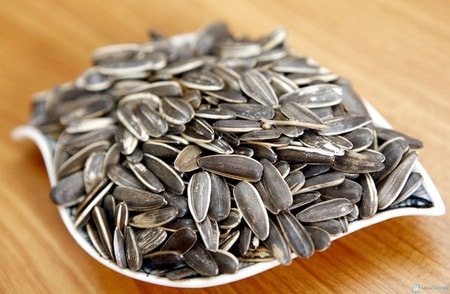
Sunflower seeds
Previously, the National Institute for Food Safety and Hygiene Testing also took 10 samples of sunflower seeds in Hanoi for testing and did not detect any aluminum sulfate or talc powder that could affect consumer health.
Thus, as of April 2nd, 2013, 34 samples of potentially hazardous sunflower seeds from 5 key provinces and cities have been monitored and tested, all yielding results that did not detect any harmful residues as warned.
To ensure food safety in the business and use of sunflower seeds, the Food Safety Administration recommends:
- Do not use any chemical preservatives or flavorings that are not on the permitted list for processing or preservation.
- Absolutely do not trade in or use sunflower seeds that are moldy, infested with insects, or lack clear origin and source.
- When buying sunflower seeds, choose those that are hygienically packaged, have a natural color (not too shiny or brightly colored), a natural aroma, and are free from mold or any unusual taste.
According to VNmedia-M