

For a green Vinh City
(Baonghean)This summer began with continuous, prolonged heatwaves. Even Vinh City, being near the sea, experienced peak outdoor temperatures exceeding 40 degrees Celsius. These days, walking down the streets and seeing people dressed in sun-protective clothing, it makes one think of a city once filled with lush greenery.
Vinh has been a Class 1 urban area for five years now. During this time, the city has undergone many positive changes, especially with one of the fastest urbanization rates in the North Central region. Vinh City has also created beautiful green spaces such as the Cua Bac flower garden, Cua Nam flower garden, Nguyen Tat Thanh Park, Ho Chi Minh Square, etc. However, the current urban green space system still does not meet the standards for coverage.
To ensure the urban coverage standards of a Class 1 city, the city assigned the Green Park Joint Stock Company the following tasks: sowing, nurturing, planting, caring for, and trading various types of shade trees, street trees, ornamental plants, and flowers; managing and maintaining flower gardens, parks, plazas, traffic islands, forest parks, and cemeteries; designing and constructing flower beds, ornamental plants, and lawns. With this task, the company has specific annual targets for planting trees. The focus is primarily on intercropping along streets and caring for and planting new lawns and ornamental plants in flower beds and median strips. During the continuous heatwaves of this summer, the company's workers have had to constantly water and care for the ornamental plants and lawns on major streets such as Le Mao Street, the Ho Chi Minh Square area, Truong Thi Street, and Lenin Boulevard...
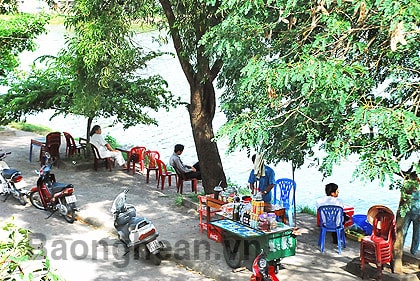
Goong Lake - a relaxing spot in the heart of Vinh City.
Despite many positive changes, Vinh City's urban green space system has not yet "kept pace" with the development trend in terms of area and urbanization speed. Mr. Nguyen Dang Lu (84 years old, living in Block 6, Truong Thi Ward) said: "In the past, Vinh City had many green trees and a small population, so it felt very airy and cool. War and floods have repeatedly destroyed the old landscape, and houses have sprung up everywhere, making it feel suffocating. There are many new roads and many new trees, but it's not like it used to be."
It is well known that, through countless ups and downs, the streets we see today have required immense effort and cultivation. However, creating a truly green city is not the responsibility of just one sector or level of government. Mr. Phan Xuan Bao, Director of Vinh City Green Park Joint Stock Company, stated: In recent years, the city has paid great attention to developing the urban green space system. This is reflected in the increasing investment in planting, maintaining, and caring for urban green spaces over the years, from 4.2 billion VND (2009) to 10 billion VND (2011) and 12 billion VND (2012).
However, a regulation for a Type 1 urban area requires 30-50 hectares for the production of trees and ornamental plants, but currently, the city's nursery area is still insufficient to meet this need. Meanwhile, urban green space planning is a mandatory component of urban planning. When constructing new urban roads, trees must be planted in conjunction with the construction of technical infrastructure.
In reality, the proportion of green space and the structure of tree planting in Vinh City are not rational. Throughout the city, 30-40% of the trees planted are unsuitable, such as paulownia trees and acacia trees. Those responsible have explained that this is due to the changes in a rapidly developing city, and that the previously planted trees, both those planted by the State and partly by the people, were primarily fast-growing trees planted under various programs and projects, thus not conforming to regulations and standards.
Meanwhile, funding for planting, caring for, and protecting trees is limited, and there is a lack of mechanisms and policies to encourage all economic sectors and the public to participate. In addition, tree management is lax, with indiscriminate tree felling and pruning reducing tree cover and survival rates in the city. There was a time when, under the cover of darkness, some people secretly stripped the bark from milkwood trees on some deserted streets to sell to traditional medicine shops or to use as waterproofing resin in construction projects, seriously affecting the trees planted in the area.
To develop urban greenery, it is thought that in addition to budget funds, Vinh City needs to mobilize resources from the people. To achieve this, there must be preferential mechanisms and policies to encourage investment; public disclosure of planning and lists of projects seeking investment; effective investment promotion; and integration of urban park and green space projects with other profitable projects. Furthermore, it is necessary to strengthen urban green space management in terms of planting, maintaining, and protecting trees. At the same time, people should be encouraged and guided to actively participate in planting, caring for, and protecting trees in front of their households and along streets, ensuring compliance with planning and regulations on approved tree species. The government should also implement a policy of social mobilization to encourage businesses and philanthropists to invest in planting trees. This will contribute to environmental protection, ensure urban green space standards, and significantly help maintain a green Vinh City.