

Things to avoid when growing houseplants indoors.
No one wants their houseplants to die, but sometimes people unknowingly kill them with their care.
When growing houseplants, you need to know how to create a natural weather environment for them. Therefore, you need to spend time initially experimenting with the type of plant you intend to grow, and then adjust the environment to help the plant adapt to those living conditions.
The most important thing you can do yourself is to learn everything related to the necessary requirements for plant growth and development, and then find ways to create and provide the necessary conditions for plant growth. If you notice any abnormalities in your plants, quickly find out the reason and find ways to fix it to help them grow again. Below are things to avoid:
1. Overwatering
This is the first thing to avoid if you don't want to harm your plants. Many people don't really know how to care for their plants; they just water them whenever they have time. Plants absorb air through their roots, and if the soil is always wet, air absorption becomes difficult. Furthermore, overwatering will cause the roots to rot quickly, leading to the plant's death.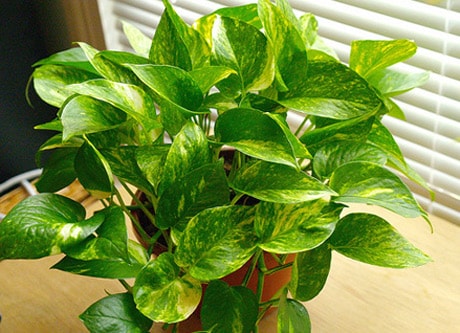
That's why you shouldn't water your plants passively. Check if the soil below the surface (about 1 inch (2.54 cm) below the surface) is dry; if it is, then water. When you do water, water thoroughly, until you can see water draining from the drainage holes at the bottom of the pot. This is a useful check not only for those who rarely water their plants, but also for those who are always busy watering them.
Do not allow plants to be submerged in water. If you want to increase the humidity for your plants by placing them on a tray of water containing pebbles, make sure the water level is lower than the drainage holes at the bottom of the pot.
2. Watering at the wrong time and in the wrong way.
When watering your plants, only water moderately to ensure the soil has sufficient moisture, but avoid letting the soil dry out completely, as this will increase the salt content in the soil and affect plant growth. You may not notice this until you start seeing slightly white patches appearing on the soil surface or around the edges of the pot. At least once a month, water your potted plants thoroughly; doing so will allow excess salt to drain through the drainage holes at the bottom of the pot.
3. Humidity
Many houseplants are constantly lacking the necessary moisture, especially in winter. The first sign you can recognize is through the color of the tips of the leaves. If you see a brownish tint on the tips of the leaves, it means the plant is lacking water; it will wilt and shed its leaves. This coloration on the tips of the leaves is a sign that the plant is lacking the necessary moisture.
Lack of humidity is also a cause of plant death, and the humidity change from summer to winter is significant. In the summer, if you leave your plants outdoors during the day and then bring them indoors, the humidity change is even more pronounced. In this case, you need to bring your plants indoors before the outdoor temperature rises. After bringing the plants inside, you should leave the windows open; this will help the plants avoid some of the sudden humidity changes between the outside and inside.
To ensure your plants receive the necessary moisture, you first need to determine the appropriate watering level for your plants. If your plants tend to dry out, you can increase humidity by placing a tray of water containing pebbles at the bottom of the pot, making sure to fill it only up to the drainage hole. Do not completely submerge the pot, as this can cause various problems. You can also increase humidity by covering the plants during the day. If you have many houseplants, you can also invest in a humidifier to ensure proper humidity for your plants. Besides ensuring humidity for your plants, a humidifier is also beneficial for your leather and wooden furniture.
4. Lack of light
If houseplants don't get enough light, they'll look paler than those that do. You can tell this by seeing that the new leaves are smaller than usual. Determining the amount of light houseplants need is just as important as estimating how much water they need. Simply put, you should take the time initially to understand what light conditions your plants will thrive in.
However, for most houseplants, you shouldn't place them in direct sunlight, such as near a window. The sun's rays will burn the leaves. Only plants that prefer bright light, like primroses, gardenias, and geraniums, can be placed in direct sunlight. Plants that don't need much light, like honeysuckle, are best placed in a location without direct sunlight.
For other types of plants, you need to pay attention to how much light each type absorbs. Generally, east and west-facing windows are the preferred directions for placing indoor potted plants, but if your house receives direct sunlight, it's best not to place your plants near a window, as that's where they get the most sunlight to thrive. Always be mindful of any unusual occurrences with your plants. If you notice signs that your plants aren't getting enough light, move them to a location where they can receive more sunlight.
5. Keeping plants in an excessively cold environment.
For tropical plants or flowering plants, regularly placing them near doorways or windows with limited privacy is not good for them; it's like leaving them outdoors without any protection. Just like humans, most indoor plants thrive in environments with appropriate humidity, which is understandable. Cool evening temperatures are ideal for indoor plant growth. Indoor plants cannot regulate themselves when it gets too cold; you'll first notice leaf drop and the plant looks dehydrated. That's when you need to increase the temperature. If indoor plants are exposed to cold for too long, they will quickly die.
6. Exposing plants directly to heat.
Placing plants too close to or in direct contact with heat sources, such as near heaters or ducts, not only burns the plants but also causes them to dehydrate quickly. Many people think it's good to place plants in warm areas, but if they are placed too close, exposing them directly to heat like near heaters or ducts, it will not only burn the plants but also cause them to lose water rapidly. When you water the soil, even the leaves will quickly dry out. If the temperature in your room is low and you keep plants indoors, you should increase the warmth by placing them away from heating devices or isolating them from direct heat sources with a thick board.
7. Neglecting or ignoring pest control issues.
Pests can reproduce very quickly. There's no way to control their numbers, so you must pay close attention to signs on your plants to respond promptly. Flies, aphids, mealybugs, and scale insects can multiply on plants within days, causing damage, and in the worst case, if these pests persist, the plant will quickly die. Look for discolored or curled leaves, and check if your plants become soft and droopy even after watering.
Here are some common types of insects to watch out for:
Aphids: Pay attention to the joints between branches, especially on plants with dense foliage. These small aphids cause damage by sucking the plant's nutrients. Leaves infested with aphids will have yellowish spots on their surface. As the infestation worsens, the leaves will turn completely yellow, gradually becoming brittle and easily broken, ultimately leading to the plant's death.
To control and eliminate mites, you need to spray your crops with pesticides according to the manufacturer's instructions.
Mealybugs: These look like fluffy white spots and usually cling to the joints of leaf stalks, and can also be seen along the stem. They reproduce, grow, and gradually suck all the nutrients from the plant. When plants are infested with mealybugs, they appear to dry out even when watered. They are very difficult to eradicate. If your plants are infested with mealybugs, cut off the affected branches and remove them. You can also use a cloth dipped in alcohol to dab the mealybugs. If the plant is heavily infested, it's best to remove it. Keeping it won't help because the mealybugs will multiply very quickly.
Scale insects: These are small insects that cling to the stems, stalks, and leaf petioles of plants. They are covered by a hard, oval-shaped shell. Like mealybugs, they gradually suck the nutrients from the plant, weakening it and preventing it from surviving. Also like mealybugs, scale insects are difficult to remove. Pesticides cannot penetrate their hard outer shell. Sometimes, you can use your fingernail to pry them off the plant. For young scale insects, which crawl without their outer shell to find a place to attach, you can use pesticides to spray and kill them.
Aphids: These look like small green, white, yellow, or black spots covering the entire surface of your plants. Aphids reproduce and multiply very quickly; they can infest your plants in just a few days. Aphids are soft-bodied insects, so they can be easily eradicated by vigorously watering the plants or spraying insecticides repeatedly. However, these insects are very persistent, so you need to be patient to eliminate them.
8. The roots are spreading out too much for the size of the pot.
At some point, as the plant grows, its roots become overgrown and intertwined inside the pot, randomly restricting its own growth. At this stage, the plant tends to dry out faster than usual because the number of extra roots is too much for the soil. This is true for any potted plant; sooner or later, the roots will grow excessively inside the pot. When this happens, the pot becomes too small to accommodate the plant because of the overgrown roots. Leaving it like this will inadvertently limit the plant's growth.
If you notice your plants drying out faster than usual, it's a sign that an excessive number of roots are growing inside the pot. The problem is simple: too many roots mean there isn't enough soil to nourish the plant and regulate water levels.
It's easy to fix this problem: simply repot your plant into a new pot that's about 1-2 inches (2.54-5.08 cm) larger than its old pot. Be careful not to try to repot it into a pot that's too large, as an oversized pot will keep the roots constantly wet.
According to Sinhvatcanh - LY