

Gold prices increased by 50,000 VND per tael.
Currently, the price of gold in Vietnam is 42.30 million VND, while the world price is 1,435.45 USD/oz.
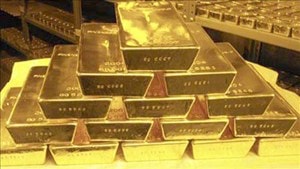
Illustrative image
At the opening of trading this morning, the price of gold in Vietnam increased by 50,000 VND per ounce compared to the closing price of yesterday's session.
According to the Saigon Jewelry Company's listing, after the increase, the buying price of SJC gold rose to 42.00 million VND/ounce. The selling price is 42.30 million VND/ounce.
In the Hanoi market, SJC gold is listed at 42.00 – 42.32 million VND/ounce (buying price – selling price).
The spread between buying and selling prices of gold in the domestic market is currently at 300,000 VND per tael.
The current world gold price (according to Vietnam time) continues to rise by $7/oz compared to earlier this morning, bringing the world gold price to $1,435.45/oz.
According to the exchange rate at Vietcombank, the world gold price is currently equivalent to 36.21 million VND/ounce. The domestic gold price is 6.09 million VND/ounce higher than the world gold price.
At 7:30
According to Kitco News, at the close of trading last night in the US market, world gold prices on the Comex exchange rose across the board. Specifically, the price of gold for June delivery increased by $18.5 to $1,427.3/oz; spot gold increased by $14.2/oz to $1,428.2/oz.
Converting to Vietnamese currency using the USD exchange rate at Vietcombank of 20,945 VND/USD, the world gold price is currently 36.03 million VND/ounce.
According to Kitco News, the surge in gold prices last night was driven by strong global demand for physical gold, particularly in Asia, following last weekend's price drop. This week, there have been reports of gold bullion shortages in some countries, and gold retailers have had to charge a premium on spot gold prices.
External market indicators also had a more optimistic impact on gold, with a weaker US dollar and sharply rising crude oil prices.
The recent phenomenon of investors selling off gold in the short term has led to them buying it back at higher prices. Simultaneously, several economic developments have eroded investor confidence in the financial and economic health of the EU. In particular, Germany's business confidence index fell to 104.4 points in April from 106.7 points in March, further highlighting the EU's economic difficulties.
More importantly, the decline in bond yields in the US and Germany, and the low government bond yields in Japan, suggest that the monetary policies of the US Federal Reserve, the European Central Bank, and the Bank of Japan will continue to be aggressive in stimulating the economy, at least for the next few months. This will be a major factor driving price increases in commodity markets, including precious metals.
According to (vov.vn) - LT