
Deceptive practices regarding "Made in Vietnam" products.
Recently, fashion items "Made in Vietnam" have gradually gained the trust of consumers, but along with that, countless shops displaying "Made in Vietnam" signs have sprung up everywhere.
Recently, fashion items "Made in Vietnam" have gradually gained the trust of consumers, but along with that, countless shops displaying "Made in Vietnam" signs have sprung up everywhere.
Among them, there are quite a few shops that mix in counterfeit and low-quality goods, and even engage in deceptive pricing practices.
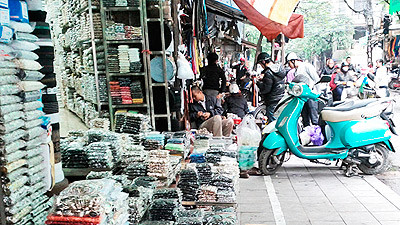
Labels of famous brands are sold in abundance on Hang Bo Street.
The era of "Made in Vietnam" products.
Recently, due to domestic garment businesses focusing on the domestic market, fashion items have become more diverse in design, and product quality has improved significantly. However, the reality is that many stores, even without selling Vietnamese products, still display "Made in Vietnam" signs to increase prices and attract customers. This has led to many consumers being deceived.
Ms. Hoang Hong Hanh, an employee at an advertising company, said that for the past two years, she has chosen to buy "Made in Vietnam" fashion products for her whole family, instead of famous foreign brands. Because of their beautiful designs and reasonable prices, she trusts the products sold in "Made in Vietnam" stores because the materials are better and safer than those from China.
However, according to Ms. Hanh, many stores are taking advantage of customers' preference for Vietnamese goods by mixing in Chinese-made products, cutting and replacing labels, and then advertising them to customers as defective or "label-cut" goods from famous foreign brands produced in Vietnam.
“Not only is there ambiguity regarding quality, design, and brand, but the prices of these products also vary from place to place. Last weekend, I bought a Zara T-shirt at a ‘Made in Vietnam’ store on Dinh Liet Street for 220,000 VND. Yet, the very next day, I saw an identical shirt, in terms of style and quality, being sold at another ‘Made in Vietnam’ store for 150,000 VND,” Ms. Hanh recounted.
In addition, fashion items from famous brands like Zara, Mango, H&M, etc., sold in these stores are also priced affordably for most consumers. For example, a pair of H&M women's jeans costs between 280,000 and 350,000 VND/piece, and a Mango shirt costs between 220,000 and 320,000 VND/piece…
If shop owners "transform" Chinese products or "copy" brand designs, then rework them and attach "authentic" labels, then put up "Made in Vietnam" signs, consumers find it difficult to detect the deception. Therefore, many customers who buy these fake "Made in Vietnam" fashion items from some shops experience problems such as torn seams, altered fabric after washing, shrinkage, and fading.
One investment, four times the profit.
When we inquired about the origin of the "Made in Vietnam" products, the shop owners explained that these clothes were genuine items from famous brands manufactured in Vietnam, but due to defects, they had family members working in garment factories and were able to "collect" this source of goods.
Therefore, they have to cut off the labels so that if they are inspected, it's easier to evade detection, and customers can still recognize that it's a genuine product. Besides stores with flashy signs, many online sellers have also appeared with catchy advertisements such as "100% genuine 'Made in Vietnam' products, sold at original prices," along with addresses and contact numbers. Customers can view the products on the website or visit the store in person.
Ms. Cao Quynh Loan, owner of a fashion brand specializing in designing trousers, shirts, and dresses for office workers, commented that because domestic consumers are very interested in Vietnamese export garments, many vendors have been selling counterfeit designs, even mixing in low-quality goods to sell to customers. Many shop owners even arbitrarily display "Made in Vietnam" signs, using the brand names of famous companies on their domestically manufactured products.
"One investment, four times the profit," they only have to sew labels and tags onto these products, so if customers aren't careful, they can easily be deceived. And if domestic branded goods manufacturers and relevant authorities don't soon intervene to stop this situation, in the very near future, Vietnamese consumers will lose faith in "Made in Vietnam" brands.
According to (anninhthudo - PH)