

Quality management of aquaculture feed: An urgent need.
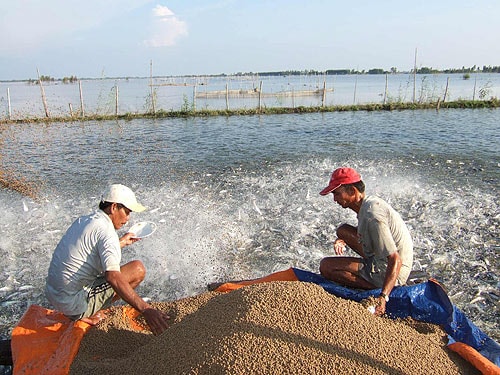
KTNT - Although accounting for 65% - 80% of the production cost of aquaculture, Vietnam's aquaculture feed processing industry is currently heavily dependent on foreign enterprises. Quality control is neglected, and there are many loopholes in management policies. Finding a solution to the problem of aquaculture feed quality is an urgent necessity.
 |
According to a report by the General Department of Fisheries, the number of factories and the production volume of aquaculture feed in the country have increased significantly in recent years. Currently, there are approximately 130 aquaculture feed factories nationwide, producing over 4,500 tons of products, and 110 supplementary feed production facilities with 311 products in circulation, totaling about 3.7 million tons per year.
The proliferation of feed production plants, coupled with a lack of strict management mechanisms, a shortage of modern quality analysis systems, and inconsistent and untimely analysis compared to management requirements, has led to the continued circulation of low-quality aquaculture feed on the market, causing significant losses for farmers. According to Deputy Minister of Agriculture and Rural Development Nguyen Thi Xuan Thu, substandard aquaculture feed slows fish and shrimp growth and results in high feed wastage. While Thai farmers only need 1.1 kg of feed to produce 1 kg of shrimp, the same product in Vietnam requires 1.3 kg. This is why farmers' profits are significantly reduced.
Back in 2008, the Dong Thap Fisheries Department inspected 131 samples of aquaculture feed and found 56 samples that did not meet the declared protein quality standards, accounting for 42.7%. The Aquaculture Testing, Inspection, and Certification Center also inspected 39 aquaculture feed samples and found 6 samples that did not meet quality standards (15%). On average, from 2008 to the present, the rate of aquaculture feed quality violations has been quite high, exceeding 20% per year. The main violations involve failing to meet protein, lipid, or other standards such as fiber and ash content. Currently, there are approximately 5,000 mixed feed products, 3,000 supplementary feed products, and about 3,000 environmental treatment products circulating in the market; however, authorities have only been able to inspect about 100 products. This is like "throwing stones into a pond full of weeds" and also explains why the number of victims of substandard food products continues to increase.
It's also noteworthy that, due to high profits, many businesses and production facilities are "willing" to pay fines to continue violating regulations. In particular, if a distributor is "unfortunately" penalized by authorities for selling substandard products, many companies are even willing to pay the fine, which is "insignificant," to "encourage" the distributor to continue selling. This situation has led to the open sale of substandard aquaculture feed products.
Many believe that one of the reasons for the continued violations in the declaration of aquaculture feed quality is the insufficient deterrent effect of the penalties. Regarding the business of aquaculture feed and veterinary drugs, Mr. Vo Thanh Hai, Chief Inspector of the Bac Lieu Department of Agriculture and Rural Development, stated: “According to current regulations, the penalties for quality violations are low, so businesses are willing to pay the fines and are also willing to continue violating because the profits from trading counterfeit goods are too high.” Therefore, to combat the production and sale of counterfeit, imitation, or substandard veterinary drugs and aquaculture feed, the Bac Lieu Department of Agriculture and Rural Development will publicly announce the identities of the violating businesses through mass media outlets to encourage consumer boycotts.
While decrees and circulars related to the quality control of animal feed have been issued, there is still no specific law dedicated to the quality of aquatic feed. Besides the lack of relevant regulations and the slow and inconsistent implementation across many localities, another major challenge is the limited equipment and the inadequate skills of local officials, making it difficult to detect violations promptly and effectively without modern tools. For example, in 2012 in Bac Lieu, the Inspectorate of the Department of Agriculture and Rural Development collected samples of feed and biological products for analysis, and nearly 50% of them failed to meet standards. However, for districts, conducting sample analysis is difficult due to insufficient resources, especially funding. This loophole has allowed many products, advertised with flowery language, to flood rural areas, causing significant losses to farmers. According to Deputy Minister Nguyen Thi Xuan Thu, we currently have few quality analysis laboratories that meet standards (ISO/IEC; 17025) and testing laboratories designated by the Ministry of Agriculture and Rural Development. Therefore, analysis results are slow, inaccurate, and have high error rates, resulting in different laboratory tests yielding different results for the same aquaculture feed sample.
One can also certainly doubt the objectivity of the test results when samples sent to the testing agency all bear the name of the manufacturing plant or a specific brand, and naturally, these samples meet the standards. This explains why, in 2010, the Department of Aquaculture tested 999 samples but found no violations, while the Center for Aquaculture Testing and Certification tested 39 samples and found 6 samples in violation of quality standards.
Although feed is an extremely important input factor determining the quality of aquatic products, there are currently no technical standards for aquatic feed, and therefore it does not meet the requirements for conformity certification under the Law on Product and Goods Quality and the Law on Standards and Technical Regulations, as well as specialized legal documents such as Decree 08/2010/ND-CP and Circular No. 66/2011/TT-BNN.
In fact, the quality of aquaculture feed is currently only certified by the Testing, Inspection, and Certification Center under the General Department of Fisheries. However, Mr. Nguyen Huy Dien, Deputy Director General of the General Department of Fisheries (Ministry of Agriculture and Rural Development), stated that imported aquaculture feed has been quite strictly controlled since the 2000s. Accordingly, all types of feed imported into Vietnam must be listed in the permitted circulation catalog; if it is a new product, it must undergo testing; if it is not yet on the catalog, it must go through the registration procedure. Imported aquaculture feed is also subject to quality checks, must have a test certificate meeting the prescribed standards, and based on this test certificate, the General Department of Fisheries issues a quality certification and allows it to be put into business and use.
"However, to further improve the quality control of animal feed in general, and aquatic feed in particular, we need to strengthen quality checks and verify whether products are on the approved list. Furthermore, we need to inspect, control, and enhance the capacity of testing laboratories," Mr. Dien emphasized.
Sharing Mr. Dien's viewpoint, Mr. Le Ba Lich, Chairman of the Vietnam Livestock Association, stated: "We do not lack standards or regulations in the inspection and quarantine of animal feed quality; the important thing is whether we implement them seriously or not. Documents and regulations exist, but if those implementing them deliberately go against the law for short-term gains, we can never control it. Therefore, in my opinion, the first and most important solution is the serious attitude of all levels of management."
Mr. Lich analyzed: "In developed countries, the sampling of imported products is carried out extremely rigorously. Not only do they have skilled engineers and technicians, but they also have modern machinery and facilities for animal feed research that are properly and effectively invested in." These are also areas where our animal feed production industry is lacking and weak.
An official from a research and testing center confided: "It's not that we don't understand the safety quarantine principles for all types of feed, but given the limited resources available for research, we are powerless. We have a lab, but most of the sample analysis equipment is outdated and can only detect a few common antibiotic residues, while fraudulent practices in animal feed production are becoming increasingly sophisticated and widespread."
Mr. Vo Van Trac, Vice President of the Vietnam Horticultural Association and Vice President of the Vietnam Fisheries Association, believes that it will take time to reduce the percentage of substandard feed from the current 20% to the 0.6-9.2% stipulated in current regulations. Explaining this, Mr. Trac stated that sampling and testing of feed is not yet done regularly due to the time-consuming nature of the limited number of qualified quality analysis laboratories. He also did not rule out the possibility that the quality of aquaculture feed has decreased partly because the product passes through many intermediaries before reaching farmers. "As far as I know, the quality of aquaculture feed is tested at the factories and meets standards, but after passing through distributors and reaching aquaculture farmers, the quality has already decreased by 20-30%," Mr. Trac analyzed.
One effective approach being adopted by many businesses is to produce their own aquaculture feed, such as Vinh Hoan, Minh Phu, Hung Vuong, and Go Dang. These companies have built production plants to save on the high cost of purchasing feed, thereby reducing production costs and increasing competitiveness. "Businesses that build their own aquaculture feed production plants can control both costs and quality, trace the origin of the feed to avoid prohibited substances imposed by importing countries, and reduce costs by 5-7%," a representative from Go Dang Company stated.
While aquaculture feed is only one step in the aquaculture process, it largely determines product quality. Therefore, if we don't have long-term solutions to ensure feed quality, this crucial industry will certainly continue to "shoot itself in the foot" when trying to penetrate potential global markets.
According to data from the Department of Animal Husbandry (Ministry of Agriculture and Rural Development), from July 1, 2012 to May 31, 2013, authorized units (including Vinacert Certification and Inspection Joint Stock Company) inspected 20,329 shipments of imported animal feed with a total volume of 5.92 million tons (worth 3 billion USD), including high-protein feed, high-energy feed, supplementary feed, and tens of thousands of tons of hay from 63 countries and territories worldwide. Vinacert Certification and Inspection Joint Stock Company alone inspected over 30% of these shipments and found that 25.3% did not meet quality requirements.
Through inspections, 43 shipments were found to be substandard (nearly 3,000 tons), including 18 shipments with quality below the declared standards, 17 shipments violating regulations on safety indicators in the corresponding technical standards, and 8 shipments that were expired or nearing their expiration date but were still imported into Vietnam by businesses.
Quality management of aquaculture feed: An urgent need.
12/11/2013 - 03:27:00
KTNT - Although accounting for 65% - 80% of the production cost of aquaculture, Vietnam's aquaculture feed processing industry is currently heavily dependent on foreign enterprises. Quality control is neglected, and there are many loopholes in management policies. Finding a solution to the problem of aquaculture feed quality is an urgent necessity.
According to a report by the General Department of Fisheries, the number of factories and the production volume of aquaculture feed in the country have increased significantly in recent years. Currently, there are approximately 130 aquaculture feed factories nationwide, producing over 4,500 tons of products, and 110 supplementary feed production facilities with 311 products in circulation, totaling about 3.7 million tons per year.
The proliferation of feed production plants, coupled with a lack of strict management mechanisms, a shortage of modern quality analysis systems, and inconsistent and untimely analysis compared to management requirements, has led to the continued circulation of low-quality aquaculture feed on the market, causing significant losses for farmers. According to Deputy Minister of Agriculture and Rural Development Nguyen Thi Xuan Thu, substandard aquaculture feed slows fish and shrimp growth and results in high feed wastage. While Thai farmers only need 1.1 kg of feed to produce 1 kg of shrimp, the same product in Vietnam requires 1.3 kg. This is why farmers' profits are significantly reduced.
Back in 2008, the Dong Thap Fisheries Department inspected 131 samples of aquaculture feed and found 56 samples that did not meet the declared protein quality standards, accounting for 42.7%. The Aquaculture Testing, Inspection, and Certification Center also inspected 39 aquaculture feed samples and found 6 samples that did not meet quality standards (15%). On average, from 2008 to the present, the rate of aquaculture feed quality violations has been quite high, exceeding 20% per year. The main violations involve failing to meet protein, lipid, or other standards such as fiber and ash content. Currently, there are approximately 5,000 mixed feed products, 3,000 supplementary feed products, and about 3,000 environmental treatment products circulating in the market; however, authorities have only been able to inspect about 100 products. This is like "throwing stones into a pond full of weeds" and also explains why the number of victims of substandard food products continues to increase.
It's also noteworthy that, due to high profits, many businesses and production facilities are "willing" to pay fines to continue violating regulations. In particular, if a distributor is "unfortunately" penalized by authorities for selling substandard products, many companies are even willing to pay the fine, which is "insignificant," to "encourage" the distributor to continue selling. This situation has led to the open sale of substandard aquaculture feed products.
Lack of legal framework
Many believe that one of the reasons for the continued violations in the declaration of aquaculture feed quality is the insufficient deterrent effect of the penalties. Regarding the business of aquaculture feed and veterinary drugs, Mr. Vo Thanh Hai, Chief Inspector of the Bac Lieu Department of Agriculture and Rural Development, stated: “According to current regulations, the penalties for quality violations are low, so businesses are willing to pay the fines and are also willing to continue violating because the profits from trading counterfeit goods are too high.” Therefore, to combat the production and sale of counterfeit, imitation, or substandard veterinary drugs and aquaculture feed, the Bac Lieu Department of Agriculture and Rural Development will publicly announce the identities of the violating businesses through mass media outlets to encourage consumer boycotts.
While decrees and circulars related to the quality control of animal feed have been issued, there is still no specific law dedicated to the quality of aquatic feed. Besides the lack of relevant regulations and the slow and inconsistent implementation across many localities, another major challenge is the limited equipment and the inadequate skills of local officials, making it difficult to detect violations promptly and effectively without modern tools. For example, in 2012 in Bac Lieu, the Inspectorate of the Department of Agriculture and Rural Development collected samples of feed and biological products for analysis, and nearly 50% of them failed to meet standards. However, for districts, conducting sample analysis is difficult due to insufficient resources, especially funding. This loophole has allowed many products, advertised with flowery language, to flood rural areas, causing significant losses to farmers. According to Deputy Minister Nguyen Thi Xuan Thu, we currently have few quality analysis laboratories that meet standards (ISO/IEC; 17025) and testing laboratories designated by the Ministry of Agriculture and Rural Development. Therefore, analysis results are slow, inaccurate, and have high error rates, resulting in different laboratory tests yielding different results for the same aquaculture feed sample.
One can also certainly doubt the objectivity of the test results when samples sent to the testing agency all bear the name of the manufacturing plant or a specific brand, and naturally, these samples meet the standards. This explains why, in 2010, the Department of Aquaculture tested 999 samples but found no violations, while the Center for Aquaculture Testing and Certification tested 39 samples and found 6 samples in violation of quality standards.
Enhance inspection capacity and increase penalties.
Although feed is an extremely important input factor determining the quality of aquatic products, there are currently no technical standards for aquatic feed, and therefore it does not meet the requirements for conformity certification under the Law on Product and Goods Quality and the Law on Standards and Technical Regulations, as well as specialized legal documents such as Decree 08/2010/ND-CP and Circular No. 66/2011/TT-BNN.
In fact, the quality of aquaculture feed is currently only certified by the Testing, Inspection, and Certification Center under the General Department of Fisheries. However, Mr. Nguyen Huy Dien, Deputy Director General of the General Department of Fisheries (Ministry of Agriculture and Rural Development), stated that imported aquaculture feed has been quite strictly controlled since the 2000s. Accordingly, all types of feed imported into Vietnam must be listed in the permitted circulation catalog; if it is a new product, it must undergo testing; if it is not yet on the catalog, it must go through the registration procedure. Imported aquaculture feed is also subject to quality checks, must have a test certificate meeting the prescribed standards, and based on this test certificate, the General Department of Fisheries issues a quality certification and allows it to be put into business and use.
"However, to further improve the quality control of animal feed in general, and aquatic feed in particular, we need to strengthen quality checks and verify whether products are on the approved list. Furthermore, we need to inspect, control, and enhance the capacity of testing laboratories," Mr. Dien emphasized.
Sharing Mr. Dien's viewpoint, Mr. Le Ba Lich, Chairman of the Vietnam Livestock Association, stated: "We do not lack standards or regulations in the inspection and quarantine of animal feed quality; the important thing is whether we implement them seriously or not. Documents and regulations exist, but if those implementing them deliberately go against the law for short-term gains, we can never control it. Therefore, in my opinion, the first and most important solution is the serious attitude of all levels of management."
Mr. Lich analyzed: "In developed countries, the sampling of imported products is carried out extremely rigorously. Not only do they have skilled engineers and technicians, but they also have modern machinery and facilities for animal feed research that are properly and effectively invested in." These are also areas where our animal feed production industry is lacking and weak.
An official from a research and testing center confided: "It's not that we don't understand the safety quarantine principles for all types of feed, but given the limited resources available for research, we are powerless. We have a lab, but most of the sample analysis equipment is outdated and can only detect a few common antibiotic residues, while fraudulent practices in animal feed production are becoming increasingly sophisticated and widespread."
Mr. Vo Van Trac, Vice President of the Vietnam Horticultural Association and Vice President of the Vietnam Fisheries Association, believes that it will take time to reduce the percentage of substandard feed from the current 20% to the 0.6-9.2% stipulated in current regulations. Explaining this, Mr. Trac stated that sampling and testing of feed is not yet done regularly due to the time-consuming nature of the limited number of qualified quality analysis laboratories. He also did not rule out the possibility that the quality of aquaculture feed has decreased partly because the product passes through many intermediaries before reaching farmers. "As far as I know, the quality of aquaculture feed is tested at the factories and meets standards, but after passing through distributors and reaching aquaculture farmers, the quality has already decreased by 20-30%," Mr. Trac analyzed.
One effective approach being adopted by many businesses is to produce their own aquaculture feed, such as Vinh Hoan, Minh Phu, Hung Vuong, and Go Dang. These companies have built production plants to save on the high cost of purchasing feed, thereby reducing production costs and increasing competitiveness. "Businesses that build their own aquaculture feed production plants can control both costs and quality, trace the origin of the feed to avoid prohibited substances imposed by importing countries, and reduce costs by 5-7%," a representative from Go Dang Company stated.
While aquaculture feed is only one step in the aquaculture process, it largely determines product quality. Therefore, if we don't have long-term solutions to ensure feed quality, this crucial industry will certainly continue to "shoot itself in the foot" when trying to penetrate potential global markets.
According to VOV