

Lá giang (a type of medicinal herb) is used to treat bone and joint pain.
The leaves of the Giang plant have a sour taste and a cooling nature; they enter the liver meridian; and have the effects of clearing heat, reducing inflammation, killing bacteria, and quenching thirst. The stem of the plant has the effects of clearing heat and detoxifying, promoting diuresis, and reducing swelling...
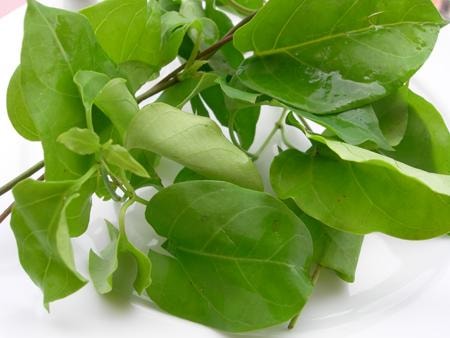
Sour-soup creeper, also known as river-leaf creeper, is a species of plant belonging to the Apocynaceae family, native to Southeast Asia, and used in medicine and food. Its English name is Sour-soup creeper or River-leaf creeper.
This is a climbing vine commonly found along rivers and streams in Southeast Asia, its leaves used to make sour soup. The plant is distributed in China, Laos, Cambodia, and Vietnam.
 |
In Vietnam, the plant grows in many places in the central provinces and the Mekong Delta. In the South, the Giang leaf plant often grows wild along rivers and canals, in orchards, and is used as a vegetable and medicine. Currently, the Giang leaf plant is cultivated specifically as a source of clean, specialty vegetables by some farmers. People in the South use it to make sour soup and prepare many nutritious dishes such as stir-frying it with chicken, freshwater fish, beef, etc. Giang leaf sour soup is a delicious and nutritious dish.
According to Traditional Chinese Medicine, the leaves of the Giang plant have a sour taste and a cooling nature; they enter the liver meridian; and have the effects of clearing heat, reducing inflammation, killing bacteria, and relieving thirst. The stem of the plant has the effects of clearing heat and detoxifying, promoting diuresis, reducing swelling, relieving thirst, and dissolving stones.
The Piper betel plant is a folk medicine used to treat indigestion, bloating, stomach pain, and joint pain. Externally, it is used to treat boils, sores, and itchy skin. It is also used as a sour-tasting ingredient in cooking (fish, meat).
The stems and leaves of the Giang plant are used to treat urinary stones, urinary tract infections, and chronic nephritis. In particular, it is also effective in treating urinary tract infections with stones, chronic nephritis, enteritis, rheumatism, and swelling.
Biologically, the liquid extract of *Lagerstroemia indica* leaves shows no toxicity and has the effect of inhibiting 9 types of bacteria, and reducing acute inflammation both when taken orally and injected. The parts used for medicinal purposes are the stem, roots, and leaves.
Here are some ways to treat illnesses using the *Lá Giang* plant.
* Treating urinary tract infections and kidney stones:100-200g of the stem (or leaves) of the Giang plant. Boil and drink several times a day (according to Vietnamese Traditional Medicine) or 10-20g of the stem and leaves of the Giang plant. Steep and drink as a substitute for tea.
* Treating indigestion and bloating:30-50g of Giang leaves. Boil and drink the decoction. This remedy, taken continuously, can treat kidney stones and urinary tract infections.
* Treats bone and joint pain, and stomach pain.Use 20-40g of roots or leaves. Brew into a decoction and drink; often combined with other pain-relieving herbs.
* Treating boils, skin rashes, and wounds:Wash the fresh leaves, crush them, and apply the paste to the wound.
* Flying fish cooked with Giang leaves (beneficial for replenishing deficiencies, dispelling wind and dampness, strengthening bones and muscles; preventing and treating urinary tract infections with symptoms of frequent and painful urination):3-5 flying fish, 100g of sour leaf (Lá Giang). Scale and fin the flying fish, cut into 2-3 pieces; wash and crush the sour leaves. Bring water to a boil, add the fish, then add the sour leaves and seasoning powder (salt, MSG). You can also add a handful of rice to thicken the soup. When removing from the heat, add a crushed chili pepper.
* Treating cystitis with chicken broth and Piper betel leaves (uses to clear heat and detoxify, for cases of blood and qi deficiency, rheumatic pain caused by wind, cold and dampness; postpartum hemorrhage, leucorrhea, hemorrhagic dysentery syndrome, hemorrhoids with bleeding, and general weakness):600g chicken, 100g sour leaf (Lá Giang), seasonings to taste. Wash the chicken, drain, and chop into pieces; wash the sour leaves (Lá Giang Tenderly).
Add the chicken to 1 liter of water, bring to a boil, skim off the foam, and add fish sauce and seasonings to taste. When the chicken is tender, add the crushed giang leaves and bring to a boil; before removing from the heat, add a little fresh herbs to taste.
According to Dr. Hoang Xuan Dai - Agriculture