

Will robots soon have brains like humans?
Humanity is about to enter a new technological era in which computers and robots can sense, act, and even think for themselves using a network similar to our own brains.
 |
| The first computer chip inspired by the human brain is expected to be unveiled this year. Photo: IBM |
Experts at Google and Facebook have been applying principles of neuroscience to develop artificial brains in the hope of solving their data problems. Now, Qualcomm, based in San Diego, USA, is also planning to launch its first commercial chip inspired by the human brain.
The New York Times reports that Qualcomm's special computer chip is expected to launch this year. It will be capable of automatically performing tasks that currently require sophisticated programming, as well as simulating human perception, actions, and thinking.
In practice, this means the new type of chip can avoid and tolerate errors, significantly improving everything from facial and voice recognition to navigation and planning. In the long term, this technology will pave the way for the emergence of intelligent systems that can perform tasks in the same way, or even better, than humans.
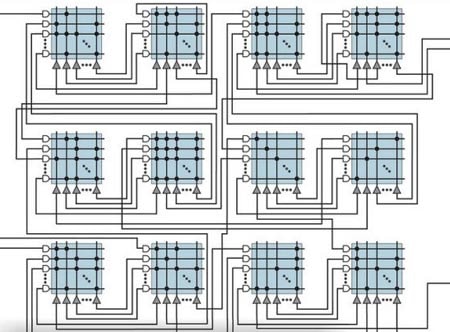
This type of chip is currently being developed by a company under IBM's ownership in collaboration with Qualcomm, in the SyNAPSE project, which has been underway since 2009. It utilizes a network of interconnected and configurable "neural synapse cores." The chip's memory acts like synapses in the brain, while the microprocessors function like neurons and information transmission is like nerve fibers.
The chips have been designed to replicate and improve the brain's ability to respond to biosensors and analyze massive amounts of data from multiple sources simultaneously.
IBM recently announced a new programming architecture for this chip, allowing developers to design applications after the chip is released this year.
According to vietnamnet