

The ice age is about to return to Earth.
A new ice age is on the verge of breaking in Europe, after scientists warned of a significant decrease in solar activity.
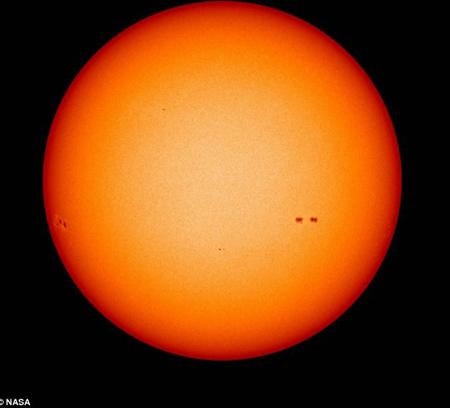 |
This image of the Sun was captured by a NASA telescope.
The number of gas explosions on the Sun's surface should have peaked during its 11-year cycle. However, the number of explosions has unexpectedly decreased.
An astrophysicist said he had never seen such a drop in his 30-year career and there were concerns that temperatures could fall so low that the River Thames in England would freeze over.
"We would have to go back 100 years to a time when the Sun was this weak," Richard Harrison, head of the astrophysics department at the Rutherford Appleton Laboratory in Oxfordshire, told the BBC.
One of the most significant periods of solar inactivity occurred in the 17th century, during what is known as the Maunder Minimum. At that time, a harsh winter enveloped Europe.
That cold spell caused not only the River Thames to freeze solid, but also the Baltic Sea to be covered in ice.
Dr. Lucie Green from the Mullard Space Science Laboratory at University College London told the BBC: "The event came as a complete surprise to me and many other solar scientists."
Following this period of weak solar activity, scientists wondered if the situation would change. "It looks like the sun is getting sleepy," Green said. "There are strong indications that the sun is behaving like it did before the Maunder Minimum."
According to Vietnam+