

A historical perspective through the film "Grand Chancellor Tran Thu Do"
(Baonghean) - As one of four film projects invested in to celebrate the 1000th anniversary of Thang Long, Hanoi: "Ly Cong Uan and the Edict on Relocating the Capital," "Long Thanh Lute Player's Song," and "Thang Long Chronicle," the film "Grand Chancellor Tran Thu Do" still has many differing opinions regarding its historical and cultural significance and needs revision. After a three-year wait, the film officially aired on VTV1 on November 6, 2013.
After much debate among historians, the film "Grand Chancellor Tran Thu Do" gradually reveals the portrait of this meritorious official of the Tran dynasty. Whether he was meritorious or not depends on individual perspectives and eras, but through the film, viewers will gain a different perspective on Tran Thu Do. At the end of the Ly dynasty, which was decaying and corrupt, if the Tran dynasty hadn't planned for a greater cause, the people of Dai Viet would have suffered even more due to rebellious factions. The character of Tran Thu Do is the focal point at the beginning of this historical narrative, allowing viewers to better understand the transfer of power from the Ly dynasty to the Tran dynasty in the 13th century and their nearly 40 years of leadership (from 1226 to 1264).
According to Ngo Sy Lien's "Dai Viet History Chronicle": "Tran Thu Do is a special historical figure, evaluated from many different perspectives, both praise and criticism. He was once considered a cunning and manipulative politician, even at times quite ruthless, especially in orchestrating the usurpation of the Ly dynasty's throne for the Tran dynasty, leading to the forced suicide of Ly Hue Tong and the murder of the Ly royal family to eliminate future threats. However, from the Tran dynasty's perspective, he was a great contributor to the founding and support of the dynasty, dedicating his loyalty, talent, and intelligence to helping the court preserve its legacy and protect the country against foreign invaders. Today, looking back at this figure requires a more fair assessment to properly evaluate the positive aspects that need to be affirmed and praised, especially the uprightness and impartiality of a high-ranking official."
 |
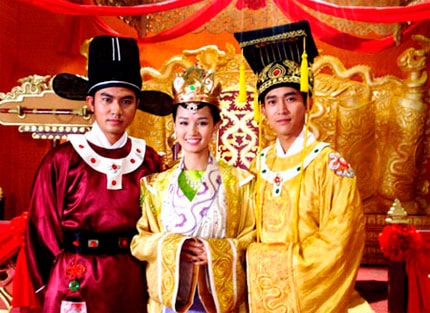 |
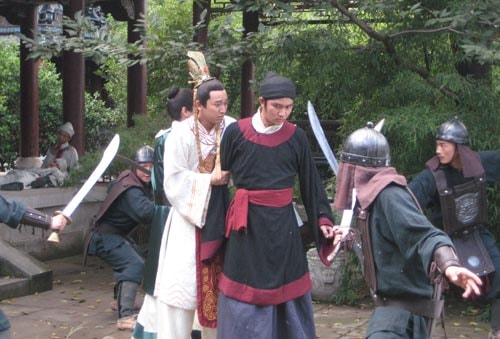
| Some scenes from the movie. |
The film provided a comprehensive overview, not only of the main character Tran Thu Do but also highlighting other important figures related to the Ly and Tran dynasties. While not denying Tran Thu Do's contributions, the person who laid the foundation for the Tran dynasty was Tran Ly – a man from a family with a traditional fishing background, whose ideology extended far beyond Hai Ap, towards Thang Long, with a clear political purpose, foresight, and the ability to utilize talented people. Tran Ly placed his complete trust in his nephew Tran Thu Do, using his daughter Tran Thi Dung to "tie down" Crown Prince Sam (later King Ly Hue Tong), a clever move to avoid being accused of usurping the Ly dynasty.
Compared to previously produced historical films, "Grand Chancellor Tran Thu Do" is quite good, meticulously made with serious investment and research into history. The script by writer Nguyen Manh Tuan is tight and solid, with convincing and logical situations. The film is carefully crafted down to the smallest detail, including costumes, props, and martial arts techniques – an area often compared between Vietnamese historical films and Chinese period dramas – but this time, audiences are relatively satisfied with the film's setting. It's evident that "Grand Chancellor Tran Thu Do" is distinctly Vietnamese in every scene, prop, spear, bow and arrow, carriage, and even the costumes… all reflecting a close connection to Vietnamese culture.
A good script, dedicated director, and substantial investment, along with the performances of seasoned actors such as People's Artist Hoang Dung (King Ly Cao Tong), People's Artist Lan Huong (Empress Dam), and Meritorious Artist Bui Bai Binh (To Trung Tu), contributed to the film's success. The film features many touching scenes, particularly the emotional portrayals of King Ly Cao Tong, Tran Ly, Empress Dam, and the trio of actors Tran Bao, La Thanh Huyen, and Hua Vi Van in their roles as Tran Thu Do, Tran Thi Dung, and Prince Sam, grappling with the complexities of a love triangle and the sacrifices made for the greater good. The elaborate and grand scale of the historical drama genre is beautifully conveyed through the plot and events, captivating viewers.
Reportedly, the film "Grand Chancellor Tran Thu Do" mobilized 120 actors from both North and South Vietnam, with a massive investment of 57 billion VND. Besides using the Co Loa film studio as a filming location, the crew also had to borrow the Hengdian film studio in China to shoot large-scale scenes depicting the story's events and the magnificent palaces of the royal court. The leadership of General Director Dao Duy Phuc and Director Tat Binh of Film Studio I was commended for their careful and effective management, avoiding the public's criticism of "wasting money." Based on what it has shown, "Grand Chancellor Tran Thu Do" is a worthwhile film and will be a good start for greater investment in Vietnamese historical films.
Le Lan(47, Dang Thuc Hua Street, Vinh City)