

Sweden has successfully transplanted uteruses into nine women.
Scientists at the University of Gothenburg (Sweden) have just announced the successful transplantation of uteruses into nine women, offering hope to unfortunate women who were born without a uterus or had to have one removed due to illness.
Professor Mats Brannstrom, head of the research team, said that just a few days after surgery, patients who received uterine transplants donated by their mothers and relatives were discharged from the hospital and in good health.
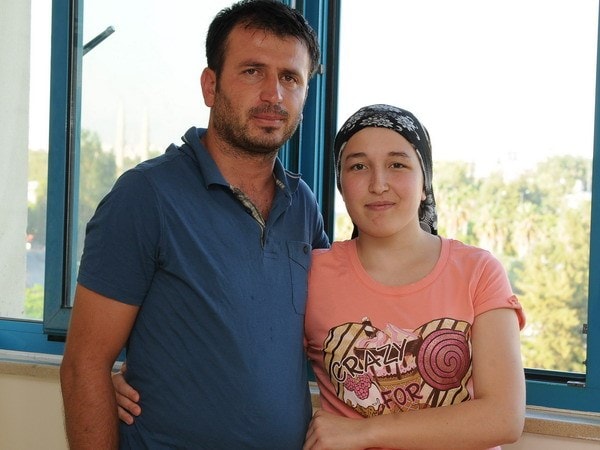 |
| The world's first woman to undergo a uterine transplant poses for a photo alongside her husband. (Source: AFP-VNA) |
Six weeks after surgery, most patients had their menstrual cycles, indicating that the transplanted uterus was healthy and functioning well. Although doctors noted some mild rejection and uterine inflammation in transplanted patients, none were serious enough to require special care.
These transplant surgeries do not connect the women's uteruses to their fallopian tubes, so they cannot conceive naturally. However, the uterus recipients all have their own ovaries, which can produce eggs.
Before the surgery, these individuals had their eggs extracted to create embryos through in-vitro fertilization. These embryos were then frozen, and several months after the surgery, doctors planned to transfer them to the newly implanted uteruses, allowing these women to conceive their own children.
Professor Brannstrom said that in February, he and his colleagues will hold the first workshop on uterine transplantation and will publish a scientific report on this achievement.
Brannstrom also hopes that in the near future, his research team will be able to transfer embryos into the bodies of women who have undergone uterine transplants, enabling them to conceive and give birth on their own.
After a maximum of two pregnancies, the transplanted uteruses will be removed, and women who receive the new uteruses can stop using anti-rejection medication.
Previously, the first two uterine transplants were performed in Türkiye in 2011 and Saudi Arabia in 2000, but the recipients of the new uteruses were unable to have children.
Uterine transplantation is controversial in many countries around the world, mainly concerning living donors and the health consequences of anti-rejection medication, such as high blood pressure, obesity, swelling, and the risk of certain cancers.
According to VNA