
We lose more than we gain.
(Baonghean) - This is the general assessment of international experts and scholars when commenting on China's illegal placement of an oil rig in waters under Vietnam's sovereignty. International media continues to publish numerous articles condemning China's wrongful actions.
(Baonghean) - This is the general assessment of international experts and scholars when commenting on China's illegal placement of an oil rig in waters under Vietnam's sovereignty. International media continues to publish numerous articles condemning China's wrongful actions.
According to Dr. Tomotaka Shoji, Head of the Asia-Africa Research Division, Regional Studies Section of the National Defence Research Institute of the Japanese Ministry of Defence, with its aggressive actions, "China is losing its relationship with Vietnam." Dr. Tomotaka Shoji analyzed: "China is an important partner for Vietnam in many areas, so Vietnam has made great efforts over a very long period to stabilize this relationship. China's illegal placement of the Haiyang-981 oil rig in Vietnamese waters will force Vietnam to consider the overall situation before taking any action." Dr. Tomotaka Shoji also stated that although China may increase its influence and control on the ground, it will also suffer losses. The biggest loss is its relationship with Vietnam and, moreover, its relationship with ASEAN.
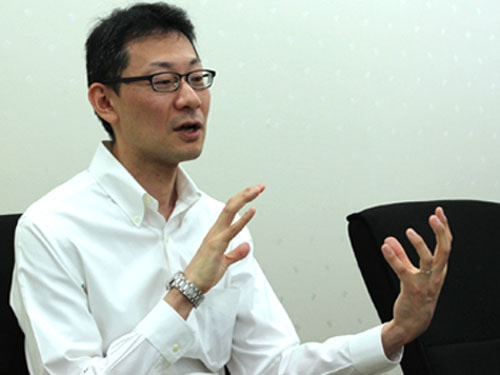 |
| Dr. Tomotaka Shoji. |
Responding to the press, Dr. Jonathan London, an American professor at the Center for Southeast Asian Studies at the University of Hong Kong, stated: "The world must see clearly that Vietnam deserves support." According to Dr. Jonathan, "there is a general consensus internationally that Beijing's deployment of the oil rig is primarily political." China's actions serve at least three distinct but related purposes: altering the status quo by exploiting resources in disputed areas in violation of international rules, probing the reactions of other nations, primarily Vietnam and the United States, and engaging in coercive diplomacy. "China's military expansion and unreasonable territorial claims abroad are aimed at sparking a regional arms race."
Not only does China's blatant deployment of an oil rig into Vietnamese waters affect bilateral relations, but it is also a betrayal of trust against ASEAN, going against the spirit of the Declaration on the Conduct of Parties in the South China Sea (DOC) that China signed with ASEAN countries in 2002. Gregory Poling, an expert at the Center for Strategic and International Studies in the US, asserted: With each such step, China destroys the goodwill it has built in Southeast Asia, pushing its closest neighbors further away, creating an image of a disruptive force in the international system, and completely incapable of becoming a responsible emerging power in the international community. Countries will lose faith in China's commitment to other agreements.
Professor Kim Tae-wan, PhD, Head of the Political Science Department at Dong-Eui University, South Korea, commented on China's illegal placement of an oil rig in Vietnam's exclusive economic zone and continental shelf: "China will lose more than it gains." Through this action, China has shown no intention of relinquishing its rights in the area. However, even if the rig is successfully installed, China will not be recognized by the international community as having Chinese sovereignty over the region.
China is currently seeking to increase its leadership role in the region following a G2-style model, but given the strong resistance from Vietnam and the international community, it is unlikely that China will be able to actually carry out oil exploration in this area.
Against the backdrop of deep-seated conflicts and disputes between China and Japan and the Philippines over territorial sovereignty, China's unilateral actions not only fuel skepticism in Vietnam but also in other East Asian countries, including Southeast Asian nations, regarding China's strengthening economic and defense capabilities. This is detrimental to China, despite its repeated claims of "desiring a peaceful rise."
The French newspaper LeMonde, in its May 19th issue, also published an article and commentary denouncing China's aggressive attitude in deploying a giant oil rig to Vietnam's South China Sea. The article by correspondent Bruno Philippe, based in Southeast Asia, called China's actions in the South China Sea "a hegemonic scheme." According to Bruno Philippe, it is now difficult to trust China. The article cited the April incident when a Chinese oil company decided to place an oil rig in Vietnam's exclusive economic zone and continental shelf without any consultation or consent from the Vietnamese government. Just six months earlier, during a visit to Vietnam, Chinese Premier Li Keqiang had declared that the two countries would seek solutions based on mutual agreement in oil and gas exploration and exploitation activities.
The South China Morning Post, a leading newspaper in Hong Kong, recently published an article titled "China's Dangerous Arrogance in the South China Sea," sharply criticizing China's "aggressive, arrogant, and great-power-oriented" behavior. According to the author, veteran reporter and analyst Philip Bowring, who has lived in Asia for 39 years, "China's sense of superiority and selective interpretation of Southeast Asian history have become a poisonous fuel that intensifies tensions in the South China Sea." He also argues that China's current behavior towards its neighbors in the South China Sea is "aggressive, arrogant, and driven by great-power chauvinism and ethnocentrism."
Meanwhile, Hong Kong's "Multidimensional" news network argues that the Chinese government needs to change its mindset, accept the importance of trying to maintain the status quo, and learn from the spirit of international law, accurately re-evaluating the issues left behind by history.
H. Diep(synthetic)