

New breakthrough helps the blind regain their sight.
Scientists may have found a new cure for blindness after successfully regrowing corneas in the laboratory.
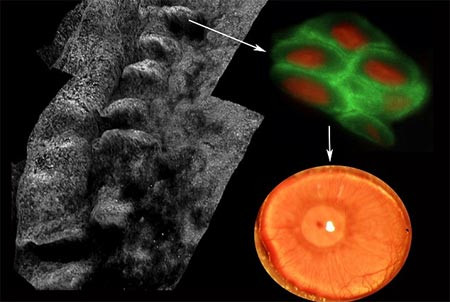 |
Researchers have found a way to identify the molecule ABCB5, which acts as a "marker" for corneal limbal stem cells—cells that are difficult to detect but crucial for corneal tissue regeneration. (Image: National News and Pictures)
The authors of a study at the Massachusetts Eye and Ear Research Institute (USA) believe their work could help reverse a leading cause of blindness in humans. A major breakthrough in stem cell research has allowed them to successfully regenerate a cornea from adult stem cells for the first time.
Experts believe their breakthrough will offer hope to burn victims, chemical injury victims, and those suffering from eye diseases. They have found a way to stimulate the regrowth of human corneal tissue to restore vision, using a molecule called ABCB5, which acts as a marker for limbal stem cells that are difficult to detect.
According to a research report in the journal Nature, this is also one of the first documented examples of creating a tissue from stem cells extracted from an adult.
Corneal limbal stem cells reside in the basal layer of the corneal limbus epithelium and help maintain and regenerate corneal tissue. Their loss due to injury or disease is one of the leading causes of blindness in humans.
Previously, tissue or cell transplantation has been used to restore the cornea. However, to date, medicine has not been sure whether true corneal limbal cells exist in transplanted tissue, and the results obtained have been incompatible.
In a new study, experts were able to use ABCB5-identifying antibodies to "target" the necessary stem cells in tissue from deceased donors and use them to regenerate anatomically correct and fully functional human corneas in mice.
Dr. Bruce Ksander, co-author of the study, explained: "Corneal limbal stem cells are rare, and successful transplantation depends on these rare cells. Our discovery now makes restoring the corneal surface easier. This is a good example of basic research that can be quickly applied."
According to Vietnam.net