

Growing Moringa: The "All-Purpose" Plant for the Family
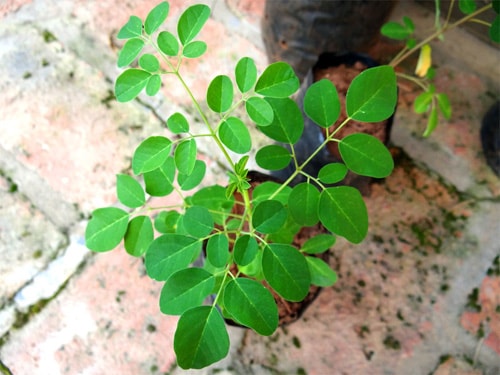
Moringa trees are extremely easy to grow and provide a nutritious vegetable for the whole family.
Moringa, also known as the wild bean, originates from South Asia and is widely cultivated in both Asia and Africa, with a history spanning over 4,000 years.
Moringa trees are very common in India and are respectfully called the "Tree of Life." In English, moringa trees have many other names due to their high nutritional value, such as "miracle tree," "wonder tree," "all-purpose tree," etc.
 |
In Vietnam, moringa trees have long been found growing wild in many places such as Thanh Hoa, Ninh Thuan, Binh Thuan, the Bay Nui region in An Giang, and Phu Quoc Island. However, in the past, the tree received little attention, and in some places it was only planted to be used as a hedge.
In recent years, studies have discovered that moringa has many special benefits, so this plant has recently been cultivated and sold at prices ranging from 70,000 to 100,000 VND per kilogram.
In Ho Chi Minh City, moringa leaves are sold for 30,000 VND per 300-gram box, seedlings for 25,000 VND each, and seeds for 100,000 VND per bag of 50 seeds. In addition, fresh stems and branches are also used for sale at 15,000 VND per box or processed into tea packets priced at 45,000-55,000 VND per box.
Application
Moringa trees are widely and diversely used in many countries in pharmaceutical technology, cosmetics, nutritional beverages, and functional foods.
 |
Treatment: Parts of the plant such as leaves, roots, seeds, bark, fruit, and flowers... possess activities such as stimulating heart and circulatory system activity, anti-tumor activity, antipyretic, anticonvulsant, anti-inflammatory, anti-ulcer, anti-seizure, diuretic, hypotensive, cholesterol-lowering, antioxidant, antidiabetic, hepatoprotective, antibiotic, and antifungal properties. The plant has been used to treat many diseases in folk medicine in many countries in South Asia.
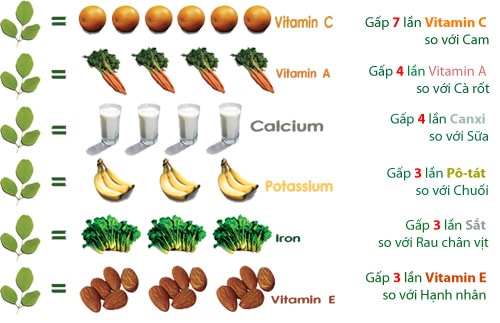
Nutrition: Moringa leaves are rich in nutrients and are currently considered by two world organizations, WHO and FAO, as a superior solution for mothers with insufficient milk and malnourished children, and as a food solution for the developing world.
For children aged 1-3 years, consuming 20 grams of fresh leaves provides 90% of the daily calcium requirement, 100% of the daily vitamin C and vitamin A requirement, 15% of the daily iron requirement, 10% of the daily protein requirement, as well as copper and essential B vitamins.
For breastfeeding mothers, just 100g of fresh leaves per day is enough to supplement the daily required calcium, vitamin C, vitamin A, iron, copper, and B vitamins.
| Nutrients | Everyday food | Fresh moringa leaves | Dried moringa leaves |
| Vitamin A | 1.8mg carrot | 6.8mg | 18.9mg |
| Calcium | 120mg milk | 440mg | 2003mg |
| Potassium | 88mg banana | 259mg | 1324mg |
| Protein | 3.1g yogurt | 6.7g | 27.1g |
| Vitamin C | 30 mg orange | 220mg | 17.3mg |
Nutritional information per 100g of moringa leaves
How to use
Currently, moringa is considered one of the most useful trees in the world, as all parts of the moringa tree can be used as food or for various other purposes; therefore, moringa cultivation is being encouraged in many countries around the world, especially poorer nations.
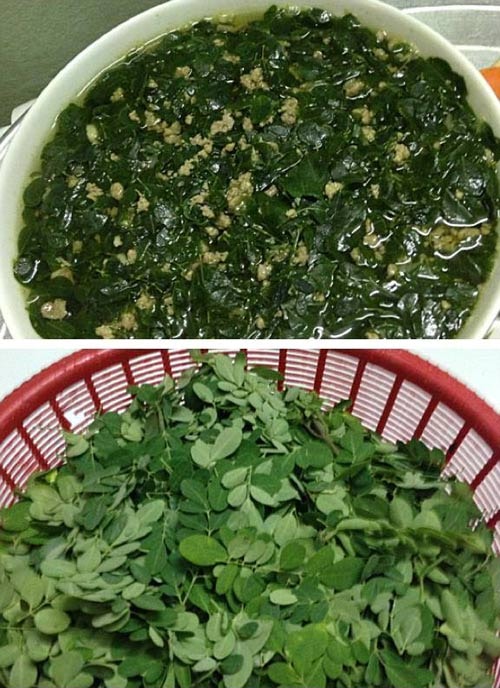
- Leaves: used in soups with meat, shrimp, mushrooms, or cooked plain (similar taste to sweet potato leaves), mixed in salads, eaten raw, stir-fried with meat and eggs, or blended into a smoothie. Dried moringa leaves, powdered, can be stored for a long time without losing nutrients and used in many dishes such as porridge, baby food, dough, and beverages.
 |
- Flowers: contain abundant nectar and are rich in nutrients; they can be used as a vegetable or dried and brewed into a tea-like drink.
- Young moringa pods: used in stir-fries, soups, stews, and broths like green beans, and have a flavor similar to asparagus. When mature, moringa seeds can be roasted and eaten like peanuts.
- Young roots: can be eaten raw or used as a condiment like mustard.
However, similar to spinach and aloe vera, pregnant women should limit their consumption of moringa leaves and products derived from moringa.
According to Alobacsi.vn