
Infants can also get diabetes.
For a long time, many people thought that diabetes only occurred in adults. However, in reality, many children, even infants, have this disease.
For a long time, many people thought that diabetes only occurred in adults. However, in reality, many children, even infants, have this disease.
Nearly died from complications of diabetes.
At 36 days old, a child with neonatal diabetes mellitus (NTTK) in Hanoi had to be admitted to the National Children's Hospital in critical condition with rapid breathing and coma. Before being admitted, K. had been treated at several other hospitals and was finally diagnosed with complications of neonatal diabetes mellitus.
Baby K. was born healthy. About five days before being admitted to the emergency room, she had a high fever of 39 degrees Celsius and diarrhea (about 10 times a day). The family took K. to Dan Phuong District General Hospital in Hanoi. After two days at the district hospital, K. was transferred to Saint Paul Hospital in Hanoi.
Here, despite various interventions by doctors such as fever reduction and oxygen support, the baby's health condition did not improve. Based on an analysis of the symptoms and test results, the doctors concluded that the patient was in a coma due to ketoacidosis, a common acute complication in patients with neonatal diabetes.
The patient was immediately transferred to the National Children's Hospital for specialized treatment. Doctors actively provided specific treatment including multiple insulin infusions per day, intravenous fluids, and close blood glucose monitoring. After nearly 40 hours of intervention, the patient's health condition improved significantly.
Dr. Can Thi Bich Ngoc, a specialist in Endocrinology, Metabolism, and Genetics (National Children's Hospital), said that K.'s health has stabilized and she is feeding well, but if her blood sugar is not closely monitored, she could fall into a coma again.
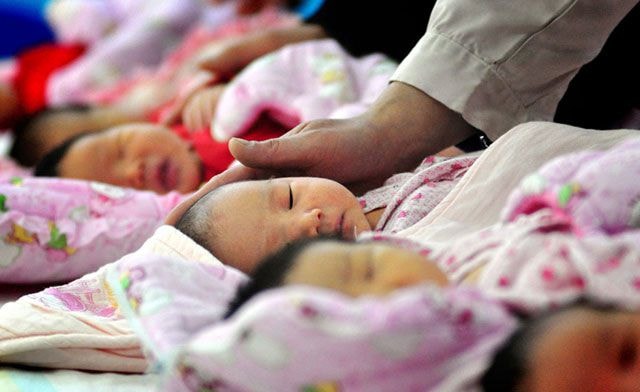 |
| Newborns are still at risk of developing diabetes. (Illustration: internet) |
Difficult to detect the disease
According to a study by the National Children's Hospital, neonatal diabetes mellitus (NDM) is a condition of elevated blood glucose levels in the first six months of a child's life. The main cause is mutations in the KCNJ11 and ABCC8 genes.
Dr. Can Thi Bich Ngoc added: diagnosing neonatal diabetes is very difficult because infants with the disease often have no clear symptoms and are only detected through blood glucose tests or when the patient has fallen into a coma.
Furthermore, the treatment process for this disease requires adherence to certain strict regulations. For infants under three months old, like patient K., it is very difficult to administer insulin injections, especially since the dosage is very small each time.
Furthermore, the subcutaneous tissue of infants, where insulin is injected, is very thin. Treatment of neonatal diabetes requires avoiding both excessively high and low blood sugar levels. However, in young children, the only indication of both of these potential problems is crying.
In newborns, up to 90% of cases are caused by gene mutations. Most cases are discovered when infants are hospitalized for other conditions such as sepsis or neonatal infections. Only after further testing do doctors discover the child has diabetes.
The National Children's Hospital conducted a study evaluating the results of oral sulfonylurea treatment on 11 patients. The results showed that six patients had the KCNJ11 mutation, and five had the ABCC8 mutation. Of these, 9/11 responded to sulfonylurea treatment and did not require insulin injections; one case was in the transition process, and one case with the new mutation was receiving insulin injections.
This study shows that identifying the disease-causing genes in neonatal diabetes is crucial for selecting treatment methods and predicting the prognosis of the disease.
Associate Professor Dr. Tran Ngoc Luong, Director of the Central Endocrinology Hospital, stated that breastfeeding is perfectly beneficial for infants with neonatal diabetes. Breast milk is the ideal food for the comprehensive development of newborns. It contains antibodies and nutrients that fully meet the changing needs of the baby, protecting them from infections and diseases.
In cases where the mother does not have enough breast milk and the baby must be fed formula, medical advice is needed to determine the appropriate use of insulin.
According to Alobacsi.vn