

A mysterious 2000-year-old remedy hidden in ancient books.
When Grigory Kessel first held the more than 1,000-year-old book, he felt a sense of déjà vu because it looked so familiar.
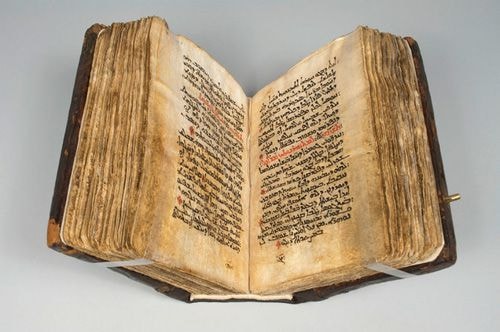 |
| Manuscripts at Batlitmore. Photo: NY Times |
Dr. Kessel is a Syrian scholar at Philipps University in Marburg, Germany. He is currently sitting in the library of the owner of the ancient book, a wealthy collector of rare scientific documents in Baltimore, Maryland, USA.
At that moment, Kessel realized that just three weeks earlier, in the Harvard University library, he had seen a book with illustrations similar to this one. The book concealed an ancient medical text in Syriac, a translation of the work of Galen, the Greek physician and philosopher who died in 200 BC. The book was missing a few pages, and Dr. Kessel was suddenly compelled by the thought that they were in Boston.
"I couldn't even imagine what it looked like," Kessel said. "When I saw the manuscript, I just had the impression that I'd seen it somewhere before. And then I remembered I'd seen a similar page at the Harvard library."
Search
Dr. Kessel returned to the Harvard library to retrieve the missing page. He analyzed the page's size, handwriting, and other elements, as well as the characters embedded beneath the scraped skin, determining it was indeed a page from an ancient Baltimore medical manuscript. However, six more pages were still missing.
He searched through 10 renowned libraries that housed ancient Syrian manuscripts, comparing them online or, sometimes, visiting the libraries in person. Finally, he found another page in the Monastery of the Holy Spirit on Mount Sinai, the holiest mountain in the world, located on the Sinai Peninsula in Egypt. It is one of the oldest libraries in the world.
Another page was found at the French National Library in Paris, and another at the Vatican Library. However, three pages remain missing.
The manuscript of Dr. Kessel is made of scraped sheepskin, with a new layer of writing over the old. Centuries ago, this was a common method for recycling leather. For this manuscript, 11th-century Syrian missionaries scraped off copies of Galen's medical texts and wrote hymns over them.
Scientists are only just beginning to understand this manuscript, Galen's document on "Simple Remedies - Preparation and Effects." It will help us understand the origins of medicine and how it has been passed on to modern science.
"From many perspectives, it is extremely important," said Peter Pormann, a Greek-Arab expert at the University of Manchester, England, who led the study of the text.
For centuries, Galen's "Simple Remedies" was the mandatory medical text for doctors. It served as a textbook on ancient medical knowledge, patient care, and the use of medicinal herbs. Galen described a root that could cure "throat sores," and introduced hemp as a remedy for earaches that "did not cause bloating."
Much of the "Simple Remedies" was translated into Syriac by the Christian community in the Middle East. It is quite possible that the hidden characters beneath the scraped parchment manuscript, dating from the 9th century, are copies of the earliest Syriac translation from the 6th century.
"Nowadays, it seems unremarkable for someone to translate from one language to another. But back then, that translation was a monumental achievement," said Dr. Kessel. "He had to create the vocabulary, find the corresponding Syrian words to translate this Greek medical vocabulary."
"Simple Remedies" is a large work, comprising 11 volumes. Galen's work has been reproduced in many versions over the centuries, becoming a bridge connecting ancient Greek medical experts to Islamic society. The Syrian translations are easier to understand and translate into Arabic than the original Greek text.
The manuscript in Baltimore was sold to a private collector in 2002. Later, in 2009, he loaned it to the Walters Museum of Art. A team of experts took spectral photographs of the pages. Each page was photographed using ultra-high-resolution digital cameras, maximizing the visibility of the scraped characters hidden beneath the scraped sheepskin. Among that team of experts was Dr. Kessel, a research fellow at the Dumbarton Oaks Library at Harvard, Washington.
No one knows how many fundamental remedies are hidden within Galen's manuscripts. The Syriac copies held at the British Library in London only contain volumes 6-8.
Scholars are eager to compare the Baltimore manuscript in Syrian with the Greek copy, which was reproduced from Galen's original centuries later. Because the texts were copied numerous times, they have therefore changed considerably from the original.
A copyist may have omitted parts they considered unimportant, or added new knowledge based on medical advances. Comparing the copy found in Baltimore with the copy in the British Library will help to understand how the ancient Greeks practiced medicine, and how it spread to the Middle East.
"Some of that isn't science by modern standards," Kessel said. Like many other ancient physicians, Galen believed that health was controlled by the balance of four elements: black bile, yellow bile, phlegm, and blood. All diseases in the body arose from excess or deficiency of these elements.
"Galen's medical system was completely insane," said Dr. Siam Bahyro, a specialist in Jewish studies at the University of Exeter, England. However, according to him, it represented the most advanced medical thinking of the time.
"We can discover things we never dreamed of," said Dr. Pormann, who led the research on the ancient manuscripts, excitedly.
According to VnExpress