

Purslane and its amazing benefits
Purslane is considered a type of weed, often growing wild in cool, damp areas along the edges of gardens and rice fields.
In the past, people often used purslane to prepare dishes such as stir-fries and salads. But few people know that it is also a precious medicinal herb bestowed by nature with amazing healing properties.
Purslane is a very common vegetable in Vietnam, growing wild and being very inexpensive. It's also quite popular in Europe; the Dutch use it to make pickles, the French love purslane and prepare it in many special dishes, and in America there's purslane salad with oil and vinegar dressing... Furthermore, purslane is a unique medicinal herb that few people know about.
Purslane often grows like a weed, and you can easily pull it up in your garden. Purslane is a broad-leaved plant that thrives in the summer and lives in the surface layer of soil where grass grows. To verify it's purslane, examine its leaves.
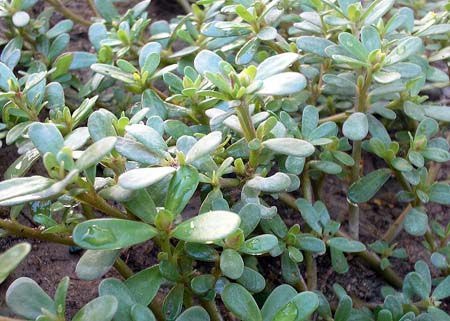
The leaves of common purslane are oval-shaped, smooth, thick, and jade-like in color. They grow creeping with branching stems if the plant is solitary, but if they grow in clumps, the stems tend to grow upright.
The leaves are thick, oblong, about 1-2.5 cm long. The flowers are very small, yellow, hermaphrodite, and grow at the tips of the branches. The seeds are small, black, and can retain their germination ability for up to 7 years (when stored). The flowers usually bloom in spring or autumn. The plant thrives in loose soil and warm temperatures with plenty of rainfall.
There are two types of purslane: wild and cultivated. The wild type usually grows creeping and is less than 50cm tall, with green leaves and reddish-purple stems. The cultivated type has larger leaves and is usually yellowish-green. The most common types are:
- Green Purslane: This is a wild-growing, native variety that tends to grow upright rather than creeping.
- Golden Purslane: has light yellow leaves, and when cooked, it tastes similar to the type above.
- Large-leaved yellow purslane (Portulaca Grandiflora): The leaves are thick and almost twice as large as the two previous varieties.
Purslane is a highly nutritious plant. According to the Institute of Hygiene and Epidemiology: Purslane contains 1.4% protein, 3% carbohydrates, 1.3% ash, 85mg% calcium, 56mg% phosphorus, 1.5mg% iron, 26mg% vitamin C, 0.32mg% caroten, 0.03mg% vitamin B1, 0.11mg% vitamin B2, and 0.7mg% vitamin PP.
Research in Taiwan shows that fresh purslane contains 1% potassium salt, while dried purslane contains 10%. French pharmacologists discovered that purslane is rich in various unsaturated Omega-3 fatty acids, especially alpha-linolenic acid. Omega-3 fatty acids improve the fluidity of cell membranes – a key factor in the body's vitality.
The effects of Omega-3 fatty acids in protecting cardiovascular health have been widely proven, and they also have many other benefits such as preventing or treating diabetes, nervous system disorders, and functional diseases.
Purslane leaves are rich in antioxidants. These substances enhance the protective effect of Omega-3 fatty acids in cells by neutralizing free radicals. For medicinal purposes, choose large, red purslane plants, using the entire plant (excluding the roots), either fresh or dried.
 |
| Purslane can inhibit platelet aggregation, coronary artery spasms, and thrombosis, thus it is effective in preventing and treating cardiovascular diseases. |
Wound healing effect
When injured, applying crushed purslane leaves to the wound will help it heal faster. Purslane leaves accelerate the process of new skin growth. For minor wounds, bone injuries, etc., you can apply purslane juice to the wound, or apply crushed fresh leaves, or drink a strong decoction of purslane. For external wounds, you can apply purslane tincture.
For severe wounds such as necrotic ulcers, dry purslane leaves should be steamed until soft, then placed in a damp cloth bag, tied tightly, and applied to the wound for 2 to 3 hours. Do not use a dry or cold cloth bag. Alternatively, you can apply the steamed purslane leaves directly to the wound, but only use damp leaves.
Anti-aging effects
Studies at the University of Wollongong (Australia) and the Washington Center for Genetics, Nutrition, and Health (USA) have shown that 100g of fresh purslane leaves contain 300-400mg of alpha-linolenic acid, 12.2mg of alpha-tocopherol, 26.6mg of ascorbic acid (vitamin C), 1.9mg of beta-carotene, and 14.8mg of glutathione. These results indicate that purslane is rich in nutrients, unsaturated fatty acids, and antioxidants.
Preventing cardiovascular disease
According to Traditional Chinese Medicine, purslane has a sour, slightly bitter taste and a cooling nature, with the effect of clearing heat and detoxifying. Purslane has a relatively high content of potassium and omega-3 fatty acids, which are essential for regulating blood cholesterol, strengthening blood vessel walls, and stabilizing blood pressure.
Antibacterial effect
Purslane is effective in killing bacteria such as Shigella (which causes dysentery), Salmonella typhi (which causes typhoid fever), and Staphylococcus aureus (a common cause of boils). It also kills some pathogenic fungi.
The effects of purslane on the uterine muscle
Purslane has the effect of stimulating uterine contractions. Tests on postpartum women who were given this extract showed an increase in the intensity of uterine contractions. However, because purslane causes uterine contractions, purslane juice should not be used by pregnant women.
Anthelmintic effect
When you have tapeworm infection, the best way is to boil fresh purslane leaves to make a concentrated decoction. Then mix the purslane decoction with a little vinegar and salt and drink it. The most effective time to drink it is in the morning, before you have eaten or drunk anything.
Drinking this for several consecutive days will be very effective in expelling worms. For pinworms, consume 50-100g of fresh purslane daily, washed, crushed, and squeezed to extract the juice. Results should be seen in about 5-7 days. Note that purslane should not be used to treat diarrhea.
Treatment of kidney stones and urinary tract diseases
Put a handful of fresh or dried sam leaves into a teapot, then steep in boiling water for 5 minutes to make sam tea. Drinking hot sam tea regularly helps promote urination and acts as a diuretic. If you have kidney stones, drink the decoction of sam leaves and try to hold your urine until you can't hold it anymore.
Then the kidney stones will be expelled. Don't be afraid if your urine is tea-colored and thick like blood, because that's a sign that toxins in your body are being eliminated!
For conditions like glomerulonephritis or cystitis, soak 100g of purslane in hot water overnight. Then, boil it and pour it into a basin or bathtub. Soak in the warm purslane water for 10-20 minutes until you sweat profusely; you'll definitely feel much better.
Curing incurable diseases
For difficult-to-treat diseases such as cancer, diabetes, hepatitis, cholecystitis, nephritis, etc., drinking purslane juice will have a noticeable effect. This is because purslane contains 3-16% silicic acid, and the substances contained in purslane have the ability to treat many incurable diseases.
In practice, purslane has been proven to eliminate these disease-causing agents and help remove necrotic tissue. Besides drinking purslane juice, you can also apply a hot purslane compress as described above.
Note that purslane is contraindicated for people with weak spleen and stomach, diarrhea, and pregnant women.
According to Alobacsi.vn