

Which fruit is the most toxic currently?
According to experts, most fruits are ripened using chemicals and pesticides. How can you distinguish those that are free of preservatives?
 |
Are fruits inevitably treated with chemicals?
According to Associate Professor Dr. Nguyen Duy Thinh, a staff member of the Institute of Biotechnology - Food Technology (Hanoi University of Science and Technology), the use of methods to artificially ripen fruits is an ancient practice, and not all of them are unsafe; only certain chemicals are permitted for use in this process.
"Fruits also contain specific substances that can cause them to ripen, age, and fall off (ethylene - C2H4). However, to ensure uniform ripening, many countries around the world use chemicals to stimulate this process. This is an application of science and not a cause for concern regarding food safety," Associate Professor Thinh said.
Similarly, chemical preservatives are used to soak fruits, helping them last longer, especially effective in environments with high levels of microorganisms and insects.
However, according to this expert, not all facilities guarantee adherence to the correct procedures, dosages, and permitted types of chemicals.
For example, vendors may use certain chemicals to ripen jackfruit and bananas, but these should only be used on unripe or mature fruit, not on unripe fruit, or to "magically" ripen fruit in just 1-2 hours. More dangerously, many establishments now use toxic chemicals such as herbicides or urea in preserving fruits, posing a health risk to consumers.
According to Associate Professor Thinh, jackfruit and bananas are the two fruits most frequently ripened using artificial methods on the market today. Chemicals used to ripen fruit are also commonly used in papayas and mangoes. However, consumers find it difficult to know exactly which chemicals traders are using, and whether they are permitted or not.
Besides using chemicals to ripen fruit quickly and evenly, vendors also use chemicals to extend the shelf life of the fruit, potentially for months or even years, without it spoiling.
According to Associate Professor Thinh, oranges, apples, or any other fruit can be treated with these chemicals, especially during hot summer weather – a time when microorganisms thrive, causing fruits to spoil quickly.
How can consumers protect themselves?
According to Mr. Thinh, the use of chemicals on fruits in particular, and all vegetables and other foods in general, is unavoidable. The level of danger depends on the awareness of the production facility, traders, and the management of relevant authorities.
Therefore, people must equip themselves with the knowledge and skills to minimize exposure to harmful chemicals, such as choosing reputable and safe establishments and selecting fruits that are in season.
In particular, soaking and washing fruits before use is very important to eliminate microorganisms and chemicals. Ideally, you should soak them in plain water, then rinse them under running water several times. When eating, peel the fruit, and especially peel only the amount you will eat at a time, to avoid re-contamination.
How to distinguish some types of fruit that are often artificially ripened nowadays.
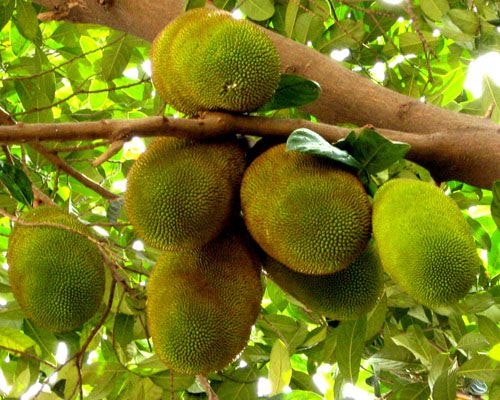
- Jackfruit:Naturally ripened jackfruit is yellowish-brown, evenly ripened throughout, has a distinctive aroma, and releases plenty of sap when cut open. Artificially ripened jackfruit has a less fragrant aroma than naturally ripened jackfruit, its thorns are still sharp and dense, the segments are small, it lacks sap, and the inside of the stem is dark and mushy.
- DurianNaturally ripened durian will be easy to separate into segments, and the flesh will have a characteristic fragrant, smooth, and creamy texture. Conversely, artificially ripened durian is difficult to separate into segments, the flesh will be tough, and it will lack the characteristic aroma.
- Sapodilla:The chemically treated sapodilla has a deep yellow color, a smooth, glossy peel with almost no blemishes, making it very attractive. Conversely, untreated sapodilla may have a slightly greenish tint, distinct veins, and a less smooth peel.
- Mango:Artificially ripened mangoes often have a green or pale yellowish-green exterior, but the inside is uniformly ripe and yellow. However, they taste bland and lack the typical mango flavor. Naturally ripened mangoes, on the other hand, have thinner skins and a fragrant, ripe aroma. When cut open, they are juicy and have a naturally sweet taste.
According to Zing.vn