

Solar-powered water separation technology
Researchers have developed a system that uses energy from hot electrons to split water molecules into oxygen and hydrogen – the raw materials for fuel cells, electrochemical devices that produce clean and efficient electricity.
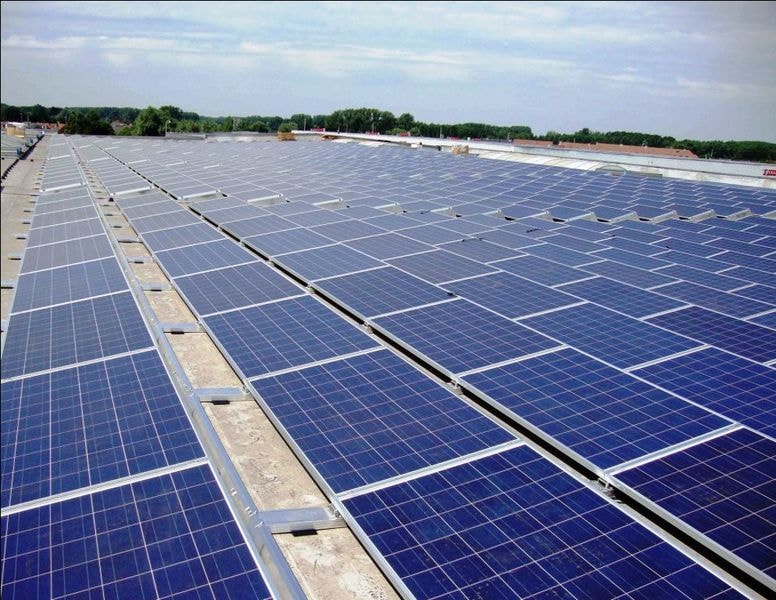 |
| Illustrative image |
Researchers at Rice University (USA) have developed a new, efficient method for harvesting energy from sunlight and converting it into clean, renewable energy by splitting water molecules.
This technology relies on the configuration of light-activated gold nanoparticles to capture sunlight and convert solar energy into highly excited electrons, which scientists call "hot electrons".
Hot electrons have the potential to drive useful chemical reactions, but they decay very quickly, and scientists are working to harness their energy.
Capturing these high-energy electrons before they cool down could allow solar power providers to significantly increase the efficiency of converting solar energy into electricity and meet national targets for reducing the cost of solar power.
In light-activated nanoparticles, light is captured and converted into plasmons, fluid-like electron waves flowing across the metal surface of the nanoparticles. Plasmons are short-lived, high-energy states, but researchers at Rice University, as well as elsewhere, have been finding ways to capture plasmon energy and convert it into useful heat or light. Plasmon nanoparticles are also one of the most promising methods for harnessing the energy of hot electrons, and the Rice University research group is working towards that goal in several recent studies.
Researchers have developed a system that uses energy from hot electrons to split water molecules into oxygen and hydrogen – the raw materials for fuel cells, electrochemical devices that produce clean and efficient electricity.
To utilize the hot electrons, the research team first separated them from their corresponding “electron holes,” the low-energy states that hot electrons bypass when receiving plasmon energy. The reason hot electrons exist for such a short time is because they tend to release new energy and return to low-energy states. The only way to avoid this is to fine-tune the system so that the hot electrons and electron holes quickly separate. The conventional method used by electrical engineers is to push the hot electrons to an energy barrier that acts as a one-way valve, but this method is inefficient.
The system consists of three layers of material. The bottom layer is a thin aluminum sheet coated with transparent nickel oxide and sprinkled with plasmon gold nanoparticles, which are hockey puck-shaped discs with a diameter of approximately 10-30 nm.
When sunlight shines directly onto the disc or reflects off the aluminum, the discs convert light energy into hot electrons. Aluminum attracts electron holes, and nickel oxide allows them to pass through, while keeping the hot electrons trapped on the gold nanoparticles. The researchers enabled the gold nanoparticles to act as a catalyst for water splitting by placing the material on a flat surface and submerging it in water. In the experiment, the research team measured the photocurrent for water splitting without directly measuring the hydrogen and oxygen gases produced from the splitting.
According to Chinhphu.vn