

5 key highlights in the tech world in 2015
The rise of Facebook, the phasing out of analog television in Vietnam, and the Bphone phenomenon are three of the five most talked-about highlights of 2015.
Facebook has become an invisible force.
At the end of January 2015, Facebook announced it had 1.39 billion monthly active users, and that number has now increased to over 1.5 billion. No longer simply an online connection service, Facebook has had a significant impact on many aspects of personal and social life.
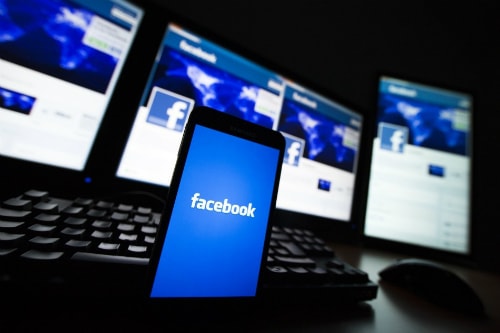 |
| Facebook has contributed $227 billion in sales worldwide. |
This social network is where politicians express their views and garner public support. Economic activities on Facebook contributed $227 billion and created 4.5 million jobs worldwide in 2014. Experts believe that in the digital age, if a company does not yet have its own Facebook account, for whatever reason, that company is being left behind.
Facebook is not simply a means of communication and connecting members; it is also a place where millions of users can express their strong voices on pressing social issues, such as the tree-cutting in Hanoi, sharing their grief with victims of the massacre in France, or celebrating the passage of same-sex marriage legislation.
In Vietnam, despite differing opinions, Facebook has become an indispensable part of internet users' lives. At the end of 2015, the government piloted a Facebook page called "Government Information" to disseminate government information more widely. This move was quickly praised because it made it easier for citizens to access official news sources.
Analog television is starting to cease broadcasting.
From November 1st, 2015, Da Nang City and four northern districts of Quang Nam province (including Hoi An City, Dien Ban, Duy Xuyen, and Dai Loc) became the first areas to cease analog television broadcasting, which had served tens of millions of viewers, and switch to digital terrestrial television.
 |
| Digital television offers many benefits. |
Analog television was the first form of television technology, where signals were broadcast from television stations to television receivers with images and sound similar to the original signal via an antenna system. This type of television was limited by space and easily affected by obstacles and other sources of signals such as radio and telephones. In contrast, digital television has a wider and longer reach; signals are digitized before transmission, and television receivers require decoders to receive them.
Digital television broadcasting is considered an inevitable step, and many countries around the world have viewed it as an "unavoidable" path. Digitalization provides citizens with high-quality programming. Meanwhile, for the government, digital television broadcasting frees up a large, valuable bandwidth for the deployment of next-generation mobile communication services, promoting the development of the information and telecommunications industry.
Following Da Nang, it is expected that by December 31, 2015, four major cities including Hanoi, Ho Chi Minh City, Hai Phong, and Can Tho will also cease broadcasting analog channels. However, the Steering Committee for the Digitalization of Television in Vietnam is currently seeking opinions on whether to postpone the "soft" shutdown of some analog television programs after the Lunar New Year to March 1, 2016.
Anonymous launches cyber war against IS.
The bloody terrorist attacks by the Islamic State (IS) militants, particularly the shootings in Paris on November 13th, have shocked and alarmed the entire world. Amidst this grim news, the hacker group Anonymous has declared an "unprecedented" war to wipe out IS from cyberspace.
The hacker campaign has somewhat hampered the online plans of the self-proclaimed Islamic State militants, such as shutting down tens of thousands of social media accounts, making it difficult for IS to spread propaganda, and provoking militants with humorous memes...
The effectiveness of the campaign remains controversial. Some argue that shutting down IS accounts will only make it more difficult for intelligence organizations to track the terrorists' movements. However, Anonymous explains: "IS sows fear and hopes that their atrocities will silence us and make us hide in fear. We want to show them that we are not afraid, we do not hide."
The Bphone phenomenon
With its massive marketing campaign proclaiming it "Made in Vietnam" and an unprecedentedly grand launch filled with hype about the product being "better than iPhone," the Bphone has sparked endless debate within the tech industry.
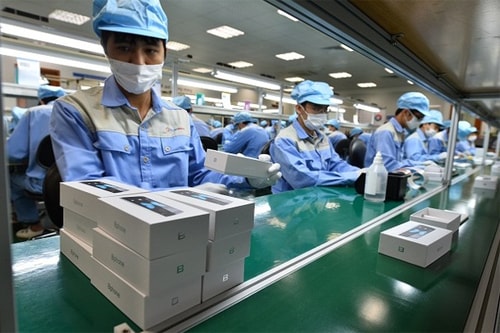 |
| The origin and quality of the Bphone product are major concerns for many people. |
Many people expected Bkav to realize the dream of a high-end phone designed and manufactured by Vietnamese people. However, the launch of the Bphone was surrounded by doubts about its origin and quality, disappointment over its excessively high price, and the weary wait due to repeated delays.
The tech community is divided, with one side arguing that Vietnamese people should support Vietnamese products and that these are just the first steps for Bkav, while the other side criticizes the Bphone, considering it merely an excessive PR stunt. Sales figures for the Bphone are not disclosed, making it difficult to determine whether the product is a success or a failure. However, despite the criticism, the Bphone is still seen as an impressive product bearing a Vietnamese brand.
The explosion of smart wearable devices.
This boom is clearly demonstrated by the latest statistics from research firm IDC. Global sales of smart wearable devices reached 21 million units in the third quarter of 2015, a 200% increase compared to the same period last year.
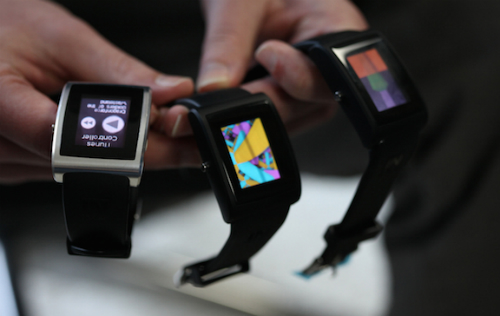 |
| The wearable device market has been booming this year. |
The wearable device market had already started to become crowded in 2014, but the arrival of the Apple Watch in April 2015 created a fierce two-horse race with Fitbit. Fitbit remains the leading manufacturer of smart wearable devices with sales of 4.7 million units last quarter, while Apple closely follows with 3.9 million devices.
Meanwhile, China is rapidly emerging as the fastest-growing market for wearable devices, with the participation of numerous domestic companies such as Xiaomi and XTC, offering competitively priced products. Xiaomi, in particular, has made what is considered a "miracle" move, experiencing an 815% year-on-year growth and selling 3.7 million wearable devices in the third quarter, only slightly behind Apple.
Analysts predict that the smart wearable market will continue its strong growth, surpassing 200 million units within the next three years. Currently, the most popular type remains basic wearable devices for health tracking, but in the next few years, smartwatches with phone connectivity to display calls, messages, emails, etc., will become more common. Many other types of wearable devices will also emerge, each with its own specific function, such as clothing accessories, contact lenses, headphones, rings, and smart necklaces.
According to VnExpress
| RELATED NEWS |
|---|