

The miraculous medicinal effects of cabbage
Mustard greens and bok choy are spicy, warming herbs; they help to clear airways, expel phlegm, warm the spleen and stomach, and stimulate digestion; they are often used to treat coughs with excessive phlegm, asthma, etc.
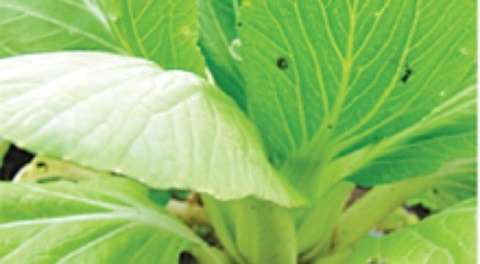 |
| Illustrative image |
There are many types of leafy greens, but the three most common are:
Mustard greens (Brassica juncea (L.) Czern. et Coss), also known as green mustard, yellow mustard, wrinkled leaf mustard, etc.
Chinese cabbage (Brassica campestris L.), also known as mustard greens, lotus cabbage, Jewish cabbage, cloud cabbage, etc.
Bok choy (Brassica alba (L.) Boiss.), also known as white mustard, white cabbage, or Chinese cabbage...
According to Traditional Chinese Medicine, mustard greens and bok choy are pungent and warming herbs; they help to clear phlegm, warm the spleen and stomach, and stimulate digestion; they are often used to treat coughs with excessive phlegm, asthma, abdominal distension and pain, and vomiting caused by cold.
Mustard seeds and bok choy are also pungent and warming herbs; they are often used to treat coughs, phlegm blockage in the throat, asthma, chest and rib fullness and pain, vomiting after eating (reflux), stroke causing speechlessness, aching and numbness in the limbs, frostbite, boils, abscesses, and swelling and pain from injuries...
Mustard greens also have a spicy taste but a cooling nature; they have the effect of dispersing blood clots and reducing swelling; they are used to treat hemoptysis due to tuberculosis, rectal bleeding due to dysentery, and boils caused by heat toxins.
In Traditional Chinese Medicine, mustard seeds are called "yun dai zi"; they have the effect of promoting blood circulation, dispelling qi, reducing swelling, and dispersing lumps. They are used to treat chest and abdominal diseases after childbirth, toxic swelling, hemorrhoids, etc.
Some medicinal remedies use vegetables.
To treat a common cold: use 50g of bok choy root - wash thoroughly, peel off the outer skin, slice, add 30g of brown sugar, decoct in water and drink throughout the day (According to the "Su Shi Pu He Zhong Cao Yao Fang").
Treatment for whooping cough: Use 2 bok choy roots and 30g of rock sugar, decoct in water and drink throughout the day (To Thuc Pho Hoa Trung Thao Duoc Phuong).
Bronchitis, asthma: Use 3-6g of roasted mustard seeds, 6-9g of roasted radish seeds, 6g of tangerine peel, and 6g of licorice root, decocted in water and drunk (Su Shi Pu He Zhong Cao Yao Fang).
Treatment for gum ulcers: Use charred mustard greens, grind into a fine powder, and apply to the gums 3-4 times a day (Guide to Medicinal Plants).
For bleeding due to gastrointestinal ulcers: crush the entire bok choy plant, squeeze out the juice, warm it slightly, and drink it twice a day before meals, one cup (about 30ml) each time (Tố thực phổ hòa trung thảo dược phương).
To treat oral ulcers and tongue inflammation: peel off the outer layer of the bok choy root, slice it, stir-fry over low heat until dark yellow, then grind it into a fine powder. Store in a tightly sealed jar for later use. Apply the powder to the affected area 2-3 times daily.
Treatment was tested on 100 cases with very good results: usually, recovery occurred after 3-4 days. For cases with deep ulcers in the oral cavity, the medication needs to be applied for more days (Tố thực phổ hòa trung thảo dược phương).
For bloody dysentery, abdominal pain, and restlessness: take the whole mustard greens plant, wash it thoroughly, crush it and squeeze out 2 cups of juice, add 1 cup of honey, heat it up and drink (Universal Remedy).
Treatment for nephritis: Use 150g of fresh mustard greens (or 50g of dried), cover with water, bring to a boil, simmer for 25 minutes, then add one chicken egg, mix well, and add a little salt after the soup is cooked. Eat once a day after lunch, continuously for several days, or you can use dried mustard greens to make a decoction to drink instead of tea (Guide to Medicinal Plants).
Painful menstruation due to blood stasis: Use 9g of mustard seeds, 9g of safflower, 9g of corydalis rhizome, 15g of salvia miltiorrhiza, 12g of red peony root, and 12g of cyperus rhizome, decocted in water and drunk (Su Shi Pu He Zhong Cao Yao Fang).
Postpartum abdominal pain due to blood stasis: Use 6g of roasted mustard seeds, 9g of Angelica sinensis, and 4.5g of cinnamon; decoct and drink the liquid (Su Shi Pu He Zhong Cao Yao Fang).
To treat persistent foul-smelling postpartum bleeding and sharp pain in the abdomen and chest: Use mustard seeds (roasted) and cinnamon – in equal amounts, grind into a fine powder, cook with wheat flour to form a paste, mix with the powdered medicine and form into pills the size of a longan seed. Take 1-2 pills 2-3 times a day, washing them down with warm wine (Su Shi Pu He Zhong Cao Yao Fang).
To treat postpartum dizziness: Use mustard seeds and dried rehmannia root - in equal amounts; grind into a fine powder. For each dose, take 6g of the powder, 7 slices of fresh ginger, half a cup each of wine, urine, and water, decoct until only 7 parts remain, then drink (Wen Shi Hai Shang Xian Fang).
For women who have little milk after childbirth: use the whole mustard greens plant, crush it and apply it to the breasts (Japanese herbal medicine).
To treat boils, carbuncles, and abscesses on the neck: boil mustard greens in water and drink the decoction, or cook them in dishes. Alternatively, wrap mustard greens in damp paper, heat them, and apply them as a compress to the affected area (Thiên Kim Phương).
According to VnMedia
| RELATED NEWS |
|---|