

Balut (fertilized duck egg) should not be given to young children.
Balut (fertilized duck egg) is very nutritious but not suitable for children under 9 years old because they cannot fully absorb the nutrients, which can easily lead to bloating and indigestion.
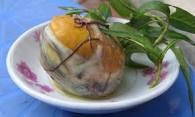 |
According to the National Institute of Nutrition, 100g of fertilized duck eggs contain 182 kcal of energy, 13.6g of protein, 12.4g of fat, 600mg of cholesterol, 82mg of calcium, 212mg of phosphorus, 3mg of iron, 450mcg of beta-carotene, and 875mcg of vitamin A...
Dr. Le Thi Hai from the National Institute of Nutrition advises: "Balut (fertilized duck egg) is good, but it shouldn't be given to children in large quantities because it's too rich in nutrients, and children can't absorb it all, easily leading to bloating and indigestion."
According to Traditional Medicine Practitioner Vu Quoc Trung, the process of developing from an egg into a fertilized duck egg produces many substances beneficial to the body, such as proteins metabolized into amino acids and fats metabolized into easily absorbed fatty acids, thus enhancing nutrition. However, young children have different digestive and metabolic capabilities than adults, so they should not be given this food.
"Children aged 9 and above can eat fertilized duck eggs," said traditional medicine practitioner Trung. Adults can eat 1-2 fertilized duck eggs a day, but note that they contain a lot of cholesterol. People with high blood cholesterol should not eat too many.
According to Dr. Hai, the best food for children is boiled free-range chicken eggs or eggs added to porridge. Eggs are essential for the development of young children, which is why nutrition, which was previously divided into four food groups, has now been separated into eight. The protein group, including milk, beans, and eggs, has been divided into three separate groups. "Previously, eggs and milk were both included in the protein group, meaning that children could eat plenty of meat if they didn't eat eggs or drink milk. Now that eggs are separated, they are an indispensable component," Dr. Hai explained.
Typically, a free-range chicken egg weighs about 40g (including the shell). Without the shell, 100g of eggs is equivalent to 3 eggs. 100mg of chicken egg provides 166 kcal of energy, 14.8g of protein, and 11.6g of fat. Eggs are one of the foods that provide a lot of high-quality, easily absorbed protein (the protein absorption rate of eggs is 100%). In addition, the egg yolk provides many fats, vitamins, and minerals essential for a child's development, such as iron, vitamin A, and zinc.
For children aged 6-7 months: Only half a chicken egg yolk should be given per meal, 2-3 times per week.
For children aged 8-12 months: Give one egg yolk per meal, 3-4 egg meals per week.
Children aged 1-2 years: Eat 3-4 eggs per week, including both the whites and yolks.
Children aged 2 and above who like eggs can be given one egg a day.
According to Zing.vn