

About Cua Lo, a land rich in legends
(Baonghean.vn) - Cua Lo is blessed with many scenic spots. With its "two dragons facing each other" geographical location, this land is considered a green gem of the East Sea, rich in culture, history, and mysterious legends.
Cua Lo is situated between two major rivers, the Lam River to the south and the Cam River to the north, with the East Sea in front. Looking into the distance, the Thach Dong mountain rises high to the right, while the Song Ngu and Hon Mat islands are visible to the left.
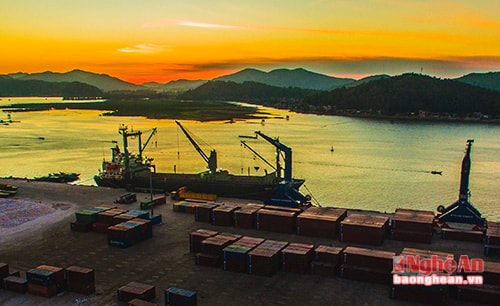 |
| Cua Lo, the final point where the Cam River flows into the sea - Photo by Sy Minh |
In addition, mountains such as Bang Nhan, Kiem Mountain, Lo Mountain, and Song Ngu Island surrounding the area act as a protective barrier, which is a unique feature of Cua Lo.
The land of Cua Lo, with its majestic mountains, has nurtured and produced an abundance of outstanding individuals. National history records heroes from this land, excelling in everything from literature to martial arts, medicine to technology. Cua Lo, with its Sword Mountain and Flag Mountain, creates a sacred atmosphere conducive to the flourishing of martial arts: it is the birthplace of outstanding military generals such as Duke Nguyen Xi and Grand Tutor Nguyen Su Hoi. The Nguyen Dinh family, descendants of Nguyen Xi, boasts dozens of individuals who have been granted the titles of Duke and Marquis.
In modern times, Cua Lo also has four revolutionary fighters with the rank of general: Hoang Dan, Hoang Khue, Hoang Mien, and Le Xuan Kien, along with many others holding the rank of colonel…
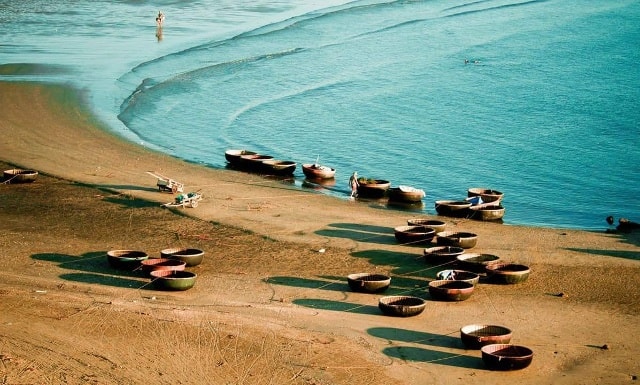 |
| A corner of Cua Lo beach |
Cua Lo beach is over 10km long, with a gentle slope, smooth white sand, and clear, clean water, free from mud unlike some other beaches.
Above the beach, there are also many large forested areas with lush rows of casuarina and coconut trees. The seawater here has a very high salinity. Therefore, Cua Lo is one of the ideal beaches in Vietnam.
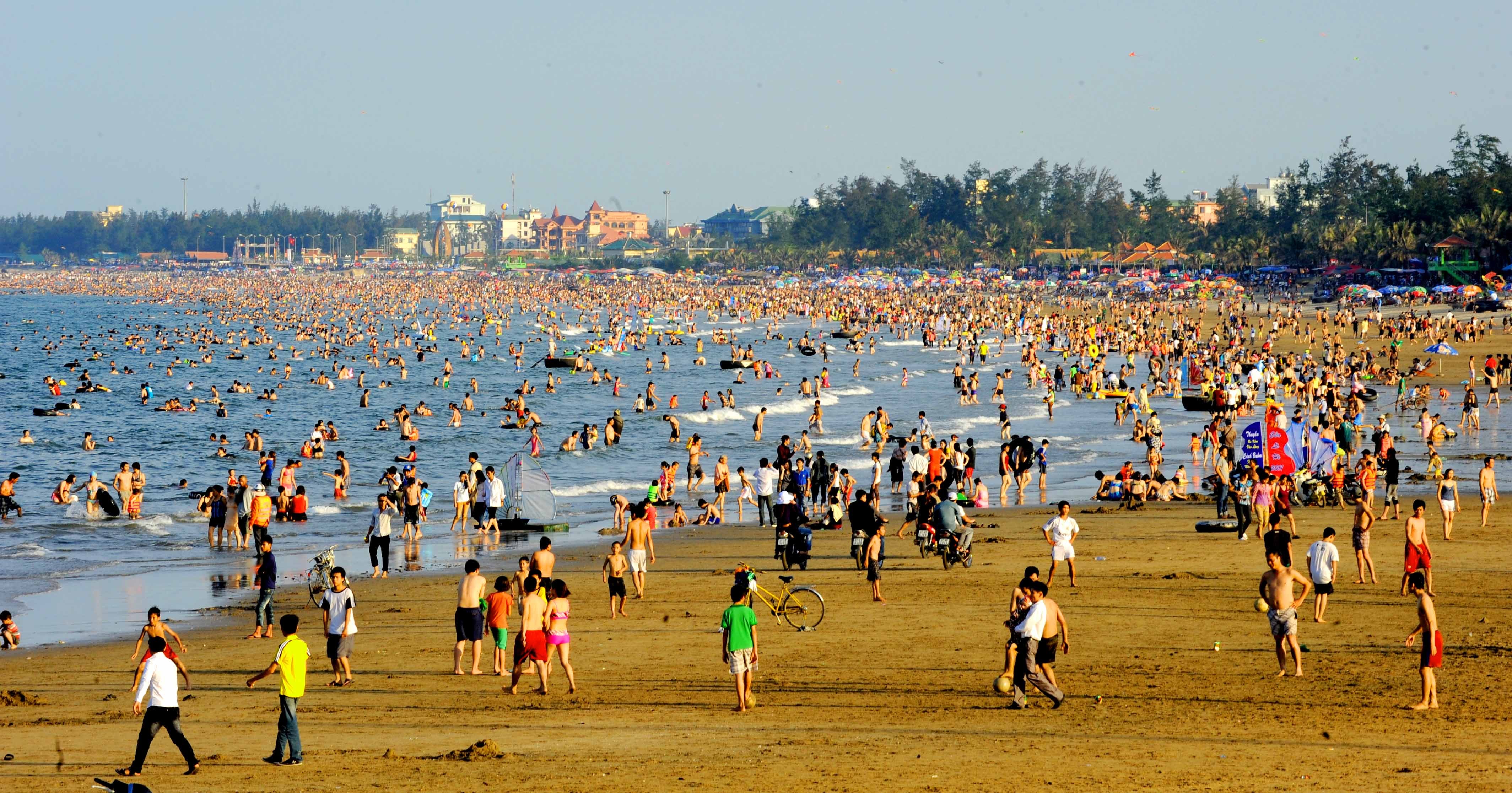 |
| Tourists swim at Cua Lo beach. |
From Cua Lo town, tourists can also participate in other attractive tours within and outside the town, such as: Kim Lien (Nam Dan), Ho Chi Minh Square (Vinh City), Pu Mat primeval forest (Con Cuong), Lac Xao (Laos) and Thailand.
In Cua Lo, tourists can visit Lan Chau Island, Ngu Island, and the Cua Hoi eco-tourism area. In particular, visitors can visit the Immortal's Tomb (on Lan Chau Island), Song Ngu Pagoda on Ngu Island by speedboat, or take a cruise to Lo Son Pagoda, Van Loc Temple, and Thu Lung Temple...
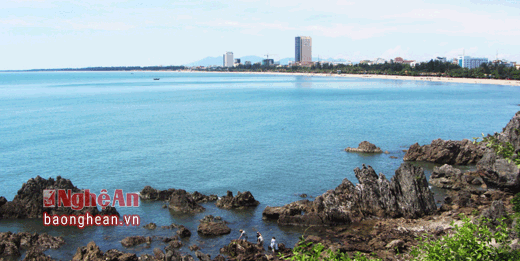 |
| Cua Lo as seen from Lan Chau Island. |
Lan Chau Island, located right next to Cua Lo beach, divides the beach into two distinct areas. At the foot of the mountain, to the southeast, there are many large, strangely shaped rocks with various names. On the island, in 1936, King Bao Dai had a castle built for his retreat.
From here, visitors can admire the panoramic view of Cua Lo town and gaze out at the vast ocean. This area is home to a uniquely beautiful species of sea daisy, whose seeds were brought here from France by King Bao Dai himself.
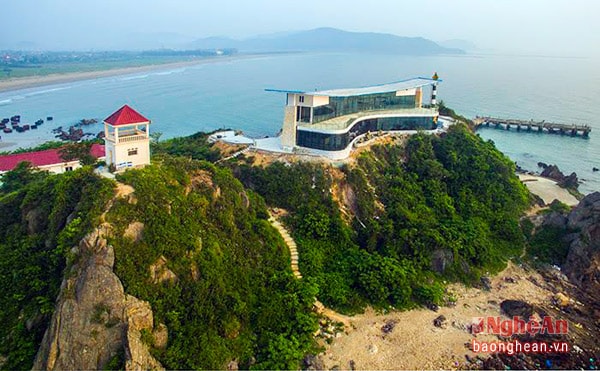 |
| The Lan Chau 1 Pavilion and restaurant on top of Lan Chau Island offer visitors panoramic views of the entire Cua Lo sea area. Photo by Sy Minh. |
Ngư Island Pagoda was built in the 13th century during the Trần Dynasty. The pagoda consists of two main areas: the temple itself and the temple garden. The pagoda is built in the shape of the Chinese character "đinh" (a type of Chinese character), comprising a lower hall and an upper hall. The lower hall has three bays covered with yin-yang tiles and is dedicated to the god Sát Hải Đại Vương Hoàng Tá Thốn; the upper hall also has three bays covered with yin-yang tiles and is dedicated to the Buddhas. The lower beams are carved with the Four Sacred Animals (Dragon,麒麟, Turtle, Phoenix), which are very beautiful and sacred. Princess Huyền Trân, rescued by General Trần Khát Chân and brought to Thăng Long, once visited the island and the pagoda to offer incense and pray.
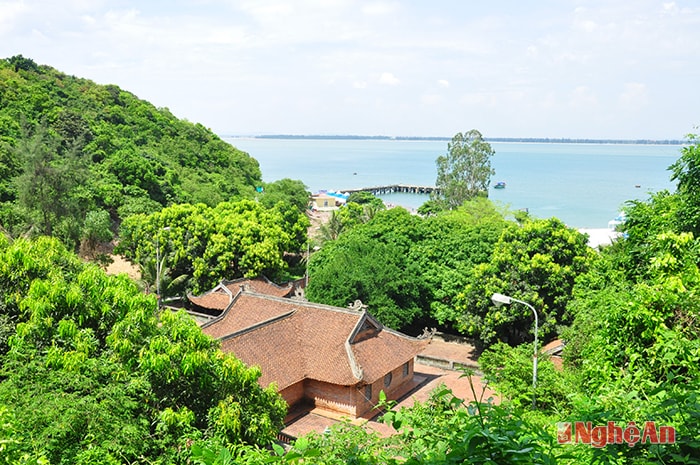 |
| Dao Ngu Pagoda - Photo by Tran Hai |
The temple garden has many naturally growing trees such as: Banyan, Mung, and Duoi (currently there are 2 ancient Barringtonia trees and 1 ancient Duoi tree in the temple garden) and a well called the Jade Well because it is the only place on the island with fresh water. The well is not deep but the water is very clear, sweet, and never runs dry.
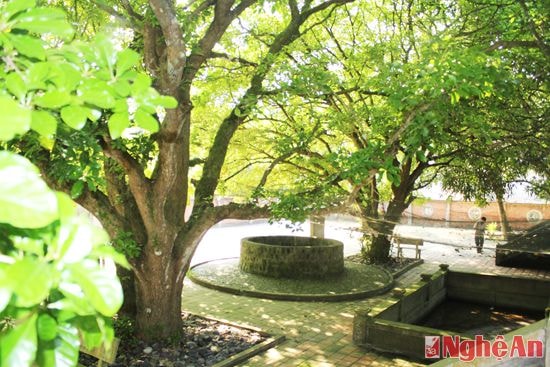 |
| Two 700-year-old Barringtonia trees and a jade well in front of the temple on Ngư Island (on Ngư Island). |
The temple grounds have two Barringtonia trees, one of which is about 700 years old. Between the two large and small islands, there is also a pebble beach with clear blue water all year round, known as Tien Beach.
Harbors have also been built on Song Ngu Island and Lan Chau Island, making it convenient for pilgrims and tourists to visit the temples.
Visiting Cua Lo, we can experience a land rich in legends and enjoy the beautiful scenery, along with exciting experiences of the blue sea, white sand, and golden sunshine...
NN (compiled)