
Swamps containing mysterious corpses in Denmark.
The Nordic countries have dark swamps where the bodies of people considered sacrificial offerings to the gods are preserved, dating back thousands of years.
The Nordic countries have dark swamps where the bodies of people considered sacrificial offerings to the gods are preserved, dating back thousands of years.
The train, traveling from Hamburg (Germany) to Denmark, rumbled through lush green fields and birch forests, with golden sunlight dappling through the leaves, carrying a group of travelers, including journalist Adam Graham, to a land of bodies buried in mud for thousands of years.
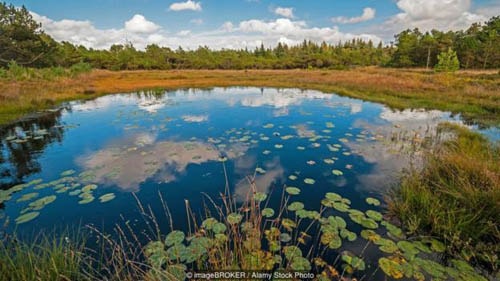 |
These swamps containing corpses dating back 2,000 years have been found across northern European countries, from Ireland to Finland. Photo: Alamy. |
Archaeologists believe these bodies were victims who were murdered and then thrown into the swamps as part of a ritual sacrifice to the gods. They were often criminals or immigrants.
Denmark has one of the highest concentrations of swamps in the world, containing human remains that have remained almost perfectly preserved for 2,000 years. Between the 1800s and 1960s, Denmark stumbled upon these bodies. This was also a period when the country still used peat as fuel.
To better understand these mysterious deaths, journalist Adam traveled to Vejle, a small town of just over 100,000 people located in the southeastern part of the Jutland peninsula, 240 km west of Copenhagen. It boasts stunning scenery and is also home to archaeologist Mads Ravn, head of the Vejle Museum. He oversees a fascinating collection of artifacts, including Roman coins, swords, and swastika brooches – items found in swamps and used as offerings to the gods (including the god of iron).
Talking to Mads in a dimly lit room at the back of the museum,He saw the body of a woman.Haraldskær was placed in a glass coffin. The woman's facial expressions revealed shock, fear, and disbelief. Adam said he felt quite awkward facing the corpse.
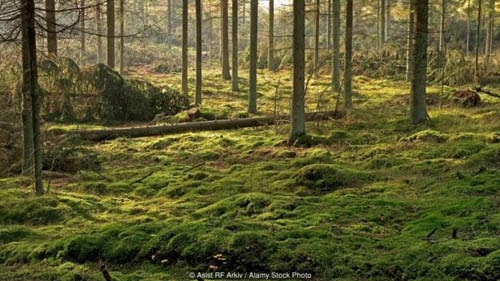 |
Scientists point out that most of the bodies found buried in the mud were brutally murdered, with some having ropes strangled. Photo: Alamy. |
"She was discovered by a peat digger in the swamp in 1835. We believe she lived in the 10th century, during the time of Queen Gunhildd. She was drowned by her own husband," Mads said, scratching his beard.
However, Mads added that the body was later re-identified. It dated back at least 2,200 years. The woman was found completely naked, wrapped in a robe, and submerged in a swamp after she had died. Her stomach contained food, and it is believed to have been a last and unusual meal in the society of that time.
Adam's next stop was Aarhus, Denmark's second-largest city, where he visited a museum.Moesgaard. Here lies the coffin of a man also found beneath the swamp. His body was preserved almost perfectly beneath the deep mud, his skin still nearly intact, his face delicate. "He was a handsome man,"archaeologist Pauline Asingh stated.
"He was tied at the knees and his throat was slit by someone standing behind him. It sounds violent and barbaric, but sacrifice was an important part of the cultural life of the people at that time."Pauline Asingh added.
The journalist's final stop on his journey was a small town.Silkeborg, 44 km from Aarhus. At the museum.In Silkeborg, a town, lies the body of a 2,400-year-old Tollund man. His body was remarkably well-preserved and was discovered in 1950. He is believed to have died by hanging, with evidence of nooses. The body had full lips, and Adam was struck by the corpse's enigmatic smile.
In the next room in the museum is an Elling woman, found 40 meters away from the Tollund man. She is believed to have also been hanged, possessing long, beautiful hair.
The journey was over, but what remained in Adam's mind were the swamps, their vibrant colors gleaming in the sun, nestled beside dense thickets. These places held the secrets of millennia of ancient customs, ritualistic practices, and terrifying sacrifices. The swamps preserved everything within them for millennia, a reminder of their power and authority in the ancient world.
According to VNE