
Examine the bottom of the bottle to distinguish between real and fake wine.
(Baonghean.vn) - As Tet (Lunar New Year) approaches, the market for counterfeit and smuggled liquor becomes increasingly active, and fake liquor poses a health risk to consumers. So how can you distinguish fake liquor?
(Baonghean.vn) - As Tet (Lunar New Year) approaches, the market for counterfeit and smuggled liquor becomes increasingly active, and fake liquor poses a health risk to consumers. So how can you distinguish fake liquor?
According to health experts, substandard and counterfeit alcoholic beverages can cause acute poisoning, with many cases leading to death. Counterfeit and low-quality alcohol often contains high concentrations of methanol or aldehyde, substances that strongly affect nerve cells and can quickly cause hypotension, dizziness, vomiting, blurred vision, and even death. Even with timely treatment, it can lead to blindness, and in many cases, irreversible vision loss.
Hanoi police dismantle a ring producing and selling counterfeit imported liquor. Photo: Doan Tan/TTXVN. |
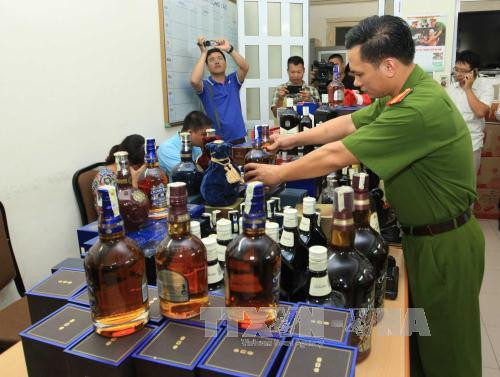
The following tips will help you gain the knowledge and experience to distinguish between fake and genuine wine:
Check import stamps and anti-counterfeiting stamps:Some well-known brands such as Chivas, Martell, Royal Solute, etc., often have anti-counterfeiting seals in the form of tamper-evident stickers affixed to the neck of the bottle. These seals cannot be peeled off and are very easy for consumers to check and identify.
Consumers can identify genuine labels by wetting the label with water or using a fluorescent pen. Shining a fluorescent light on the label will reveal the brand name printed in relief, indicating genuine wine. Counterfeit wine will not be able to replicate this.
Outer packaging of the bottle:Typically, counterfeit bottles on the market use genuine bottles and caps that have been illegally acquired. Because the caps are removed by bartenders at restaurants using specialized tools, without tearing the seal or breaking the tamper-evident seal, cracks will appear on the rim. Even after resealing with a machine, these cracks will not disappear.
Alcohol level in the bottle:Generally, well-known international brands are industrially produced and automatically bottled, so in principle, the color and level of the liquor inside the bottles are very consistent. Counterfeit liquor, being made manually, often has inconsistent color and level. When observing a row of bottles of the same brand in a store, if you see a bottle with a different level than the others, you can suspect it might be counterfeit and continue checking further factors.
Check the wine label:The major difference between genuine and counterfeit wine labels is that fake labels cannot replicate the embossed printing, metallic colors, and other techniques used by the original brand.
Check the cap/stopper:Counterfeiters often reuse genuine caps, or use completely fake caps. Reused genuine caps may still have small scratches from the prying process, while the color of fake caps looks dull, and the grooves on fake caps are not as refined and even as those on genuine caps…
Check the bottom of the bottle:Some types of wine are counterfeited by drilling a tiny, hair-thin hole in the bottom of the bottle to drain out the real wine and pump in fake wine. Therefore, when buying, you should carefully examine the bottom of the bottle; if there are any unusual marks, you should not buy it.
If you receive a bottle of wine as a gift and want to know if it's real or fake, put it in the freezer for 12 hours. If it freezes solid, it's likely counterfeit.
Test for alcohol level:Pour a small amount of liquor into your palm, rub your hands together, then bring them to your nose to smell. If you detect a strong, pungent smell of alcohol, the liquor has a high alcohol content and may be counterfeit liquor made from pure alcohol.
Counterfeit liquor lacks the characteristic aroma, has a slightly bitter taste, and leaves a harsh aftertaste. It can also cause headaches after consumption.
In addition to the tips above, consumers should choose reputable stores when buying wine or ask relatives or friends to buy it for them from the country of origin and bring it back.
| When making purchases, buyers should request an invoice from the seller, carefully check the warranty terms and conditions before buying. In particular, if you mistakenly buy counterfeit or fake goods, you should keep the goods in their original condition so you can contact the seller to request an exchange or refund, compensation, and simultaneously report the incident to the Market Management authorities and the police for handling. |
NN(Synthetic)
| RELATED NEWS |
|---|