

The meaning of the red dot on the forehead of Indian women.
"Bindi," the red dot on a woman's forehead, is considered a sign of good fortune and luck. The name comes from "bindu," which in Sanskrit means "point" or "dot," a red dot made from cinnabar powder.
The bindi has ancient origins but has gradually lost its significance in modern life. It can be used all over the world as an accessory or piece of jewelry. However, in Indian tradition, the bindi still holds special meaning, even though it is no longer required to be red as before.
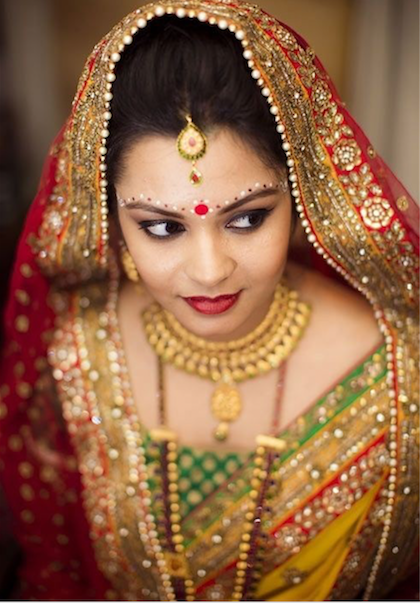 |
| The red dot is considered a charming feature of Indian women. Photo: Pinterest. |
According to Indian beliefs, the red dot usually has two main layers of meaning. Firstly, it helps indicate a woman's status. Only married women are allowed to have this lucky mole, signifying that they are in love and living happily. Widows are not allowed to do this and must wear black, symbolizing loss.
Secondly, the area between the eyebrows is considered the center of wisdom, clarity, and spiritual strength. In Hindu culture, prayer is an indispensable part of life, but they cannot spend all day praying. Therefore, the red dot on the forehead serves as a reminder of life's purpose, helping them see what they need to do to achieve enlightenment. Many also believe that the red bindi is like the third eye of the Indian people.
However, with the development of society, the scope of women wearing lucky body marks has also expanded to include children, unmarried girls, and even men. For young children, the bindi helps them stay healthy, free from illness, and ward off evil spirits. For young girls, the red dot can be replaced with gemstones, chosen to suit their face, hairstyle, and clothing, enhancing their beauty and the mysterious charm of East Asian women. In this case, the bindi takes on a decorative meaning and has no limitations on color.
According to VNE
| RELATED NEWS |
|---|