

Thanh Luong – A rural area rich in revolutionary traditions.
The people of Thanh Luong commune (Thanh Chuong district, Nghe An province) are very proud that their homeland has many historical relics, vivid evidence of the rich historical and cultural traditions of the region. This area currently has 4 state-ranked relics, including 2 national-ranked relics (Nguyen Sy family church and Nguyen Sy Sach church) and 2 provincial-ranked relics (Nguyen Duy family church, and the ancestral church and tomb of the Chu family).
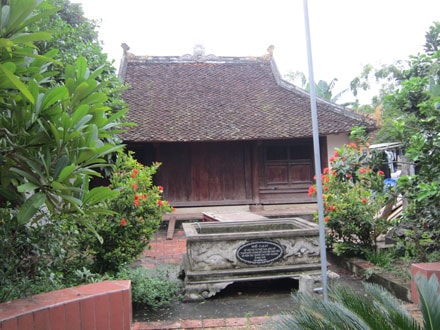
Nguyen Sy Sach Church, a national historical and cultural relic.
According to the family tree, the Nguyen Sy family came to the Con Lim area to clear land and establish Tu Vien village (now Thanh Luong commune), spanning 15 generations. Over time, this family has flourished and produced many scholars and military leaders who have brought glory to their homeland and country. The descendants of the Nguyen Sy family in Thanh Luong commune have contributed to the patriotic and scholarly traditions of Nghe An province in general and Thanh Chuong district in particular. Notable figures include the famous general Nguyen Sy Xung (during the Later Le Dynasty), who served in the army for 18 years and was promoted to the rank of Valiant General and Deputy Commander. Later, he was also one of the close advisors of Bac Binh King Nguyen Hue, playing a major role in repelling the Qing invaders. Nguyen Sy Xung's younger brother, Nguyen Sy Bieu, was granted a royal decree by Emperor Minh Mang (Nguyen Dynasty) for his service in suppressing bandits and oppressing the people. Nguyen Sy Xung's son, Nguyen Sy Quyen, also held the position of Military Secretary.
Regarding scholarly traditions, there was Nguyen Sy Lang (also known as Nguyen Thuc Hang) who passed the Bachelor's examination in the year Canh Ngo (1870) but did not enter official service, instead returning to his hometown to work as a teacher. Nguyen Sy An passed the Vice-Bachelor's examination in the year Giap Thin (1844) and was appointed by the Nguyen dynasty to the position of Han Lam Vien Kiem Khao (Academician of the Han Lam Academy) and later became a lecturer at the Han Lam Vien Academy...
Throughout the periods of struggle against French colonialism, the Nguyen Sy family ancestral temple served as a meeting place for intellectuals from all regions to discuss ways to save the people and the country. Particularly during the Nghe An-Tinh Hoa Soviet Uprising (1930-1931), it was the meeting place, printing location, and storage site for Party documents. Here, at the end of 1930, under the direction of the Nghe An Provincial Party Committee, the Xuan Lam General Committee held a conference to establish the Quang Trung Party Branch, with Comrade Nguyen Sy Tam as Secretary. At the same time, the Nguyen Sy family ancestral temple is also closely associated with the life of Comrade Nguyen Sy Sach, a pioneering and loyal revolutionary cadre of the Party. The Nguyen Sy family ancestral temple was established by later generations to worship their ancestors who contributed to the nation and its people. Every year, the family holds a grand ceremony on the 15th day of the first lunar month and another ceremony on the 17th day of the fifth lunar month. And on the annual War Invalids and Martyrs Day (July 27th), departments and organizations at the district and commune levels come here to light incense and pay respects to Comrade Nguyen Sy Sach.
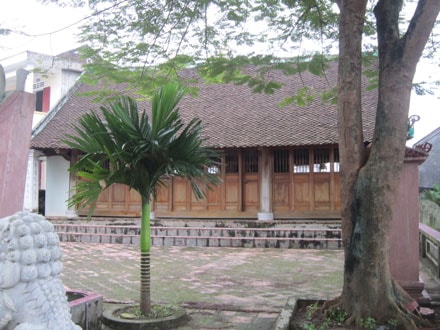
The main temple is where the community's spiritual and cultural activities take place.
The ancestors of the Nguyen Duy family in Thanh Luong were also pioneers who settled the Con Lim-Ke O area, contributing to transforming this barren land into a vibrant and prosperous countryside. From this land, the Nguyen Duy family produced individuals who achieved glorious accomplishments, contributing to the traditions of their homeland and serving as role models for generations to come. During the Tay Son dynasty, Nguyen Duy Dich, Nguyen Duy Mon, and Nguyen Duy Nam helped Emperor Quang Trung decisively defeat the Qing army, achieving great success and receiving five imperial decrees in recognition of their contributions. During the Nghe An-Tinh Gia Soviet Uprising, descendants of the Nguyen Duy family enthusiastically joined the ranks of those fighting against oppression and tyranny. Notable examples include Nguyen Duy Tram, Nguyen Duy, Nguyen Duy Tien, Nguyen Duy Tu, and Nguyen Duy Thinh... And the Nguyen Duy family ancestral temple was chosen as a printing base for the Party's propaganda materials. This was also where Party leaders met and drafted plans to fight the enemy, and it is one of the eight key locations in the Nghe An-Tinh Gia Soviet Uprising in Thanh Chuong.
It should be added that the Nguyen Duy ancestral temple is a place of worship for the ancestors, including figures whose names are recorded in the golden annals of national history. These include Dinh Quoc Cong Nguyen Bac – the founder of the family, who helped Dinh Bo Linh quell the rebellion of the 12 warlords and establish a new dynasty; Nguyen Trai – a national liberation hero, a world cultural figure, and a valuable advisor to Le Loi, who played a major role in defeating the Ming invaders and saving the nation from disaster; and Nguyen Anh Vu, the only surviving son of Nguyen Trai after the Le Chi Vien massacre. This is also the place of worship for Nguyen Duy Hien and Nguyen Duy Nang, the first members of the family to settle and establish the village here.
Along with the Nguyen Sy and Nguyen Duy families, the Chu family also arrived in the Ke Tram area quite early. This family also produced many famous figures and meritorious officials of the country. The first was Doctor Nghia, Duke Chu Tat Thang, who passed the imperial examination at the young age of 18, excelling in both literature and martial arts, and achieving many victories under the Later Le Dynasty. Next was Doctor But Xuyen, Marquis Chu Quang Tru, who held the position of Left Vice Minister of the Ministry of Finance, concurrently serving as Imperial Censor, and was granted the title of But Xuyen Marquis by the Later Le Dynasty. Doctor Van Thuy, Marquis Chu Dy Hien, was a talented and virtuous official, loyal to the people. In 1619, King Le Than Tong promoted Chu Dy Hien to the rank of Special Envoy, Grand Officer of the Thirteen Provinces, granted him the title of Marquis, and bestowed upon him a pair of "Imperial Swords." His son, Duke Giap, Chu Phung Hue, was appointed to the position of Right Deputy Governor.
The Chu family genealogy mentions two imperial consorts, Empress Chu Nhũ Nhân, but only one has been identified so far: Chu Thị Ngọc Quỳnh. Born in 1632, she was the daughter of Chu Phụng Trực. A woman of exceptional beauty and talent, Ngọc Quỳnh was selected to enter the palace at the age of 16. Later, she married Thái Bảo Quận Công Trịnh Xuân and was granted the title of Princess Consort. At the age of 19, her husband passed away, and she decided to remain chaste and devoted to him. Touched by her devotion and virtue, the king allowed her to return to her hometown to govern a large area of land. During the Lunar New Year of Tân Mão (2011), descendants of the Chu family were honored to receive the certificate recognizing the ancestral temple and tomb of the Chu family as a historical and cultural relic.
Furthermore, Thanh Luong commune currently houses the Ca Temple, a historical and cultural relic, a spiritual sanctuary for the entire community. According to the elders of the commune, the Ca Temple is very old, a place of worship for the sacred deity who protected and blessed the peaceful and prosperous life of Tu Vien village. For a long time, due to wartime conditions, the people here did not have the means to maintain the temple and offer incense, causing it to seriously deteriorate. Since 2000, the people of Thanh Luong commune have contributed money and labor to rebuild the Ca Temple on its original site and hold a ceremony on the 24th day of the 2nd lunar month every year.
Today, the descendants of the families in Thanh Luong are always striving in their studies, scientific research, and productive labor, contributing to building their homeland and remaining worthy of the traditions their ancestors have built for generations.