
US-China engage in a war of words over currency.
Beijing reacted angrily yesterday to the US Senate's vote to pass a bill aimed at sanctioning Beijing on the grounds that the yuan was being artificially devalued.
Beijing reacted angrily yesterday to the US Senate's vote to pass a bill aimed at sanctioning Beijing on the grounds that the yuan was being artificially devalued.
The People's Bank of China was quite cautious yesterday in criticizing the US Senate's decision. They argued that the bill would not solve the difficulties facing the US economy. Instead, the bill would seriously impact China's ongoing exchange rate reform, potentially even leading to a trade war. The central bank also stated that, when inflation is taken into account, the value of the yuan has already increased.
The Chinese Foreign Ministry argues that the US bill violates the rules of the World Trade Organization. The Ministry of Commerce says it is "unfair" and violates international rules.
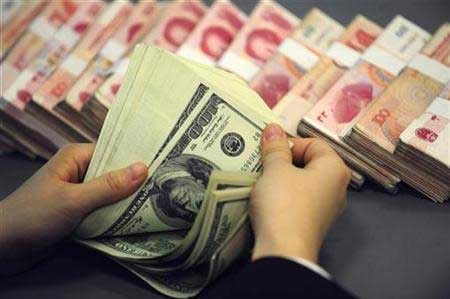
Illustration photo: Asianews
However, economists do not believe that these angry words will lead to policy changes or retaliation, at least not at this time, as the fate of the bill remains uncertain. The bill passed in the Democratic-controlled Senate. Meanwhile, it will have to go through a vote in the Republican-majority House of Representatives before being presented to the president.
"I don't think China will take any major action in response," said economist Wang Tao, adding that she also doesn't believe the bill will become law.
The bill passed by the U.S. Senate seeks to impose tariffs on goods exported from countries whose currencies are undervalued. Supporters of the bill complain that the yuan is undervalued, making Chinese goods cheaper in the international market. They believe that raising the value of the yuan would boost U.S. exports and create thousands of jobs for Americans.
Opponents argue that the bill accomplishes nothing except angering China. They say that US-China relations face even bigger problems.
Meanwhile, senior Chinese officials have become increasingly hardline in their approach to the U.S. since the global recession. Many believe Beijing is on an upward trajectory, while Washington is on the verge of a prolonged recession. Others see China as having the advantage as the largest creditor of the U.S. and the only major economy in the world still experiencing rapid growth.
Beijing officials blame Washington for plunging the world into crisis due to its poor economic management. They also oppose US actions aimed at boosting economic recovery, including bond purchases to lower interest rates. According to Beijing, this has caused the dollar to depreciate and fueled inflation in China and many other emerging economies.
Chinese leaders are also irritated by the US selling weapons to Taiwan and by US efforts to strengthen diplomacy in Southeast Asia, where China and several ASEAN countries have overlapping territorial claims in the South China Sea.
However, Chinese leaders also do not want to worsen relations with the US ahead of the US presidential election and the political transition in Beijing next year. They need foreign policy stability to focus on this process.
Chinese leaders also recognize that in a globalized economy, China's fate is closely tied to that of the United States. A trade war would affect both countries, with Beijing potentially suffering more losses due to its heavy reliance on exports.
Therefore, behind the strong rhetoric, Beijing still leaves open the possibility of reconciliation by emphasizing its long-standing commitment to continuing exchange rate reforms. This could be a hopeful sign that the US House of Representatives will not pass the bill. In fact, both the Ministry of Foreign Affairs and the People's Bank of China have reiterated China's position that Beijing will continue to increase the flexibility of the yuan.
Meanwhile, this bill puts the White House in a delicate position. Like previous administrations, President Barack Obama's administration understands that it needs Beijing's cooperation on a range of issues from economics to security. However, criticism of China remains prevalent. Many Democratic politicians, including those in major industrial states, have said that China's monetary policy is unfair to American workers.
"They apply free trade laws when it benefits them and ignore them when it's convenient for them," said Senator Charles Schumer, a supporter of the bill. "For years, Americans have been frustrated by this but haven't done anything effective to stop it."
Opponents of the bill say that instead of instigating a trade war, the U.S. should address its own problems, such as the growing national budget deficit. "We know what to do, but we're not doing it," said Senator Bob Corker. "So we have to find a scapegoat."
The U.S. House of Representatives previously voted to pass a similar bill in 2010 when the Democrats held a majority. However, the bill's future remains uncertain as Republican leaders argue it would have far-reaching consequences.
According to VnExpress