
The recurring theme of "dirty" vegetables
Vegetables are a more common part of daily meals than meat or fish, but in reality, most consumers are eating vegetables that do not meet food safety and hygiene standards.
Vegetables are a more common part of daily meals than meat or fish, but in reality, most consumers are eating vegetables that do not meet food safety and hygiene standards.
The recurring theme of "dirty" vegetables.
Hanoi and Ho Chi Minh City alone consume thousands of tons of vegetables every day, but the amount of clean vegetables supplied to these two markets is negligible. Most consumers still have to eat them without knowing if they are truly "clean."
The press has published many articles about vegetables using words like "shocking," "horrifying," and "red alert"... But people still have to eat vegetables because they can't find clean vegetables in the market, and even if they do, the quantity is insufficient to meet consumption needs, and the prices are higher than most consumers would like.
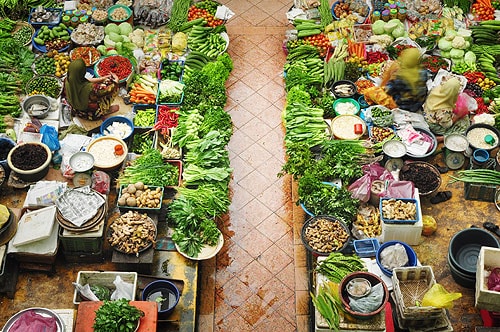
In recent years, many provinces and cities have implemented safe vegetable production programs, but these seem to be more of a solution to appease public sentiment than a strategic project of national importance. In reality, some clean vegetable farming projects have failed. Furthermore, some private businesses that claim to supply clean vegetables are actually engaging in fraudulent practices by mixing contaminated vegetables with clean ones and distributing them to the market.
Furthermore, in reality, the story of clean vegetables still contains too many uncertainties and paradoxes. Recently, at the workshop "Orientation for the production and consumption of water spinach" organized by GAP Agricultural Joint Stock Company in coordination with the Inter-district Agricultural Extension Station of District 12 - Go Vap (Ho Chi Minh City), farmers participating in the safe water spinach cultivation program in Quarter 2, Group 312, Thanh Xuan Ward, District 12, Ho Chi Minh City, revealed that they also wanted to grow clean vegetables but could not find a market. If they took them to the market themselves, buyers would complain if the vegetables didn't look appealing. Ultimately, they had to make their water spinach whiter and more vibrant by using chemicals to make it easier to sell.
The health sector has repeatedly warned about the health risks associated with consuming vegetables that are produced and consumed under unsanitary conditions, such as contamination with microorganisms, toxic chemicals, and heavy metals.
At the aforementioned workshop, Ms. Nguyen Thi Hong, head of the inter-district agricultural extension station of Districts 12 and Go Vap, frankly stated: “Given the alarming situation regarding food safety and hygiene today, especially the food poisoning cases that have occurred, food processed from green vegetables is one of the primary causes that needs to be considered. The immediate harm of eating ‘dirty’ vegetables is poisoning, but more frightening is that the toxic chemicals in these vegetables will gradually seep into the body of the consumer, potentially leading to incurable diseases such as cancer…”
The consequences of contaminated vegetables are enormous, yet the "sad refrain" of contaminated vegetables continues to be played out day after day, month after month. Contaminated vegetables are a well-known, frustrating issue that has been discussed endlessly. Despite repeated discussions, the situation remains unchanged. So how can we avoid contaminated vegetables?
You need to be "smarter" when buying vegetables.
Associate Professor Tran Dang, former Director of the Food Safety and Hygiene Department, once advised consumers to be "smarter" in choosing vegetables to protect themselves and their families. He also shared his experience in choosing fresh fruits and vegetables: buy from familiar vendors; look for any "foreign substances" such as spots or white marks, as many unsafe fruits and vegetables still have pesticides on their stems and leaves; and smell no pungent odor or chemical pesticide smell.
The doctor also kindly instructed the patient on how to wash the plant, such as carefully picking out the leaves, soaking it in a basin full of water for 10-15 minutes, rinsing it under running water, and also soaking it in potassium permanganate solution…
Some experts argue that soaking vegetables in salt water, or even commercially available vegetable wash, cannot completely guarantee that contaminated vegetables will become clean. Soaking vegetables in diluted salt water can only remove some microorganisms; impurities and pesticides are difficult to eliminate using this method. A more effective method is to thoroughly wash vegetables under strong running water and then put them in an ozone sterilizer.
Consumers' habit of buying vegetables that are bright green and vibrant still persists. But that's not a wise choice. The most visually appealing vegetables are often those that have been treated with pesticides or plant protection chemicals.
Ms. Le Thi Tu Anh, Chairwoman of the Board of Directors of GAP Agricultural Joint Stock Company, shared: “It's a misconception that vegetables that look green and white on the outside are delicious. Safe vegetables may not look as appealing, but they still taste good, and most importantly, they are good for consumers' health.”
According to a vegetable farmer in Thanh Xuan ward, District 12, Ho Chi Minh City, don't dismiss vegetables that have worms or don't look appealing; those are actually safer vegetables. On the other hand, bunches of vegetables that look large but feel light when you pick them up, with bright green leaves, or water spinach that is pure white, have almost certainly been treated with pesticides and growth stimulants.
Recently, someone shared with me an interview with vegetable and fruit farmers titled...What lies behind the fresh, beautiful vegetables and fruits?And finally, they uttered a blunt statement: "a silent death!" So, we hope consumers will equip themselves with a little more knowledge to choose safe fruits and vegetables, so they don't have to suffer a "silent death."
According to Thanh Nien