

Tax arrears: Many entities are taking advantage of the situation.
According to data from the Nghe An Tax Department, by the end of February 2012, the total tax debt in the province reached 739 billion VND (rounded figure). Ms. Thuy Anh, Deputy Head of the Tax Management and Collection Department of the Tax Department, stated that the units under the Department's management owed over 439 billion VND by the end of February. The 10 units with the largest debts owed between 2 billion and 19 billion VND. Among them are very financially strong enterprises such as: Vietnam-Laos Investment and Economic Cooperation Corporation, owing 19.4 billion VND; Central Region Investment and Development Joint Stock Company, owing 14.4 billion VND; Nghe An Bridge and Road Construction Company, owing 13.8 billion VND...
(Baonghean)According to data from the Nghe An Tax Department, by the end of February 2012, the total tax debt in the province reached 739 billion VND (rounded figure). Ms. Thuy Anh, Deputy Head of the Tax Management and Collection Department of the Tax Department, stated that the units under the Department's management owed over 439 billion VND by the end of February. The 10 units with the largest debts owed between 2 billion and 19 billion VND. Among them are very financially strong enterprises such as: Vietnam-Laos Investment and Economic Cooperation Corporation, owing 19.4 billion VND; Central Region Investment and Development Joint Stock Company, owing 14.4 billion VND; Nghe An Bridge and Road Construction Company, owing 13.8 billion VND...
Currently, in addition to the general difficulties of economic downturn, inflation, and the impact of cuts in infrastructure construction following the implementation of Resolution 11/CP, a significant number of businesses have not yet fully grasped their obligation to voluntarily pay taxes. They deliberately delay and misappropriate tax revenue, citing the complex procedures involved in obtaining bank loans and the fact that bank interest rates are higher than the penalties for late tax payments. However, there are also some businesses facing genuine difficulties that need assistance.
Currently, the list of entities with the highest tax arrears, representing three difficult-to-collect categories, includes: the group of basic construction units directly affected by Resolution 11/CP; the group of real estate businesses currently frozen; and the group of transportation services directly affected by the recent increase in fuel prices.
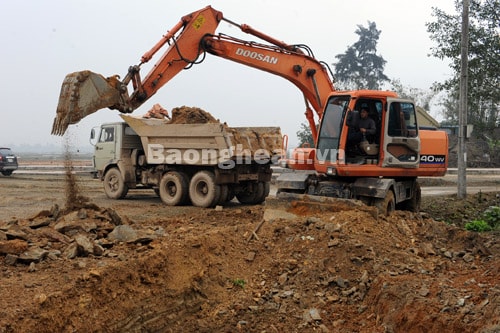
Road construction in Nghi Loc. Photo: Sy Minh
At Company 473, the atmosphere was deserted. The Deputy Head of Administration sadly explained: "It's not that we can't borrow capital from banks for production, or that we don't have projects to work on, but... we can't get paid. For example, the Phung Bridge (Hanoi), inaugurated during the 'Thousand Years of Thang Long' celebration, cost over 20 billion VND, and we're still trying to collect the debt. Then there's the Thap Bridge in Thai Binh, completed before the New Year, but the client still hasn't paid due to a lack of funds. The Ben Luc Bridge (Saigon-Trung Luong line) is the same; even after completion, the investor still owes us over 20 billion VND. Even the Ben Thuy 2 Bridge in Nghe An, many completed items and work volumes haven't been disbursed. The debt is prolonged because of 'obstacles' from before the privatization. The company has only been privatized for two years. But besides paying new tax debts, we also have to bear 10 billion VND of old debt."
At Van Xuan Taxi Company, CEO Nguyen Xuan Dat stated: "The company only incurred debts in February (last year it still received the title of 'Excellent Tax Completion Enterprise'! But it's true that the transportation service is more difficult this year than before! Perhaps the economic downturn and difficult living conditions have reduced people's travel needs. The increase of 2,000 VND/liter in gasoline prices has put the company in a dilemma because, if we raise prices accordingly, we will have fewer customers, but if we keep the old prices, we won't make a profit. Nevertheless, the company is still hoping that the tourist season will bring in more customers, allowing us to pay off the outstanding debts."
Besides many businesses facing difficulties due to the economic downturn and rising inflation, the cost of raw materials and input goods is constantly increasing. Banks are tightening lending, interest rates are high, and inefficient businesses lack the resources to pay taxes on time. Reporters have also found that many businesses are taking advantage of the situation, procrastinating, accumulating debt, and never seeming to be free from debt. Currently, provincial inspection teams are conducting checks to address violations of tax laws.
Thanh Nam - Luong Mai