

Further findings about the new EMC virus causing pneumonia.
Research by European scientists indicates that a newly discovered virus that damages the human lungs is capable of penetrating lung cells and causing disease as easily as the common flu virus. This demonstrates that the new virus has adapted quite well to become a pathogen for humans.
Research by European scientists indicates that a newly discovered virus that damages the human lungs is capable of penetrating lung cells and causing disease as easily as the common flu virus. This demonstrates that the new virus has adapted quite well to become a pathogen for humans.
Scientists conducted tests and compared this new EMC virus with the virus that causes severe acute respiratory syndrome (SARS) and the 229E virus that causes influenza in humans. All three viruses belong to the family of viruses called coronaviruses.
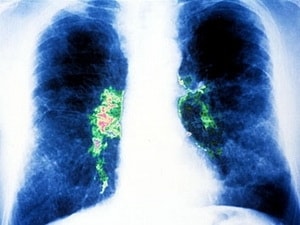
Illustrative image. (Source: suckhoedoisong.vn).
The results showed that lung cells were as vulnerable to attack by the EMC virus as the other two viruses, and in fact, the EMC virus developed even faster than the virus that causes SARS.
The EMC virus was first detected in June 2012, when a Saudi Arabian man died from a respiratory infection of unknown origin. Since then, sporadic cases have appeared, both isolated and clustered.
Tests on retained samples have revealed that two people who died during the mysterious respiratory illness outbreak in Jordan last August were infected with the EMC virus.
All cases of EMC virus infection are linked to the Middle East, with Saudi Arabia, Jordan, and Qatar showing an increase in cases.
However, this past week, the UK also announced that two of its citizens who had not recently left the country had contracted EMC, possibly through contact with a family member carrying the virus after visiting Pakistan and Saudi Arabia.
To date, 12 cases of EMC virus infection have been identified, 5 of whom have died while the rest are in critical condition.
Currently, the origin and extent of EMC's danger to humans remain undetermined. However, scientists believe that while the new virus may easily enter the human lungs, this does not necessarily mean it can spread widely from person to person.
The research results also showed that all three dental viruses bypassed the immune system, as they did not cause a strong reaction to the innate immune system, the body's first line of defense.
However, scientists discovered that when treated with interferon (signaling proteins produced by body cells to warn surrounding cells of the presence of an "attacker"), the number of lung cells infected with the EMC virus decreased significantly.
This opens up the possibility of using interferon, currently used to treat certain viral diseases, in the treatment of EMC infection.
The aforementioned study was led by scientist Thiel at the Institute of Immunobiology at Kantional Hospital in St. Gallen, Switzerland, with the participation of colleagues from Germany and the Netherlands. The study was published on February 20th in the journal “mBio” of the American Society for Microbiology.
According to (VNA) - VT