

Will taxes and fees on cars be reduced by 50-70%?
The currently high taxes on automobiles may be drastically reduced across the board to boost consumption and attract investment in the automotive manufacturing industry in Vietnam.Male
After a long wait, the automotive and parts manufacturing industries have been selected to receive support from Japan. This is good news for the Vietnamese automotive industry, and it is hoped that with support from a country with one of the world's leading automotive industries, Vietnamese production will improve and prices will become more affordable.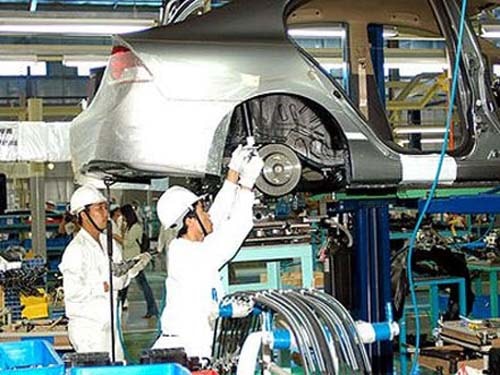
Pressure from ASEAN on affordable cars.
To expedite this process, the Japanese side proposed that Vietnam
Recently, the Ministry of Industry and Trade, the Ministry of Science and Technology, the Ministry of Planning and Investment, the Japanese Embassy, and Vietnamese and Japanese automobile companies held a meeting to discuss this issue.
To develop the automotive industry, both sides agreed that a market is essential first and foremost. Manufacturers are investing in Vietnam.
The Japanese side believes that Vietnam's automotive industry needs to be developed.
Because, by 2018, when import taxes on completely built vehicles from ASEAN countries to Vietnam are reduced to 0%, imported cars will be cheaper than domestically assembled cars. Therefore, preferential policies are needed to retain major automobile manufacturers in Vietnam.
In the period after 2018, Vietnam
However, this is a difficult period because with import taxes on automobiles reduced to 0%, the key is to find policies that promote domestic production. To date, Vietnam...
According to Nissan Techno Vietnam, although they have recently invested in Vietnam and are about to start production, whether they can maintain production beyond 2018 is still under consideration and depends heavily on government policies. Other automotive companies such as
Tax reduction across the board
To date, the Ministry of Industry and Trade has developed preferential policies to promote the automotive industry, especially regarding tax rates.
Accordingly, the Ministry proposed a 30% reduction in excise tax and a 50% reduction in registration fees for vehicles with engine capacities under 2.0L, or a 50% reduction in excise tax and registration fees for vehicles under 2.0L; and a 70% reduction in excise tax and registration fees for strategic vehicle models.
In addition, apply a 0% or minimum import tax rate to components that cannot be produced domestically. Maintain a high import tax rate on complete vehicles until 2018 before lowering it to 0%.
Following proposals from the Ministry of Industry and Trade, authorities are leaning towards a 50% reduction in excise tax and registration fees for vehicles under 2.0L; and a 70% reduction in excise tax and registration fees for strategic vehicle lines.
However, some businesses argue that this gap, if not significant, will not encourage investment in developing strategic vehicle lines. Therefore, they suggest choosing a 30% reduction in excise tax for vehicles under 2.0L and a 70% reduction in excise tax and registration fees for strategic vehicle lines.
It is expected that the National Assembly will only discuss amendments to the Law on Special Consumption Tax at the end of 2014, and policies on the automotive industry will be developed and come into effect from 2015.
Regarding strategic vehicle lines, businesses believe that although the matter has been considered for a long time, there are still no specific guidelines. Clarifying what constitutes a strategic vehicle line will help manufacturers plan to support the government in a timely manner.
The Ministry of Industry and Trade stated that the strategic vehicle line is built on criteria such as energy efficiency, environmental friendliness, compliance with EURO 4 emission standards, and ensuring a balance of national interests, consumer interests, and manufacturer interests.
Furthermore, the underdeveloped supporting industries pose a significant challenge. On February 24, 2011, the Prime Minister issued Decision No. 12/2011/QD-TTg on policies for developing certain supporting industries.
However, according to businesses, this policy is difficult to implement in practice because the regulations are too general and impractical, thus rendering it ineffective. The incentives offered are not substantial enough, the requirements are very difficult and time-consuming, so after more than two years since its inception, only two businesses have submitted proposals, none of which have been approved.
To address this, Japan also suggested establishing a specific monitoring mechanism to determine: who does what, how they do it, what is needed, and when it will be completed… because of Vietnam's policies.
Roadmap for reducing import tariffs on automobiles from the AFTA region:
In 2014 it decreased to 50%, in 2015 to 35%, in 2016 to 20%, in 2017 to 10%, and in 2018 to 0%.
We propose that the Ministry of Finance maintain a high pace until 2017:
In 2014, it decreased to 50%, remained at 50% in 2015, dropped to 40% in 2016, 30% in 2017, and finally to 0% in 2018.
According to Baocongthuong – PH