

Establish Internal Affairs Committees in all provinces and cities.
All 63 provinces and cities will have internal affairs committees comprising three functional departments: an office, a department for monitoring internal affairs, and a department for monitoring anti-corruption efforts.
The Secretariat has issued a document reminding the Standing Committees of provincial/city Party Committees to decide on the organization of internal affairs committees in their localities and to direct the transfer of organizational personnel from the provincial/city anti-corruption steering committee office to the internal affairs committee of the provincial/city Party Committee.
Regarding leadership personnel, the Secretariat requested that officials at the level of provincial/city Party Standing Committee members be appointed as heads of internal affairs departments. Where conditions do not yet permit, this important position should be assigned to Party committee members who are being considered for the next provincial/city Party Standing Committee term.
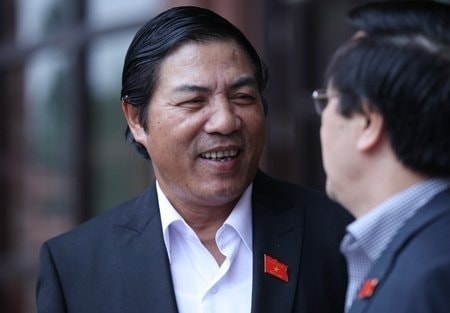 |
Head of the Central Internal Affairs Commission Nguyen Ba Thanh. Photo: Le Anh Dung |
This personnel structure is consistent with the policy adopted at the 6th Central Committee Conference. Accordingly, the Head of the Central Internal Affairs Commission and the newly re-established Central Economic Commission will also be included in the Politburo, or at least the Central Secretariat.
On the same day, the Secretariat issued regulations on the functions, tasks, and organizational structure of the internal affairs committees of provincial/city Party committees, which are essentially the same as the Central Internal Affairs Committee.
Accordingly, the internal affairs committees in provincial/city Party committees are advisory bodies on internal affairs and anti-corruption work of the provincial/city Party committee, directly and regularly advising the Standing Committee.
The responsibilities include research and proposal groups; guidance and inspection; evaluation; providing input to the provincial/city Party committee on personnel matters; and other tasks assigned by the provincial/city Party standing committee.
At the request of the Party Central Committee Secretariat, the Central Organization Department, in coordination with the Central Internal Affairs Department, issued a guiding document on the organization of provincial/city Party internal affairs departments.
Accordingly, all 63 provinces and cities have internal affairs committees comprising three functional departments: an office, a department for monitoring internal affairs, and a department for monitoring anti-corruption work. The organization and personnel are determined based on population, socio-economic conditions, and the complexity of internal affairs and anti-corruption work.
Specifically, the internal affairs committees in Hanoi, Ho Chi Minh City, Nghe An, and Thanh Hoa will have no more than 30 staff members; other localities will have no more than 21 staff members.
Specifically for the seven provinces of Lai Chau, Bac Kan, Tuyen Quang, Dak Nong, Kon Tum, Bac Lieu, and Hau Giang, the staff should not exceed 15 people, and should be organized into only two departments: an office and a department responsible for overseeing both internal affairs and anti-corruption efforts.
The establishment of internal affairs committees in all provincial/city Party committees is a relatively new development compared to the past. Before the dissolution of the Central Internal Affairs Committee (10th Party Congress), only provinces/cities with a genuine need were allowed to establish internal affairs committees, and they had to report to the Party Secretariat.
According to Vietnamnet - TH