

Large animals enrich the soil.
The extinction of giant animals during the Pleistocene epoch is what caused the scarcity of fertile arable land we see today around the world.
According to research by a team of experts from the Institute for Environmental Change at the University of Oxford (UK), the Pleistocene epoch – dating from 11,700 to 2.6 million years ago – was a period when large populations of herbivorous animals dominated the planet in place of the extinct dinosaurs.
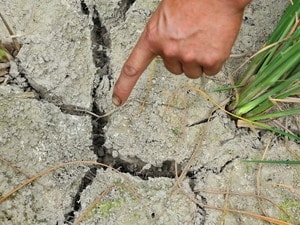
Illustrative image. (Source: THX/VNA)
These large herds of herbivores live near rivers and lakes. Weighing over 44 kg, they play a vital role in fertilizing lands far from their habitats through the excretion of waste and the decomposition of carcasses after death.
The research findings were published in the journal Nature Geoscience on August 11th.
According to Chris Doughty, co-author of the study, large animals are like the Earth's blood vessels, so if they become extinct, these blood vessels are cut off.
Because most large animal species have become extinct, the Earth now has more arid regions.
Using mathematical models, Oxford researchers predicted that the extinction of large herbivorous animal populations reduced the release of phosphorus, crucial for agriculture, by up to 98% in the Amazon basin, as well as in most other continents except Africa – the only continent where, during evolution, modern humans lived alongside large herbivorous animal populations.
According to the research team, the model used in the study will allow scientists to predict the impact of extinction on other animal species around the world today.
This is a scenario that could soon occur for some of today's large animal species, primarily in Africa and Asia.
Scientists also warn that if large animals like elephants disappear, it will have a negative impact on agricultural land.
According to (VNA) - VT