

Chinese herbal medicine found to cause cancer.
American scientists have just published a finding that could be concerning for those using traditional Chinese medicine to treat joint diseases. According to the August 7th issue of the American medical journal "Science Translational Medicine," aristolochic acid – an extract from a Chinese herb commonly used to make anti-inflammatory drugs or to treat joint diseases and gout – may cause remarkable genetic mutations and is directly linked to cancer.
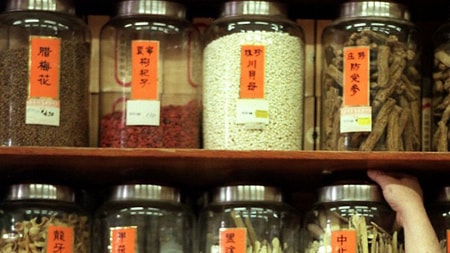 Illustration photo: Internet. |
For hundreds of years, traditional Chinese medicine has used aristolochic acid from herbs in remedies for joint pain and inflammation. However, Professor Kenneth Kinzler, working at the Johns Hopkins Kimmel Cancer Center's Ludwig Center in the US, said that his latest research with colleagues indicates that aristolochic acid is a highly mutagenic substance, and this phenomenon was found in 19 Taiwanese patients with high rates of urinary tract cancer. Although scientists have long known that aristolochic acid is a carcinogen, this is the first scientific study to demonstrate that aristolochic acid is more mutagenic than tobacco (which causes lung cancer) and ultraviolet radiation (which causes skin cancer).
In the tumors of the aforementioned patients, American scientists found up to 150 gene mutations per megabase, significantly higher than the 8 gene mutations in lung cancer patients caused by tobacco use and the 111 gene mutations in skin cancer patients caused by ultraviolet radiation. Tests revealed that all 19 patients had aristolochic acid in their bodies, and their tumors contained 753 gene mutations, while in 7 other patients with advanced urinary tract cancer who had never been exposed to aristolochic acid, their tumors had only 91 gene mutations.
A better understanding of the mutagenic effects of aristolochic acid extracted from the aforementioned vine will help researchers determine its impact on causing cancer in other internal organs (beyond the upper urinary tract). Professor Kenneth Kinzler said: "Thanks to genomic sequencing technology, we have identified a direct link between aristolochic acid and gene mutations. This technology allows us to identify the signature of gene mutations to definitively confirm the presence of a carcinogen."
Due to the carcinogenic properties of this herb, many European and North American countries banned the use of aristolochic acid in pharmaceuticals in 2001. By 2003, several Asian countries, including Japan, also implemented similar bans. Even though scientists had known for years that aristolochic acid was carcinogenic, this danger was not widely known until then. Therefore, despite the US Food and Drug Administration (FDA) issuing its first warning in 2001, this herb continued to be bought and sold online.
According to VNA - TH