

Turmeric is an antioxidant.
According to traditional Chinese medicine, turmeric has a bitter, spicy, aromatic, and pungent taste, and a warm nature. It helps to clear meridians, relieve pain, eliminate pus, stimulate skin regeneration, clear the liver and gallbladder, and break down blood cholesterol.
Turmeric is a plant belonging to the ginger family (Zingiberaceae). The turmeric rhizome contains 4%-6% of a pale yellow, aromatic essential oil (up to 2.24% in fresh turmeric) with a composition including 25% terpenic hydrocarbons, zingiberene, and 65% sesquiterpene ketones, turmerone, arturmerone; it also contains curcuminoids, including curcumin (0.3%-1.5%) and desmethoxycurcumin.
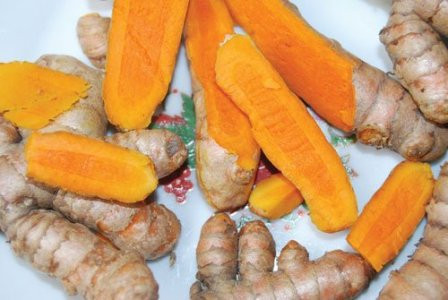
When researchers conducted experiments on breast cancer-controlled mice, they found that curcumin inhibited the growth of a protein that plays a key role in the formation and spread of metastatic tumors. Curcumin has also shown effectiveness in preventing Alzheimer's disease.
Traditional Chinese medicine holds that turmeric has a bitter, spicy, aromatic, and pungent taste, and a warm nature. It is believed to promote blood circulation, relieve pain, eliminate pus, stimulate skin regeneration, clear the liver and gallbladder, and break down blood cholesterol. Turmeric essential oil has antifungal and antibacterial properties.
To this day, turmeric remains a valuable spice and a medicinal herb with therapeutic effects on many ailments. For centuries, people have used turmeric as an antiseptic for wounds, burns, and bruises, and as a beauty treatment for women, especially after childbirth, to promote wound healing. Turmeric is also used to treat allergic rhinitis and sinusitis.
However, turmeric should not be overused. It should be used in moderation, ideally around 300-500g per day. While turmeric is generally safe, indiscriminate use can cause stomach pain and diarrhea. If you need to use turmeric tablets or capsules as a health supplement, you should consult a doctor.
According to Nguoi Lao Dong - NT