
The Chinese angelica plant - a detoxifying and anti-inflammatory remedy.
The plant also has other names, such as "fire-blowing plant", "cat's tongue grass", "dog's tongue grass", "co tat nai" (Thai ethnic group); "nha dan" (ethnic group...).
The plant also has other names, such as "fire-blowing plant," "cat's tongue grass," "dog's tongue grass," "co tat nai" (Thai ethnic group); "nha dan" (Tay ethnic group); some traditional healers call it "tien ho nam." In Chinese medicine books, the plant is called "kho di dam," also known as "thien gioi thai," "tho sai ho," "tho bo cong anh," "xuy hoa can" (fire-blowing root), "thiet tao truu" (iron broom)... Its scientific name is Elephantopus scarber L., belonging to the Asteraceae family.
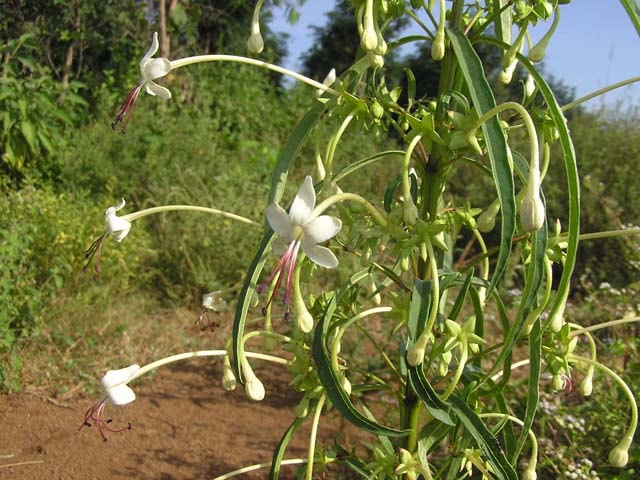
Clerodendrum inducum is a perennial herb, with stems about 20-50cm tall, bearing many branches that are almost leafless, and the entire plant is hairy. The basal leaves grow in a rosette close to the ground. The leaf blade is about 6-12cm long and 3-5cm wide, spoon-shaped, with white hairs on both sides, and has wavy serrated edges, narrowing to a broad petiole that embraces the stem. Leaves on the stem are smaller and narrower than those at the base. The purple flowers grow in cymes with false heads. The fruit is spindle-shaped with 10 protruding ridges. Flowering and fruiting season: January-August. For medicinal use, it can be harvested year-round, used fresh or dried. Note: Due to the similarity in names, the Clerodendrum inducum mentioned here is easily confused with the "false Clerodendrum," also called "Primary Hunan," scientifically known as Clerodendrum inducum (L.) O Ktze, family Verbenaceae, commonly used as a bitter tonic, expectorant, cough suppressant, and anthelmintic.
According to Traditional Chinese Medicine, the plant *Cynanchum auriculatum* has a bitter taste and a cooling nature; it acts on the lung, spleen, and liver meridians. It has the effects of clearing heat, cooling the blood, detoxifying, relieving abdominal distension and gas, promoting urination, and reducing swelling. It is primarily used to treat colds, fever, coughs, sore throats, conjunctivitis, nosebleeds, diarrhea, jaundice, nephritis with edema, boils, and snake bites.
- Dosage: 9-16g of dried herb (or 30-60g of fresh herb) decocted in water or crushed and squeezed to extract the juice for drinking. For external use, crush and apply as a poultice or boil in water for steaming or washing.
- Precautions: People with weakened immune systems and pregnant women should use with caution. Do not use for diseases classified as "cold syndrome".
Some traditional remedies use the plant *Cynanchum auriculatum*:
To treat urinary disorders (painful urination, hematuria, kidney stones, cloudy urine, urine mixed with mucus): Use a handful each of the following plants: *Cynanchum auriculatum*, *Radix Polygoni multiflori*, *Radix Polygoni multiflori*, *Radix Imperatae cylindrica*, *Radix Polygoni multiflori*, and snail meat (Tuệ Tĩnh). Boil these in water and drink the decoction.
Treatment for sore and swollen lips: Use fresh leaves of the *Centella asiatica* plant, wash them thoroughly, add a little salt, crush them, squeeze out the juice and apply it to the affected area (Hai Thuong Lan Ong - *Bach Gia Tran Tang*).
To treat boils and carbuncles: Crush fresh leaves with vinegar or fermented rice paste and apply as a poultice.
Treatment for snake bites: Crush the entire fresh plant, swallow the juice, and apply the pulp as a poultice. It can be combined with the leaves of the *Bidens pilosa* plant and chili peppers.
Treatment for nosebleeds: Use 20-30g of fresh *Cynanchum stauntonii* (Cynanchum stauntonii) plant, cook with an appropriate amount of pig liver, eat the liver and drink the broth, continuously for 3-4 days.
Treatment for jaundice (yang jaundice): Use 100-150g of fresh *Cynanchum stauntonii* plant, including the roots, and cook it with pork. Consume continuously for 4-5 days.
Treatment for ascites: Use 60g of fresh *Cynanchum stauntonii* (Cynanchum stauntonii) plant, decoct it to make a drink, and divide it into two portions to drink during the day, one in the early morning and one in the evening; it can also be cooked with pork and eaten.
Treatment for urinary retention: Use 20-30g of fresh *Cynanchum stauntonii* plant, boil it in water and drink the decoction.
Treatment for chilblains: Use 30-60g of fresh *Cynanchum stauntonii* plant and 60-120g of tofu, simmer and eat.
To treat urinary tract infections (dribbling urination, burning sensation in the urethra, etc.): Use 120g of fresh *Cynanchum stauntonii* plant, 150-200g of lean pork, and a little salt. Put everything into a pot, boil to extract the liquid, discard the residue, and divide into four doses to drink throughout the day.
Treatment for boils under the armpit: Use the entire fresh plant of *Cynanchum auriculatum*, add a little salt and vinegar, crush them together and apply to the affected area, securing it with adhesive tape; even boils that have already formed pus can be treated.
To treat sore throat and tonsillitis: Steep 10g of dried *Chia* (a type of herb) in 300ml of boiling water for half an hour, then drink throughout the day. Alternatively, chew the fresh leaves with a little salt and swallow gradually.
Treatment for oral and tongue ulcers: Use 30g of dried *Cynanchum stauntonii* (a type of herb), decoct in water and drink one dose daily. Side effects: slight discomfort in the stomach; use with caution in the elderly and young children.
According to Health & Life - NT