
Many shipments of Vietnamese tea exported to the EU have been returned.
The reason is that some batches of this tea still contain residues of two compounds, Acetamiprid and Imidacloprid.
The reason is that some batches of this tea still contain residues of two compounds, Acetamiprid and Imidacloprid.
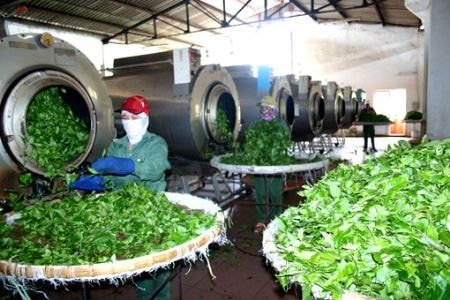
(Illustrative image: doanhnhansaigon.vn)
Information provided by the Plant Protection Department, Ministry of Agriculture and Rural Development. These compounds are on the list of permitted substances for use in controlling green leafhoppers and red thrips on tea plants in Vietnam.
According to information from the Vietnam Tea Association (Vitas), the returned goods were reported to have residues of two pesticides, Acetamiprid and Imidacloprid, exceeding the permissible levels set by EU countries – a region considered to have quite stringent regulations on food safety and hygiene standards.
In Vietnam, the two aforementioned compounds are currently still used on tea in the list of plant protection products. However, according to Mr. Nguyen Xuan Hong, Director of the Plant Protection Department, in January 2013, the Ministry of Agriculture and Rural Development issued Circular 03 on the Management of Plant Protection Products, which stipulates that these two active ingredients can only be used on tea until August 2015. We are currently implementing a roadmap to remove these two active ingredients from the list of plant protection products for tea in Vietnam.
"We have sent a document to the Plant Protection Sub-departments of tea-growing provinces and cities nationwide, requesting them to guide local authorities and the entire plant protection network to strictly control these two compounds," Mr. Hong said.
According to Mr. Nguyen Xuan Hong, the Plant Protection Department has also advised businesses that before exporting tea to other countries, they must strictly ensure the residue levels of these two active substances, and at the same time, they need to carefully control their tea growing areas to ensure that these substances are not used.
“The Plant Protection Department has also provided a list of safer and more effective pesticides for localities to guide farmers in using as alternatives. These pesticides ensure that they meet the requirements of importing countries, thereby creating conditions to maintain and expand export markets, increase tea production efficiency and food safety not only for exporting countries but also domestically,” Mr. Nguyen Xuan Hong stated.
According to (vov.vn) - LT