

Children should be encouraged to exercise outdoors.
Activities like climbing trees, swimming in the sea, playing in the rain, and mud bathing not only add color to children's childhood but also bring many practical health benefits.
An Australian study of children aged 10 to 12 found that 37% of children spent less than 30 minutes of physical activity outdoors each day, and over 43% spent more than two hours a day watching television or playing video games on computers.
|
Outdoor activities offer many practical benefits for children. (Photo:)Le Phuong |
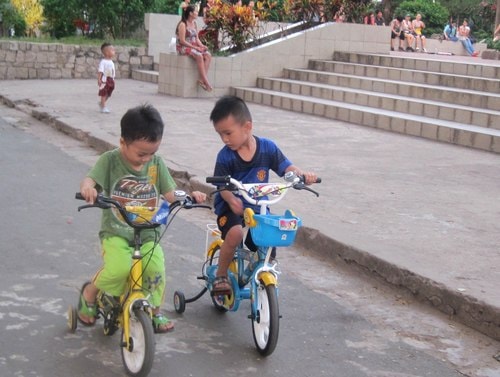
Another study also showed that children's games today have changed significantly. Among the parents interviewed, less than 20% said their children had ever climbed trees, and only 29% thought their children had ever played jump rope, hopscotch, or other street games.
Recent American research indicates that children's indoor play culture is a phenomenon influenced by the West. More than half of preschool children are reluctant to try outdoor play, and 16% of girls breathe less fresh air than boys.
According to experts, parents need to ensure their children spend at least one hour each day engaging in outdoor physical activities for the practical benefits of their development.
Studies have also highlighted the immense benefits of outdoor play for children, including a reduced risk of obesity, enhanced cognitive development, and improved motor skills. Exposure to natural sunlight, especially at a young age, plays a crucial role in physical health development and reduces stress levels in young children. Outdoor play also helps prevent the progression of ADHD (a childhood mental disorder).
Nature Play WA, an organization founded with the primary goal of encouraging parents and children to engage in fun outdoor activities, is in the process of creating 40,000 special "passports" to encourage children to play outdoors.
These special "passports" list 15 things children should do before age 12, and there are many activities that parents may have done as children, such as climbing trees, swimming in the sea, playing in the rain, mud bathing, and learning to ride a bike. Nature Play's most recent initiative is to create a "green time" chart that families can download from the organization's website. Children can fill in the chart with the amount of time they spent outdoors each day. After about two weeks, if children spend more time outdoors instead of watching TV or playing video games, parents can organize a special picnic as a reward for their efforts.
Griffin Longley, managing director of Nature Play, listed a series of reasons why outdoor activities connected with nature are so important for children's development. He said these activities are not simply about exercise. Studies have consistently shown that engaging in outdoor play stimulates children's imagination and cognitive development. The key point is that children need to play outdoors to be healthy in every way.
Besides outdoor activities like going to the beach or playing in the park, parents can let their children play in their own yard; even a small yard can offer many fun games for children.
Griffin argues that, with the pressures of busy daily work, parents may find it difficult to take their children to the park, so creating a safe and suitable outdoor space for children to play is a good idea. Children can bring their toys outside; even games typically associated with girls, like playing with dolls or pretending to be a family, are perfectly suitable for outdoor play. If the children are drawing indoors, why not suggest they go outside? Their vivid imaginations will bring the surrounding nature to life in their drawings.
4 fun outdoor activities suitable for children
1. Play with toys that have wheels.
A toy car, scooter, skateboard, or bicycle are great ideas for children.
2. Walking
Depending on their age, allow your child to try different distances, such as taking them shopping for a few trinkets or for a short walk, perhaps bringing water and some snacks as "food" for them.
3. Organize an imaginary "treasure hunt" adventure.
These games can be played by parents with their children right in their own yard. The goals are simple, such as finding a yellow flower, collecting colorful pebbles, or racing and jumping to reach the finish line.
4. Plant trees
Young children love playing with water and digging. So you can ask them to water or take care of the vegetables you grow yourself. They will enthusiastically eat the vegetables they have grown themselves.
According to VnExpress - NT