
The Khmu people happily sing the Tom song.
Là 1 trong số 5 dân tộc anh em đang sinh sống trên địa bàn huyện Kỳ Sơn, do không có chữ viết riêng, nên nhiều bản sắc văn hóa của người Khơ Mú đã từng bị mai một. Nhưng về Bảo Nam, Bảo Thắng hay Hữu Kiệm, Keng Đu bây giờ, thấy người Khơ Mú lại say sưa hát Tơm, nhảy múa trong những ngày lễ mừng nhà mới, lễ mừng ngày mùa, mới thấy hết ý nghĩa của việc nỗ lực bảo tồn bản sắc văn hóa dân tộc của những người làm văn hóa nơi đây.
(Baonghean) - Là 1 trong số 5 dân tộc anh em đang sinh sống trên địa bàn huyện Kỳ Sơn, do không có chữ viết riêng, nên nhiều bản sắc văn hóa của người Khơ Mú đã từng bị mai một. Nhưng về Bảo Nam, Bảo Thắng hay Hữu Kiệm, Keng Đu bây giờ, thấy người Khơ Mú lại say sưa hát Tơm, nhảy múa trong những ngày lễ mừng nhà mới, lễ mừng ngày mùa, mới thấy hết ý nghĩa của việc nỗ lực bảo tồn bản sắc văn hóa dân tộc của những người làm văn hóa nơi đây.
Già làng Cụt Thọ Lan ở bản Huồi Phuôn 1, xã Keng Đu (huyện Kỳ Sơn) dẫn chúng tôi lên nhà sàn để giới thiệu về “vật quý” của người Khơ mú. Đó chẳng phải là thứ gì xa lạ, mà là mấy bộ váy áo của vợ và con gái. Cũng giống như người Thái, Mông..., trang phục dân tộc từ lâu được người Khơ mú gìn giữ như một vật mang linh hồn của dân tộc mình. Nhìn chiếc váy áo và khăn quấn đầu với nhiều họa tiết dệt thổ cẩm hoa văn tinh xảo, bà Cụt Mễ Lan, vợ ông nói: “Người con gái Khơ mú chỉ mặc những bộ đồ này vào dịp lễ, tết. Mỗi khi nhà có lễ mừng nhà mới thì tất cả mọi người trong nhà đều được dệt may một bộ trang phục mới và nhảy điệu múa của dân tộc để mừng những may mắn mới sẽ đến”. Chẳng phải riêng gia đình già làng Cụt Thọ Mễ mà còn có gia đình bà Moong Mễ Sinh, ông Lương Văn Thuông và gần 30 nóc nhà sàn ở bản Huồi Phuôn 1 này đều cất giữ cẩn thận những bộ váy áo của dân tộc mình.
Còn về các phong tục tập quán, người Khơ mú có nhiều lễ hội mang đậm bản sắc và dấu ấn của cuộc sống xưa là du canh du cư. Ngoài các nghi lễ Tết Nguyên đán thì người Khơ mú còn có lễ hội mừng lúa mới trước khi bắt đầu một mùa cấy mới để cầu mùa màng bội thu, lễ hội mừng nhà mới khi chuyển đến một vùng đất mới để cầu may mắn, an lành. Anh Lương Văn Thoong, cán bộ văn hóa xã Keng Đu cho biết: “Trước đây, người Khơ mú thực hiện những nghi lễ này chỉ với quy mô trong bản. Năm ngoái được huyện đầu tư phục dựng lễ hội mừng nhà mới tại bản Huồi Phuôn 2, cả bản nô nức tham gia, có cả những người ở ngoài thị trấn và dưới tỉnh cũng về dự, người Khơ mú vui lắm”. 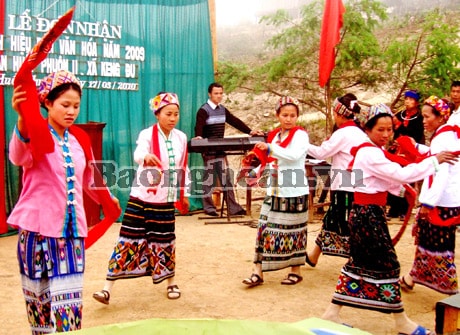
Phụ nữ xã Keng Đu nhảy múa và hát Tơm trong ngày vui đón nhận danh hiệu Đơn vị văn hóa.
Một điều không thể thiếu trong các lễ hội của người Khơ mú là điệu hát Tơm và múa dân gian. Tại các lễ hội, sau những phần nghi thức cúng bái, những phụ nữ đẹp nhất trong bản được chọn và hát điệu hát Tơm, cùng nhảy múa xung quanh chum rượu cần, già làng, thanh niên và trẻ nhỏ trong bản cũng vui cùng lời hát, điệu múa. Nếu như người Thái tự hào về những điệu xòe, người Mông tự hào về Gầuplềnh, thì người Khơ mú cũng có điệu Tơm của dân tộc mình. Với người Khơ mú, khi mừng nhà mới có điệu “Tơm Ơ Grang Mỵ”, mừng năm mới có “Tơm Muôn” (Tơm mùa xuân), mừng đám cưới có “Tơm Đường Kmun” (Tơm mừng đám cưới)... Cứ như vậy, mỗi điệu Tơm được lưu truyền từ đời này qua đời khác trong cộng đồng những người Khơ mú ở đây. Một điều làm chúng tôi kinh ngạc là dù không có chữ viết riêng nhưng những điệu Tơm vẫn được người Khơ mú hát nằm lòng, hòa cùng tiếng sáo, tiếng khèn vang cả một vùng núi rừng mỗi khi có dịp lễ, tết.
Ông Moong Văn Nghệ năm nay đã 74 tuổi nhưng vẫn thuộc những câu hát Tơm của dân tộc mình. Đã từng công tác trên huyện nay về nghỉ hưu nên ông Nghệ rất trăn trở với việc bảo tồn điệu hát Tơm của người Khơ mú. “Tôi mong có thể lưu giữ được những điệu hát Tơm cho không chỉ thế hệ bây giờ mà nhiều năm về sau, điệu hát Tơm vẫn còn được hát lên mỗi khi có ngày vui ở bản người Khơ mú”.
May mắn là chúng tôi được ông Moong Thái Nhi, Trưởng phòng Văn hóa, UBND huyện Kỳ Sơn dẫn đi thăm và giới thiệu những nét đặc sắc của người Khơ mú. Ông Moong Thái Nhi cũng chia sẻ trăn trở: “Nhiều năm qua, huyện cũng đã thực hiện nhiều đề án bảo tồn những giá trị văn hóa của người Khơ mú nhưng hầu hết người Khơ mú ở Kỳ Sơn lại sống ở những vùng hết sức xa xôi nên điều kiện để đầu tư là rất khó khăn. Với đề án bảo tồn văn hóa các dân tộc gắn với phát triển du lịch sắp tới, chúng tôi mong muốn không chỉ bảo tồn những giá trị văn hóa tinh thần của dân tộc Khơ mú mà còn của các dân tộc khác đang sinh sống trên địa bàn huyện”.
Thái Anh