

Developing the human brain from stem cells.
For the first time in a laboratory, scientists in Austria have successfully grown a miniature human brain from stem cells.
This success has opened up hope for neuroscientists to gain a deeper understanding of how the human brain develops and to identify the causes of neurological disorders such as schizophrenia, depression, and autism.
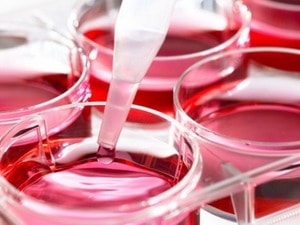
(Source: Reuters)
To create brain tissue, two scientists, Juergen Knoblich and Madeline Lancaster from the Institute of Molecular Biotechnology (Austria) and their colleagues at the University of Edinburgh (UK), cultured human stem cells in the laboratory using a special combination of nutrients.
These nutrients are designed to take advantage of cells' innate ability to form the structures of complex organs.
The research team created neuroectoderm, the layer of cells in embryos that forms the basis for the development of all parts of the brain and nervous system.
Pieces of this tissue are then placed in a "rig" and put into a rotating bioreactor (a system that circulates oxygen and nutrients) allowing the stem cell tissue to grow into a brain organelle.
After a month, the tissue fragments had spontaneously formed primitive structures, which were the developing regions of the brain such as the reticular formation, choroid plexus, and cerebral cortex.
A month later, these brain cell structures reached their maximum size of about 4 mm. Although very small and still a long way from reaching the sophisticated and complex structure of a fully developed human brain, these brain cell structures already contained neurons and distinct types of neural tissue.
The research team stated that they haven't yet considered creating a complete human brain; their goal is to analyze human brain development and create models of neurological disorders such as depression, autism, or schizophrenia. This would allow them to identify the causes of critical developmental brain dysfunction and test effective treatments for millions of patients worldwide.
According to (VNA) - VT