

With sales plummeting all year, car manufacturers fear they will have to close down soon.
In the best-case scenario, in 2013, the whole country only consumed about 110,000 vehicles of all types, including both imported and domestically assembled vehicles, the same level as in 2007. Despite government tax and fee reductions, and businesses offering discounts and promotions, cars remained unsold throughout the year. A difficult year, coupled with a low market outlook and unclear policies, led many car assembly companies to warn of the risk of closure.
Affordable items are on sale, while luxury items are selling fast.
2013 saw the continuous launch of new car models, both domestically assembled and imported. According to statistics, nearly 30 new models were launched between March and December 2013, covering all segments, from budget to luxury, and from small to large vehicles.
With a large number of cars being produced and difficult to sell, promotional programs and discounts are constantly running almost all year round. When manufacturers and importers don't have any programs, dealerships also come up with their own to attract customers.
Prices have decreased across most models. Even best-selling brands like Toyota have seen price reductions, from the Vios to the Camry, with discounts ranging from as low as 10 million VND to as high as 60 million VND depending on the model.
 |
Not only used cars but also newly launched cars are seeing price reductions. Truong Hai, immediately after launching the Kia K3 at 628 million VND in mid-October 2013, promptly reduced the price by 20 million VND for all four versions. Similarly, Peugeot, having just launched its first product, the Peugeot 408, priced at 1 billion 49 million VND, immediately reduced the price by 50 million VND...
While domestic assembly faces difficulties and the market is sluggish, the imported car market is thriving. According to the General Statistics Office, this year's automobile imports are estimated at nearly 34,500 units with a value of 709 million USD. Compared to last year, the import value of completely assembled automobiles in 2013 has increased by 25.9% in volume and 15.2% in value.
According to VAMA's calculations, the growth rate of the imported car market compared to the same period in 2012 was significantly higher than that of domestically assembled cars. Specifically, imported cars achieved a sales volume increase of 25% compared to an 18% increase for domestically assembled cars.
In recent months, the imported car market has become significantly more vibrant compared to last year and the beginning of this year. Besides the increase in the number of imported vehicles, the product range and even the number of new brands entering the market have also increased quite rapidly.
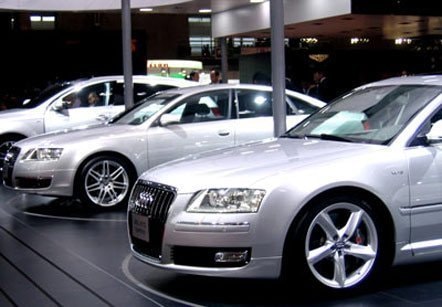
While the overall market is sluggish, the luxury car segment is a bright spot attracting attention. Estimates suggest that the Vietnamese luxury car market in 2013 maintained an average growth rate of over 30%, with approximately 4,000 units sold. Currently, Mercedes-Benz Vietnam boasts the highest growth rate, exceeding 50%. Other brands like BMW also saw a 20% increase in sales, estimated at around 1,000 vehicles this year. Audi, though lower, still achieved around 600 units, while Porsche, Range Rover, Renault, and others also accounted for a significant number of customers.
Mr. Yoshihisa Maruta, General Director of Toyota Vietnam, said: Although the average per capita income is lower than Thailand and Indonesia, and the economy was difficult in 2013, many people in Vietnam are still willing to spend billions of dong to buy luxury cars, so the luxury car market continues to grow well.
Since the beginning of the year, three more luxury car brands have joined the ranks. In addition to the already well-known Peugeot and Lexus, the supercar Rolls-Royce has also made its appearance.
Businesses fear having to close down.
Despite price reductions and the launch of many new models, sales have not increased significantly, especially for domestically assembled vehicles, causing difficulties for many businesses. What worries businesses is that while demand for personal vehicles usually increases in the last months of the year, sales are actually decreasing. According to VAMA data, passenger car sales in October 2013 decreased by 1% compared to September, and in November they continued to decrease by 1% compared to October.
 |
The current challenge lies with car dealerships, as sharply reduced prices have resulted in zero profit. Despite the market being considered to be recovering, many dealerships are actually complaining about losses, experiencing slow and difficult sales, and weak consumer demand.
Many car dealerships in Hanoi report having dozens of cars in inventory because they anticipated a boom in the automotive market towards the end of the year, increased demand, and a desire for high sales figures to receive bonuses from suppliers. Therefore, dealerships placed larger orders, but sales did not meet expectations.
In 2013, Thailand sold 1.45 million new cars, with nearly 700,000 of them being passenger cars with fewer than 5 seats. In Indonesia, the number of new cars sold was also around 1.2 million. Malaysia saw over 600,000 cars sold. Meanwhile, in 2013, the entire Vietnamese car market only sold approximately 110,000 cars of all types.
In terms of population, Thailand has less than 70 million people, Indonesia has over 240 million, while Vietnam has just reached 90 million. This number of car sales is actually quite low compared to neighboring countries.
Domestic automobile manufacturers are facing significant challenges. Currently, the designed production capacity of automobile manufacturers nationwide is approximately 458,000 vehicles per year, while actual production only reaches around 80,000 vehicles per year, meaning it's less than 20% of the target. According to assessments, the domestic automobile assembly industry is likely to achieve only a 3% growth rate in the coming years, due to increasingly fierce competition from imported vehicles resulting from decreasing import tax rates.
In 2012, when Vietnam reduced the tax on pickup trucks originating from ASEAN countries to 15%, all domestic assemblers of this type of vehicle ceased operations for an extended period and switched to importing completely built vehicles.
While Vietnamese consumers remain hesitant about domestic products, the reduction in import tax rates on completely built vehicles threatens the nascent automotive industry. In this situation, many domestic automotive companies fear they may have to close down and switch to importing and distributing if the government does not implement a proper policy to support the development of the automotive industry.
According to vietnamnet