

Spring markets
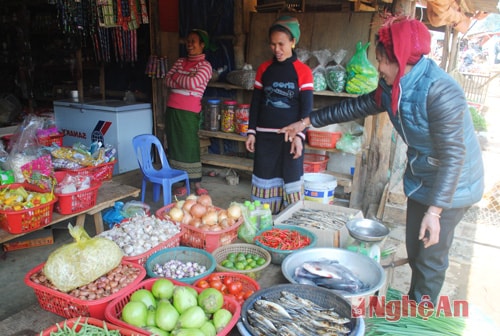
(Baonghean) - In the days leading up to Tet (Lunar New Year), Hau Market in Tien Thuy commune (Quynh Luu district) suddenly becomes noisier and more vibrant than usual. While the mist still blankets the market, somewhere beneath the worn conical hats, warm greetings and farewells for the year are already being exchanged. Women and mothers go to the market from dawn, some carrying baskets of vegetables still glistening with morning dew, others carrying bunches of green bananas, a few chickens, dong leaves, rice, sticky rice… They excitedly call out to each other, buying and selling busily.
(Baonghean) - In the days leading up to Tet (Lunar New Year), Hau Market in Tien Thuy commune (Quynh Luu district) suddenly becomes noisier and more vibrant than usual. While the mist still blankets the market, somewhere beneath the worn conical hats, warm greetings and farewells for the year are already being exchanged. Women and mothers go to the market from dawn, some carrying baskets of vegetables still glistening with morning dew, others carrying bunches of green bananas, a few chickens, dong leaves, rice, sticky rice… They excitedly call out to each other, buying and selling busily.
From old memories
Although it was only the 20th day of the 12th lunar month, the warm atmosphere of spring had already filled the tranquil rural market, dispelling the biting cold of the last days of winter. By 5 a.m., many carts loaded with goods and baskets of vegetables and fruits from neighboring communes like Quynh Nghia, Quynh Minh, and Quynh Luong were arriving at the market, bustling with buying and selling. Many people went to the market to shop for Tet (Lunar New Year), while others simply came to admire and enjoy the atmosphere of the rural market on the last days of the year. The arrival of Tet stirs emotions in the hearts of those far from home, especially because of the simple image of the rural market. After a long period of earning a living, those who have left their hometowns go to the market to feel the spring air arriving. They go to the market to relive childhood memories, or simply to admire the vibrant colors of the bustling rural market. For me, Hau Market has a magical allure; even though I've been away from this market for almost 30 years since childhood, I can never forget the peaceful image of the rural market on the days leading up to Tet, especially when I think of my grandmother.
Back then, when I was only seven or eight years old, every summer vacation or Tet holiday, my mother would take me back to my grandmother's village. My hometown was a peaceful, tranquil coastal village, much like this village market. My grandmother would often bring to the market to sell the shrimp, fish, and shellfish that my grandfather had caught. In the days leading up to Tet, she would also bring a bunch of green bananas from her garden and five or seven chickens she had raised to sell during Tet, hoping to earn a little extra money to buy me a new outfit for the spring festivities. Each time, I would trail after her, always drawn to the fragrant aroma of fried cakes and dumplings. After selling her goods, she would buy a few kilograms of rice, sticky rice, banana leaves, onions, and always a treat for me. Even now, I still vividly remember the shy feeling of standing in the market trying on the new clothes she bought, washing them thoroughly, and waiting until the afternoon of the 30th of Tet to let me wear them, so I could be clean and fragrant to welcome the new spring.
Decades have passed, and while time may change everything, this peculiar oyster market remains the same: rows of old, rickety stalls, with goods for sale—dried produce, groceries, fish, meat, betel nuts, etc.—spread out on tarpaulins and plastic sheets on the ground or stored in baskets, tubs, and basins. Behind the market are rows of seafood, vegetables, fruits, brooms, mats, and other goods sold outdoors. The seafood at the oyster market is particularly fresh and delicious because the fish, shrimp, and squid are brought to the market immediately after being caught by the women, so almost every morning there is a glistening supply of fresh fish and shrimp, except on days when the sea is rough.
Mrs. Nguyen Thi Sau, nearly 70 years old, with jet-black teeth, is a native of Tien Thuy commune who has been selling betel nuts and leaves at Hau Market for over 40 years. For 40 years, she has sat in the same familiar spot, enduring the rain and sun, the ground sinking and crumbling, but her basket of betel nuts and tray of betel leaves remain intact. In the days leading up to Tet (Lunar New Year), the demand for betel nuts increases, so Mrs. Sau asks her children and grandchildren to gather more from other localities to sell. She carefully wraps each betel leaf for customers in banana leaves to keep them fresh during the Tet holidays. Next to her is the dry goods stall of Mrs. Quan, 75 years old, who has been selling at the market for over 30 years, also selling familiar items for the daily lives of rural people: a few shallots, soapnuts, candles, peanuts, sesame seeds, mushrooms, onions, garlic, vermicelli, and even paper offerings. Mrs. Quan confided in me that her life is intertwined with this market. Every day she comes to the market to open her stall at 6 a.m., and even earlier during Tet (Lunar New Year). She only takes a day off when she's sick; otherwise, her heart is always with the market. With little capital and selling small items, the profit isn't much, but going to the market brings her joy in life from the warm, bustling atmosphere and the familiar faces of buyers and sellers. It's as if she's been given renewed energy to live out the rest of her old age.
On the last days of the year, Hau Market seems larger, accommodating all the goods brought in from neighboring communes for exchange and sale. Alongside these, there are still familiar products of daily life for rural people: green vegetables, scallions, sugarcane, bananas, oranges, pomelos, etc., harvested from simple home gardens. Therefore, Hau Market is famous for its many "clean" products, free from harmful chemicals and additives. Perhaps that's why the market always attracts many visitors from far and wide. Many people living in Giat Town or other communes more than 10 km away from Hau Market make time to come to this market to buy these authentic, clean rural products. These days, Hau Market also offers many new items such as paintings, cakes and sweets, fresh flowers, bundles of banana leaves, pomelos, and papayas... all fresh and green. A corner of the market is ablaze with yellow chrysanthemums, lilies, gladioli, red roses, and carnations, all vying to show off their colors. Mothers and grandmothers go to the market to prepare for Tet, from onions and banana leaves to meat, a chicken for the offering on the 30th night, cakes, candies, incense, flowers and fruits, or a new broom for sweeping the house, all to ensure that Tet is complete and every family can gather warmly around the Tet feast on spring day.
Visiting the Highland Market
Amidst the vibrant spring colors and the biting cold of the year-end, we traveled over 30 kilometers towards Tri Le commune (Que Phong district) to explore this unique border market. Even though it was past 7 a.m., the road from Kim Son town to Tri Le commune was still deserted. A dilapidated passenger bus, carrying over five passengers and carefully packed goods, trudged up Chuoi hill. Every now and then, the bus stopped to receive more items sent by locals to their relatives up here. Unlike other buses, the driver was also the bus attendant, so passengers could sit wherever they wanted. After 45 minutes of laborious climbing, the first bus of the day arrived at Tri Le market. As soon as we stepped off, the biting cold seeped into our skin, making us shiver and gasp for air. Despite being warned beforehand and wearing multiple layers of warm clothing, we couldn't escape the chill of this remote border region.
 |
| Local produce is always the most sought-after item. Photo: Pham Bang |
Tri Le Market was established in the 1980s by people from nearby villages and those who migrated from the lowlands. Initially, the market consisted only of dilapidated thatched houses, but as people's living standards improved, many invested in building kiosks inside their homes for trading. The market operates continuously throughout the month, but is busiest from 6 am to 10 am. Therefore, it has become a bustling market area with over 70 stalls offering a wide variety of goods. The most distinctive feature of Tri Le Market is the local produce that people bring to trade, such as bamboo shoots, taro, and black chickens. Meanwhile, shoes, clothes, soap, and seafood are also brought to the market by people from the lowlands and always attract the attention of the highland people. Speaking to us, Ms. Lo Y Van, from Huoi Sai 1 village, shared that she had to wake up at 3:30 am and travel over 20km to get to the market on time. The simple, hardworking demeanor and shy smile on the lips of this Hmong woman seem to warm the biting cold of the winter morning in the highlands. The goods she brings to the market are vegetables and roots from her garden, hoping to sell them at a good price to earn money to buy new clothes for her children and some food for her family to prepare for the traditional Lunar New Year.
Tri Le commune (Que Phong district) is considered the "capital" of fog and cold. Before winter arrives, you can't see each other even from a distance of about 10 meters, and the temperature here can drop to 5-7 degrees Celsius. But the year-end market erases all of that, giving way to warmth thanks to greetings, friendly handshakes, and the exchange of goods brought to the market by people from both countries. Because it is only about 15km from the Lao border, Lao people regularly cross over to exchange and trade goods with the local people. The Lao people mainly come to buy food and clothing.
Mr. Chan Bon, from Phan Thoong village (Sam To district, Hua Phan province, Laos), has to wake up at dawn to ride his motorbike to Tri Le market to buy some supplies for his family. Around the market, Mr. Bon chooses several tools such as hoes and shovels, a cassette player, and some clothes for his children. Mr. Bon said: “Since the roads have become more convenient, I often come here to shop. Vietnamese people are very friendly and open, and there are so many goods to choose from. Sellers and buyers are like family; there’s no need to haggle, just buy what you like. Every time I go to the market, I get to immerse myself in the bustling atmosphere and chat with many people. Through that, I learn a lot of experience to apply to my farming.”
Compared to previous years, people's purchasing power this year is somewhat more cautious and limited. This is because people have started producing their own food and household items. The road connecting the center of Tri Le commune with the eight Mong villages is now easily accessible; motorbikes can reach the market in about 30 minutes, so they can shop any day instead of waiting until Tet (Lunar New Year) as before. Mr. Dam Thien Thuong, Deputy Secretary of the Party Committee of Tri Le commune, said: "Most people from the remote villages come to the market both for sightseeing and to buy a few personal items. They are basically self-sufficient in food, so they don't waste time traveling anymore. Going to the market also gives people the opportunity to socialize, learn, and exchange cultural aspects and production knowledge. But it is thanks to the market that the lives of the people in the market area in particular, and the villages of Tri Le commune in general, are becoming more prosperous." The agricultural products that the local people produce are always sold out; many customers from Vinh even come up to place orders in advance, but there isn't enough supply. These are the positive results that economic models such as passion fruit, sugarcane, cage fish farming, and two-crop rice cultivation have brought to the people. This year, the people will have a more prosperous and joyful Tet holiday than in previous years.
Quynh Lan - Pham Bang