

5 steps to care for your car's tires this summer.
With Vietnam's tropical climate, proper tire care during the hot summer months is extremely important. So, how do you properly care for your tires, and what points should you pay attention to? Equip yourself with the necessary knowledge to prepare for the upcoming summer.
What should you do if your tire blows out?
Tires are a crucial yet often overlooked part of a vehicle. They are the point of direct contact between the car and the road. They bear the weight of the entire vehicle and also withstand obstacles on the road. How you treat your tires will not only affect their durability but also the car's balance, power, steering responsiveness, fuel efficiency, and many other factors. Therefore, caring for and maintaining your tires according to the following guidelines is extremely important.
1. Check tire pressure.
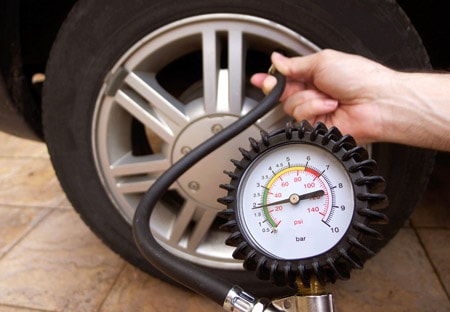 |
During the summer, outdoor temperatures are often quite high, which can easily have negative effects on tires. Tire pressure will also change because the rubber and air inside the tire expand with temperature; the change also depends on whether the vehicle is moving on a hot road surface or stationary.
Overinflating your tires can lead to cracks in the treads and even tire blowouts. Therefore, checking tire pressure is essential and very important. Measure the pressure weekly using a pressure gauge, especially before long journeys. If your tires get too hot, you can pour a little water on them. Parking in the shade also helps protect your tires.
2. Nitrogen gas pump
 |
| Nitrogen gas pumps help stabilize pressure. |
Here's a helpful tip: replace regular air with nitrogen in your tires. Regular air expands faster than nitrogen, and nitrogen, being an inert gas, doesn't ignite, reducing the risk of tire blowouts and stabilizing pressure because it doesn't contain moisture like regular air. This method saves you time and effort compared to regularly checking tire pressure. However, you shouldn't neglect regular tire checks.
3. Check the tire valves.
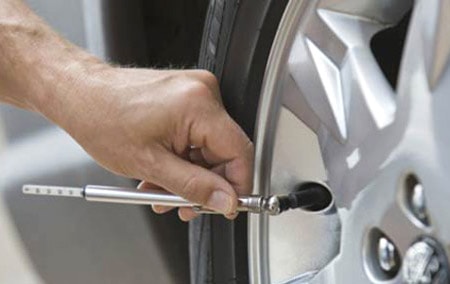 |
| A valve that doesn't seal properly can cause gas to leak from the valve head. |
Ensure that the valves maintain their correct shape and that the caps fit snugly. A poorly fitted valve can cause gas leaks from the valve head.
4. Check the tires.
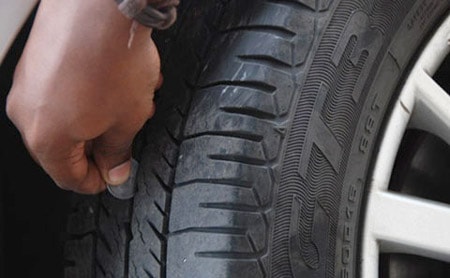 |
| Check tire pressure using a coin. |
Before summer arrives, check your tires for any cracks. Use the coin tire tread test. This simple trick will help you determine if your tires are worn out and if it's time to replace them.
Use a coin and place it in the tire grooves to measure the tread depth, doing this for all tires. If the depth is consistent across all treads, everything is fine. However, if there is a difference in depth, it indicates uneven tire wear. Check the tooth alignment, gears, and camshaft alignment to make necessary adjustments. This wear and tear is mainly due to frequent driving on rough roads, so it's necessary to check and adjust the rear wheel alignment every 3000 km, or when the vehicle can no longer maintain a straight line.
Additionally, during the tire inspection, you should also check the tire valves, ensuring that they retain their original shape and have their caps intact, without any air leaks.
5. Check the spare tire.
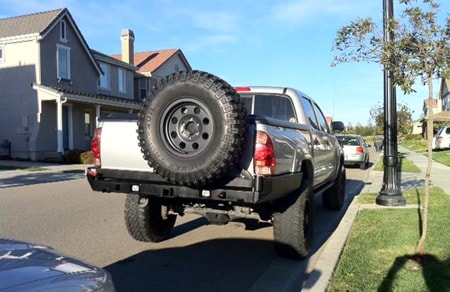 |
Checking and maintaining your tires isn't just about taking care of your main tires. Take the time to do the same for your spare tire. This is to prepare for unfortunate situations where you need to replace a tire and it doesn't meet the required standards.
Imagine you get a flat tire, but your spare tire isn't up to standard. It's a real hassle having to drive around looking for a tire shop. Therefore, make sure you check all of these points on your spare tire. This is just as important as checking your main tires.
According to Baogiaothongvantai.