

Individuals who are not eligible for the measles vaccine.
A single dose of measles vaccine is not sufficient to provide high immunity for children; they need to receive two doses according to the Expanded Immunization Program, one at 9 months of age and the second at 18 months of age.
For various reasons, recently, many people have been misled into believing that vaccination is dangerous, leading many parents to delay full vaccination for their children. This results in a high risk of contracting diseases that were previously considered eradicated in our country. Therefore, parents need to pay special attention and ensure their children receive all vaccinations according to the Ministry of Health's program, avoiding misconceptions that could endanger their children later on.
The typical age for children to contract measles is after 6 months of age, as children under 6 months still have immunity passed on from their mothers if they are breastfed, which protects them. However, in recent cases, a significant number of children have contracted the disease while breastfeeding, possibly because the mothers have not been vaccinated against measles and have not developed immunity to the disease, thus lacking antibodies to protect their children.
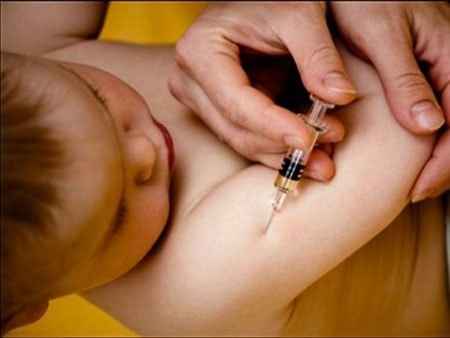 |
Although the recommended age for measles vaccination is 9 months, it is still possible to vaccinate breastfed infants and children under 9 months old. Measles vaccination should only be given to children under 9 months old when directed by the Expanded Immunization Program and when necessary.
All children who received the measles vaccine before 9 months of age should receive the full dose as soon as they reach 9 months of age. The dose given before 9 months of age does not count as one dose. Children over 18 months of age who have not received both doses of the measles vaccine should receive the remaining dose as soon as possible.
Breastfeeding women can receive the measles vaccine because the antibodies produced protect the mother and are secreted through breast milk to protect the child from measles before the child can develop immunity on their own.
After vaccination, children may still contract measles, but it is usually mild and not contagious. Serious reactions after measles vaccination are rare but can occur.
Patients with fever or active acute infections should postpone vaccination. Vaccination can be resumed once the patient recovers.
- Do not get vaccinated if you have an allergic reaction to the vaccine.
- Pregnant women should not receive this injection.
- Do not vaccinate in immunocompromised individuals.
Individuals who have undergone serological testing for measles IgM antibodies and tested positive do not require measles vaccination.
Individuals who were previously suspected of having measles but were not diagnosed with the disease still need to be vaccinated against measles.
When administering the measles vaccine, if for any reason (such as the child being restless) the dose is not fully given, a booster shot should not be given; instead, you must wait until the next scheduled dose.
If you have been exposed to a source of measles virus, the vaccine can prevent the disease if administered within 72 hours of exposure. Vaccination within 6 days of exposure can prevent severe complications of the disease.
According to Tien Phong