

Accelerate the equitization of state-owned enterprises to achieve the target.
Restructuring state-owned enterprises is identified as one of the three main pillars of economic restructuring, aiming to create comprehensive innovation from organizational models, management methods, investment and business strategies... to capital restructuring.
To complete the equitization of 432 state-owned enterprises from now until 2015 as required by the Government, perfecting institutions and mechanisms is one of the prerequisite tasks to help enterprises accelerate towards achieving this goal.
Delegating authority and defining responsibilities.
According to Pham Viet Muon, Deputy Head of the Standing Committee of the Steering Committee for Enterprise Innovation and Development, since the issuance of Decree No. 99/2012/ND-CP on the assignment and decentralization of the rights, obligations, and responsibilities of the state owner with respect to state-owned enterprises and state capital invested in enterprises, the rights, responsibilities, and obligations of the Government, ministries, sectors, localities, and the boards of directors of state-owned economic groups and corporations have been more clearly defined.
The industry management ministry is the focal agency responsible for exercising the rights, responsibilities, and obligations of the state owner with respect to state-owned enterprises, especially state-owned corporations and general companies. It is also responsible for supervising, inspecting, and evaluating the performance and effectiveness of these enterprises.
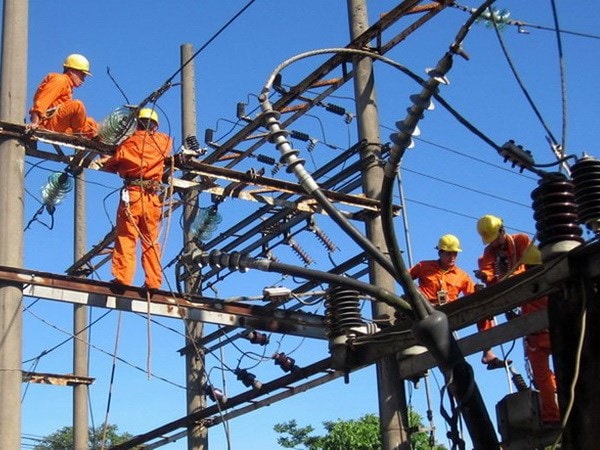 |
| Illustrative photo: VNA |
Reports from 13 ministries, 34 localities, and 6 economic groups indicate that the implementation of state ownership management has initially yielded positive results. The functions of inspection, supervision, and evaluation of the effectiveness of state ownership in state-owned enterprises have received greater attention. The rights, obligations, and responsibilities of state ownership focused primarily on privatization, divestment, and the transfer of ownership representation rights to the State Capital Investment and Business Corporation (SCIC); supplementing charter capital, amending and supplementing organizational charters; personnel decisions; and inspection, auditing, and supervision of state-owned enterprises.
In fact, the formation and improvement of the organization and operation of SCIC over the past period has also brought about many important experiences in innovating the method of managing state capital in enterprises, thereby moving towards eliminating administrative intervention by state agencies in production and business activities, contributing to the innovation of the method of managing state capital in enterprises from an administrative form to a business form.
Improve business efficiency
From 2011 to 2013, the whole country restructured and equitized 180 enterprises, reducing the number of 100% state-owned enterprises to 949 units (excluding state-owned agricultural and forestry farms), including 19 state-owned corporations and 21 enterprises with state capital exceeding 100 billion VND. Most of these enterprises are large-scale, have a wide scope of operations, and are diversified businesses such as the Vietnam Foreign Trade Bank, the Vietnam Investment Development Bank, the Vietnam Gas Corporation, the Vietnam Petroleum Corporation, the Vietnam Steel Corporation, and the Viglacera Corporation...
Through equitization, state-owned enterprises have undergone a significant restructuring, fundamentally focusing on key industries, sectors, and geographical areas that the State needs to control. While the number of state-owned enterprises has decreased considerably, in many important industries and sectors, they have become stronger with increased capital.
According to the Steering Committee for Enterprise Reform and Development, most state-owned enterprises have experienced significant growth and improved efficiency after privatization. The establishment of joint-stock companies continues to increase competition in the economy and promotes the restructuring of the stock market. Along with reviewing their business sectors, many enterprises have proactively developed long-term plans, development strategies for 2015-2020, and financial plans for implementation.
State-owned corporations and conglomerates have reorganized their production and business operations, restructuring their member enterprises towards specialization, division of labor, cooperation, avoiding fragmentation, and preventing internal competition; merging and consolidating business members in the same industry.
Implementing financial restructuring, many state-owned economic groups and corporations have improved their financial capacity and increased their charter capital, such as Vietnam Electricity Group (EVN) increasing its charter capital from VND 76,700 billion to VND 143,000 billion; Vietnam Coal and Mineral Industry Group increasing from VND 14,794 billion to VND 35,000 billion; and Vietnam Chemical Group doubling its capital from VND 8,000 billion to VND 16,000 billion... At the same time, divestment of investments outside the core business has also received more attention, with a total divestment amount reaching VND 4,164 billion out of a total of VND 21,797 billion, equivalent to 19%.
Despite the challenging economic conditions, state-owned enterprises, particularly state-owned economic groups and corporations, have still achieved relatively high growth rates.
State capital invested in enterprises continues to be preserved and developed. In 2013, 18 corporations and general companies with a total state capital of VND 840,000 billion (accounting for 83% of state capital in enterprises) achieved total revenue of VND 1,184 trillion and contributed VND 191,000 billion to the state budget. Of these, 17 out of 18 units operated profitably, with a return on equity of 16.19%. Despite being in the process of restructuring and reorganizing the apparatus, the state-owned enterprise sector still maintains the highest contribution to the state budget among the three economic sectors, exceeding 30%.
However, the efficiency of these enterprises is still considered disproportionate to the resources they possess, and their competitiveness is low. Therefore, while state capital has increased significantly, revenue, profits, budget contributions, and return on capital have not increased proportionally. Consequently, improving enterprise efficiency remains a challenging task, alongside achieving the goal of privatizing 432 state-owned enterprises by the end of 2015.
A drastic solution
According to the plan for restructuring and reforming state-owned enterprises for the period 2011-2015, approved by the Government, ministries, sectors, localities, economic groups, and state-owned corporations, by 2015, 531 enterprises were to be equitized, 25 enterprises merged or consolidated, 16 enterprises dissolved or declared bankrupt, and 10 enterprises transferred or sold. However, the results of equitization over the past three years have been low (99 enterprises), so from now until the end of 2015, the whole country will have to complete the equitization of the remaining 432 enterprises.
To complete this plan, the Ministry of Planning and Investment believes that determination and unity from the central to local levels are needed to ensure the timely implementation of approved state-owned enterprise restructuring plans. Furthermore, the implementation solutions must be very decisive.
In an effort to further accelerate the equitization process, Vice Chairman of the Ho Chi Minh City People's Committee Le Manh Ha boldly proposed that the Prime Minister approve a list of enterprises that will not undergo equitization.
According to Mr. Ha, equitization is a matter of course, so if any enterprise wants not to be equitized, it must prove its reasons and apply for permission. Ho Chi Minh City also proactively proposed allowing the addition of some public utility enterprises not subject to equitization in the 2014-2015 period to carry out equitization early, especially units in the environmental sanitation sector in districts and communes, because in reality, non-state enterprises are more capable of performing this task.
Along with the core task of equitization, the divestment of non-core investments and state capital in sectors where controlling stakes are not necessary will also be seriously implemented. Divesting non-core investments is not merely about cutting or reducing losses, but about using market mechanisms to reallocate resources and improve capital efficiency. However, there are still many concerns about the deadline for completing divestment in 2015, with various reasons being cited.
According to Mr. Tran Ngoc Thuan, General Director of the Vietnam Rubber Industry Group, the stock market is still not "warming up," while projects need a suitable divestment roadmap to avoid losing state assets. Some projects, such as hydropower projects, which are in the incomplete investment phase and cannot be finished in 2015, are being proposed by the Group to the Government for completion before divestment is carried out according to regulations.
If a business invests in a non-core business and it proves profitable, whether divestment is mandatory is a concern for many businesses and managers. Currently, many corporations and conglomerates have significant cross-business investments requiring divestment due to investments outside their core business, stemming from policies aimed at utilizing each other's goods and services. Therefore, a mechanism for divesting from these investments is needed to ensure efficiency and speed for businesses, even allowing divestment by agreement or at book value, Mr. Thuan proposed.
According to Dr. Tran Van, Vice Chairman of the National Assembly's Finance and Budget Committee, the restructuring process of state-owned enterprises will reduce the proportion of direct state participation in production and business to attract financial resources from the private sector to invest in enterprises and strengthen corporate governance. Meanwhile, it is still necessary to ensure social stability and control market prices, and increase the direct influence of the state on industries and sectors that are "sensitive" to the people.
In the restructuring of state-owned enterprises, attention must be paid to the influence of "interest groups" on decisions regarding the privatization, sale, transfer, dissolution, and bankruptcy of state-owned enterprises. While these decisions may sometimes be somewhat incomplete, they can still seize opportunities and favorable circumstances for preserving and divesting state capital.
According to Vietnam+