

China shows a "nice gesture" towards Russia.
(Baonghean) - While Russia is struggling to overcome the major shock caused by the worst decline of the Ruble in years, China has shown a "nice gesture" by offering to help Russia overcome the crisis. Although it is only a proposal and has not yet been confirmed by Russia, China's move once again demonstrates the "golden age" in Russia-China relations through the spirit of "sharing hardships" between "great brothers," despite analysts' assessments of a lack of strategic trust in this relationship.
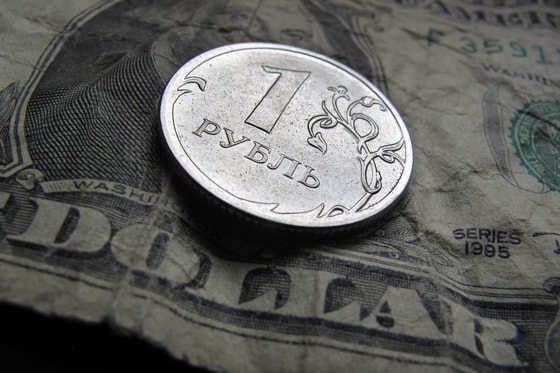 |
| Will the ruble regain its value against the US dollar? |
| RELATED NEWS |
|---|
China's offer comes at a time when Russia is struggling to maintain the value of the ruble after its worst drop on December 16th – a day dubbed "Black Tuesday" by financial circles. At that time, the ruble fell from 57.5 rubles to 64.45 rubles per US dollar. An emergency meeting that night, which decided to raise the benchmark interest rate from 10.5% to 17% per year, failed to prevent the ruble from spiraling out of control, at one point reaching 80 rubles per US dollar. Many economists have offered very pessimistic assessments of Russia's current situation, suggesting that the country is falling into a full-blown economic crisis. Currently, Russia is implementing drastic measures to save the ruble, such as injecting an additional $70 billion from its foreign exchange reserves into the market and urging private companies and citizens to stop hoarding US dollars. However, to date, there are no signs that the Ruble has regained market confidence.
Experts have analyzed numerous factors that have pushed the Russian economy into its current predicament, such as the dramatic drop in crude oil prices on the world market, an unbalanced economic structure, and the vulnerability of the economy due to excessive foreign debt. All these factors have simultaneously had a negative impact, triggered by the sanctions imposed on Russia by the West. As long as Russia and the West remain unable to find a solution to the Ukraine issue – the source of the sanctions imposed on each other – the problems of the Russian economy are unlikely to be resolved in the short term. Therefore, it is believed that China will be a "lifeline" for Russia during this extremely difficult period. According to analysts, the expansion of trade between Russia and China outside of the US dollar will help stabilize the ruble by increasing its liquidity. The method proposed by China to rescue the ruble has received a positive response from financial markets, with the ruble appreciating by 3% in just one day.
It is readily apparent that "standing on the same side" in a series of recent "hot" international developments is a crucial foundation for the close relationship between Russia and China today. However, questions have often been raised about the "strategic trust" between these two superpowers – a factor that makes it difficult for the Russia-China relationship to be elevated to a solid alliance. Therefore, behind China's latest offer, public opinion is very interested in why China is showing such enthusiasm for Russia? From an international perspective, China's "extending a hand" to Russia at a time when the latter is facing difficulties will help China build an image of a reliable partner, a friend willing to "share in hardship." This will contribute to achieving the goal that Chinese President Xi Jinping has mentioned: "strengthening the country's position as the world's second-largest economy."
Economically, rescuing the ruble also means that China will expand the yuan's global influence as an alternative reserve currency to the US dollar. Besides Russia, China has already signed similar swap agreements with nearly 30 other countries, and China desperately needs swap deals like the one with the Russian ruble to turn these agreements into reality. Furthermore, supporting the ruble helps China avoid indirect losses. Because, when the ruble depreciates and oil prices fall, Russia will be unable to fulfill its energy contract commitments with China, which include importing Chinese goods and cars. Considering the domino effect, a depreciating ruble could trigger a panic spreading to other countries, ultimately leading to a flight of capital from emerging markets, including China.
Thus, it can be seen that China's "saving Russia" is essentially "saving itself." If the Ruble-Renminbi transaction is successfully completed by both sides, what China gains will be immeasurable in terms of profit and loss figures. And this story once again proves the assessment of analysts: the Russia-China relationship is not only about self-interest but also about timing, and that is precisely the "weakness" of a long-term partnership.
Thuy Ngoc